


Il Bastione della cristianità
Cambia lingua:
Quando parliamo del periodo tardo rinascimentale delle “Hungaries” dobbiamo guardare allo stato pietoso di questo paese nei secoli XVI-XVII Dove è scomparso il paese un tempo fiorente del re Mattia?
Lo ricordiamo come il primo re che diffuse la cultura rinascimentale verso la Germania Trentasei anni dopo la sua morte il suo paese stava combattendo per la sopravvivenza Se parliamo di guerra rinascimentale contro eserciti non cristiani, la famosa battaglia di Mohács nel 1526 è una pietra miliare Fu una battaglia su larga scala contro l’esercito ottomano, e il mondo dovette aspettare ancora centocinquanta anni per sconfiggere nuovamente i musulmani in una battaglia aperta Nonostante gli sforzi eroici della moderna fanteria picca e moschetto sostenuta forse dalla cavalleria più corazzata dell’epoca, i cannoni turchi e le raffiche disciplinate dei giannizzeri decisero la battaglia Gli ungheresi hanno quasi vinto la giornata, ma il giovane re ungherese Luigi II perse la vita nel combattimento Il sultano Solimano il Magnifico non poteva quasi credere alla sua buona fortuna e aveva paura di dare la caccia per un giorno Si prese il suo tempo con la decapitazione dei suoi 2.000 prigionieri di guerra Poi si stava lentamente avvicinando alla sguarnita Buda.
Presto il palazzo rinascimentale di fama mondiale del defunto re Mattia subì il saccheggio. L’Europa paga per prima cosa la sua struttura omogenea. Se mai possiamo parlare ungherese, un re che ci distrae dalla minaccia musulmana non sembrava preoccuparci del famoso palazzo rinascimentale. Hanno prestato poca attenzione ai precedenti 170 anni di guerra tra il Regno ungherese e il minaccioso Impero ottomano. Quando il giovane re morì sul campo di battaglia, il nostro vicino occidentale difficilmente poteva aspettare di usurpare il suo trono. Pettegolezzi se avesse avuto il fatto che la sua armatura era stata trafitta da un rondel, un pugnale a tre spigoli, usato tipicamente dai mercenari occidentali. Nel momento in cui Solimano lasciò il paese, le truppe austriache attaccarono immediatamente l’attuale re ungherese Szapolyai. L’avidità di Ferdinando asburgico gli impedì di prestare attenzione alla minaccia musulmana. Era in debito con i Fugger fino alle ginocchia. Aveva un disperato bisogno delle ricche miniere di rame, oro e argento dell’Alta Ungheria. Ferdinando I fu piuttosto contento di aver visto gli ungheresi così facilmente dalla mano dei turchi. Poteva rapidamente togliere l’estrazione mineraria delle città di Krmnaitzya (Sönánya) e l’Europa non poteva renderci un pericolo internazionale.
Realization often comes in the last minute. Count, general, and poet, the Hungarian-Croatian Nicholas Zrínyi wrote about the European situation in his letter to Emperor Leopold I in 1664 with these words: “…the strength of the Muslims is like Antheus’ from ancient Greek mythology, who regained his strength anytime he touched the ground […] the Turks are winning even if they are not victorious.” In his Latin letter Zrínyi was re-listing his reasons for an offensive war, launched by the would-be allied Christian powers: „The sabre of the Sultan would not make a difference between us. He would care neither about our political relations nor about the divisions among our states, nor about our envious and suspicious nature. Rather, he would bathe his sword in the blood of the defeated Christendom. The mad rage of the Muslims would wade through us without comparison, without sorting out the interests of Northern Protestants and Roman Catholics, regardless of the conflicting goals and principles of the Austrian and the French monarchies. So what is the reason in repining on the regional conferences when the flame of the fire burning on our borders is big enough to consume the last of the Christians on this Earth? If (God save us) Croatia fell and the Turks could have a free way to go, what would befall to the domains of Venice and the opposite shore of the Adriatic Sea, or the lands of Spain and Rome? Yet, I haven’t heard that the European powers would understand this and would take up arms under Christ’s flag. Nam tua res agitur, paries cum proximus ardet Ucalegon. (Your own safety is in danger when the neighboring wall blazes). But what if the conflagration, that is presently burning in Hungary and is covering Germany in smoke, making Italy’s eyes run with a tear, would seem like a remote, negligible and underestimated spark from spyglasses of France and England? In this case, let them cast their look, for Heaven’s sake, toward the Mediterranian Sea and tell me what is the meaning of the huge pirate activity that is devastating those seas with more than seventy ships? They are Turks, aren’t they?” History has it all. We just have to rediscover its message. Before jumping to conclusions, let us take a look at late-Renaissance Hungary again. Hungary was divided into three countries at that time, so we would call them together “Hungaries”.
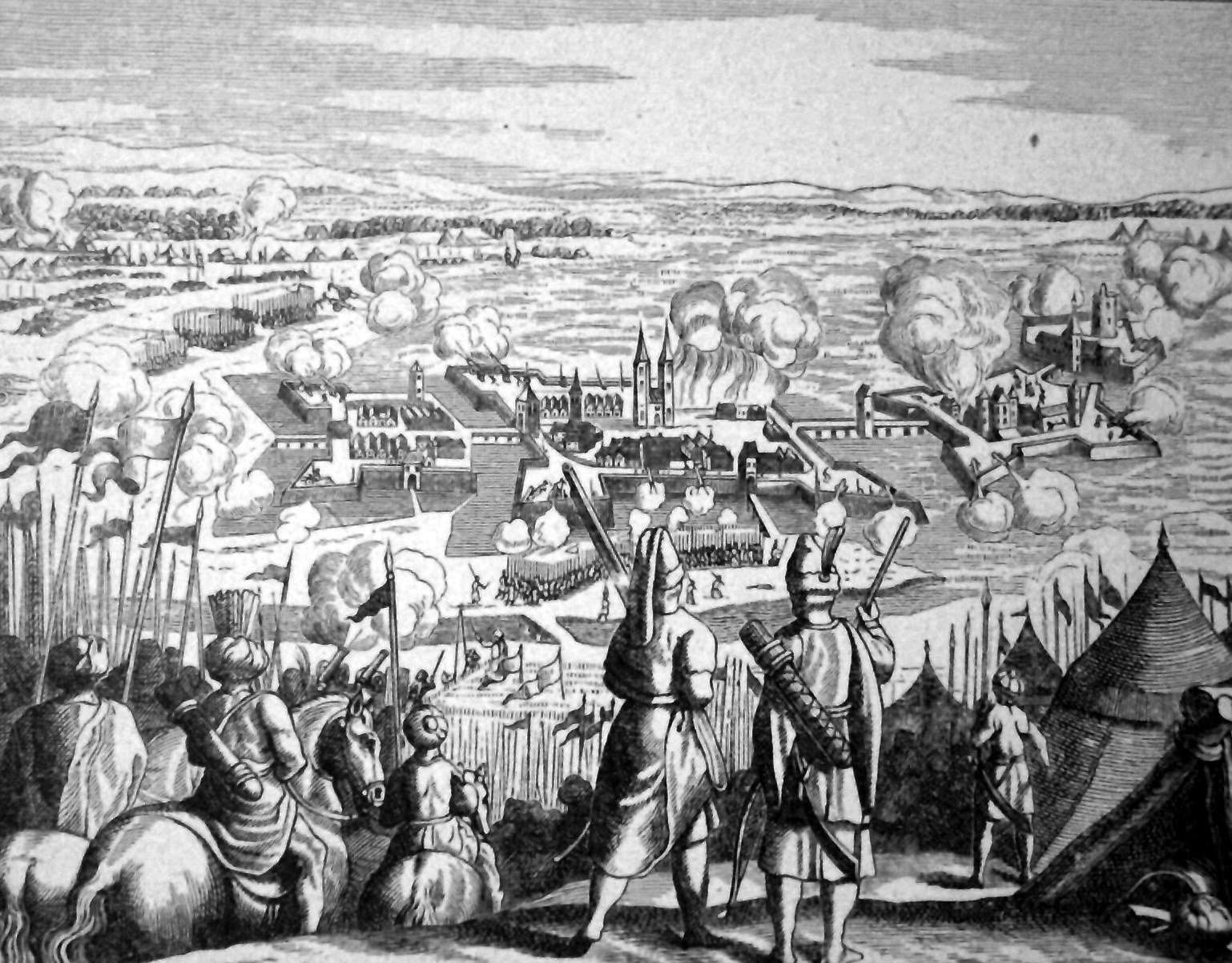
The Habsburg-ruled Royal Hungary included the Trans-Danubian and Upper-Hungarian counties. Its Hungarian aristocrats were busy trying to fight the Turks with all the money they could beg for from Vienna. On the other hand, they also tried to cling to their constitutional feudal rights against the Habsburgs’ overpower. Transylvania was a rather independent country. It gradually has become the so-called “Fairy Garden of Europe” with its rich late-Renaissance and early Baroque court. It was the country of religious tolerance and economic growth. All the fugitive Protestants of Europe found shelter here. Even the Jewish lived undisturbed, without having to wear discriminative signs. It was Prince Gábor Bethlen who granted the Jews these outstanding rights in 1620 in a document issued in Kolozsvár. The middle-section of Hungary was ruled by the Ottomans. It was practically a war-zone where the Turks could never introduce their offices and ways of life like they did in the Balkans. They were glad to control the settlements and the roads, and could barely collect enough taxes to keep their garrisons. Their forts were filled with soldiers majorly of Balkan origin, mostly Serbians. Here, the Renaissance heritage had suffered much during the 150-year-long Ottoman stay. Not only the Gothic buildings were destroyed but also King Matthias’ famous palaces and churches were ruined or neglected. Statues were broken into pieces or frescoes scratched off because of religious reasons. Churches were disassembled stone by stone. Their materials were used to build mosques, minarets, and fortifications. Even tolling the bells was prohibited and life got stricter and grimmer than ever before. King Matthias had the largest Renaissance library of the age North of the Alps. It contained 3,000 artistically bounded Corvina books. They were transported to the Sultan and the collection got scattered. Not to speak of the losses in human lives. The Muslims were selling thousands in the slave markets of Asia and Egypt. Hungarians had lost the estimated number of one million people during the 150 years of ceaseless wars. Whole regions got depopulated and an entire Hungarian dialect got extinct. The destruction foreshadowed the fate awaiting Europe. After the taking of the Buda castle in 1541, Renaissance culture could only live on in the courts of several Hungarian aristocrats. The Eszterhazy, the Nádasdy or the Croatian-Hungarian Zrinyi family supported all fields of culture and education in castles like Sárvár or Csáktornya (Cakovec). The Transylvanians provided the second center for the arts in these perilous times. Prince Gábor Bethlen and Prince György Rákóczi I’s courts were reported no worse than any other European high courts. “Rien de barbare” said Prince d’Augouléme, the relative of King Louis XIII, when he visited Bethlen’s court. The Occupied Land of the Ottomans was fringed by the longest borderland of Europe. There was the longest chain of castles for the longest period against the relentless Turkish attacks. The Muslims wanted to have their horses watered in the Seine. The smaller and bigger castles heroically slowed down or stopped the enemy to reach their first destination, Vienna.
Check out the valiant warriors in the sieges of castles like Szigetvár, Eger, Kőszeg or Drégely, to list only the most heroic ones. The Habsburg overlords of Royal Hungary proved to be very tight-fisted. The 12-14,000 castle-warriors and hussars garrisoned in 120 forts and castles were ridiculously underpaid or not paid at all. Some received no payment during nine full years, some even died of starvation. The supporting toil of local peasants saved the castles from crumbling down. Meanwhile, the well-paid Austrian mercenaries kept surrendering the forts to the Turks. Furthermore, the Viennese court could not stop fabricating charges of treason against wealthy Hungarian aristocrats. The warriors of the Borderland were impoverished noblemen and fugitives from all social classes. They had lost their lands and families because of the Muslim conquest. They lived in their castles that were their only homes and their brothers-in-arms were their family. Some of them cultivated vineyards or had to take part in civilian trade to support themselves. Still, their biggest income came from the constant raids and ambushes against the enemy. They had to care for themselves, because their payment from the king’s treasury arrived late or never. When it arrived, it usually covered only the price they spent on wine. They elected their officers and had their own protestant pastors who fought alongside with them. It is odd how the court’s stinginess forced these warriors to get their pay from attacking the Turks day and night. It was the birth of the only effective warfare that could keep a bigger hostile army at bay by the ambushes of always-moving small elite units. They represented the last, late-Renaissance afterthought of chivalry and called themselves the “Valiant Order”. Their symbolical figure was the renaissance warrior-poet Bálint Balassi. The famous poet lost his life in a siege that attempted to take the castle of Esztergom back from the Turks in 1594. The Austrians openly treated the country as a buffer-state and a food-chamber. Hungarians have got bled white in the Turkish wars and became alienated against the Habsburgs. Finally, they rebelled. It was Prince Imre Thököly. Without him the Turks would never had reached Vienna in 1683. This embittered aristocrat took the city of Pozsony and let the Turks pass and kill his enemies, the Habsburgs. Had it not been for the Polish King Sobieski, Vienna would have perished, and perhaps the Turks could have walked up to Switzerland. After 150 years of indifference, Europe got frightened at Vienna’s siege. They started to recognize the Muslim threat, so they pulled themselves together in the last moment. It was clear that Vienna would not be able to withstand a second siege, and there is a chance also for a Sobiesky not to arrive on time.
The Habsburgs were either “liberating” Hungary with a united European crusaders-army or wait idly until the Turks regain their power. We know enough about the rest. Popular TV channels and history schoolbooks are boasting how the glorious Habsburgs wiped the Turks out in 1699. There is not much about in these books or films what happened to Hungary after this. How the south-Balkanian ethnic groups were settled throughout Hungary and Transylvania by the Habsburgs. How the new ethnic elements have appeared, nearly outnumbering the local indigenous folks. How Hungary tried to shake off the Habsburgs’ yoke in two wars of independence ibetween 1704-1711 and in 1848-49. How the Austrian-Hungarian Monarchy was fabricated in 1867. How the Habsburgs controlled the finance, the defense, and the foreign affairs after that. How the fear from the Hungarians’ constantly rebellious nature forced the Habsburgs to permit more national rights to the Hungarians. How this resulted in giving the widest range of minority rights for all the other ethnic groups of the Monarchy. It happened in same age when the native Americans were massacred and the Irish language was systematically eradicated. As history is written by the victors, popular history channels also fail to add how Hungary was dragged into the Great War in 1914 by the Habsburgs. Its outcome was that Hungary lost 74% of its territories to new countries like Romania, Yugoslavia, and Czechoslovakia. Today it is not politically correct to speak about this. The suspicious feelings and the mutual prejudice that separate us from our neighbors doesn’t make anyone happy. No wonder that talking about the effects of late-Renaissance Hungarian-Turkish wars is a touchy topic. It would always offend lots of people in many countries. Not mentioning certain political parties and religious groups who would also feel bad. Let’s sleeping dogs lie. Will Europe ever learn? Saying at least a “thank you” for the Hungarians’ efforts, for fighting the Muslims for 300 years, would be nice. Particularly, when our nation got weakened ethnically because of it so much.
Il presidente turco avrebbe dovuto visitare il castello di Szigetvár questo settembre Szigetvár è un famoso castello dove il sultano Solimano il Magnifico era morto nel 1566 durante l’assedio Il presidente Erdogan ha annullato la sua visita, ma dubito che avrebbe offerto un risarcimento finanziario al nostro Paese per i passati crimini di guerra. Eppure, mi chiedo. Non è mai venuto in mente al presidente Erdogan dove si troverebbe ora il suo palazzo presidenziale se gli ungheresi del tardo Rinascimento si fossero schierati con lui?
Foto:“Tolnai világtörténelme”
Editor di copie: bm