



基督教世界的堡垒
變更語言:
論“匈牙利”文藝復興後期時,我們必須看看這個國家在16-17世紀的抱歉狀態,曾經繁榮的馬提亞斯王國消失在何處?
我们记得他是第一位向德国传播文艺复兴文化的国王。他去世三十六年后,他的国家正在为生存而战。如果我们谈论文艺复兴时期针对非基督教军队的战争,1526年著名的莫哈奇战役是一场里程碑式的对抗奥斯曼军队的大战,世界还要再等一百五十年才能在公开的战斗中再次击败穆斯林。尽管现代长矛和步枪步兵在也许是当时最精良的骑兵的支援下做出了英勇的努力,但土耳其大炮和禁卫军的纪律齐射决定了这场战斗。匈牙利人几乎赢得了胜利,但年轻的匈牙利国王路易二世在战斗中丧生。苏丹苏莱曼大帝几乎不敢相信自己的好运,也不敢追逐一天。他花时间斩首了他的 2000 名战俘。然后他慢慢地接近不设防的布达。
很快,已故国王马蒂亚斯世界著名的文艺复兴宫殿遭受了第一次掠夺。欧洲,如果我们能说到这样的同质结构,那么似乎并不关心穆斯林的威胁。他们很少关注匈牙利王国与威胁不断的奥斯曼帝国之间过去170年的战争。当年轻的匈牙利国王在战场上阵亡时,我们的西方邻国几乎迫不及待地想篡夺他的王位。八卦说他的盔甲被一把三刃匕首刺穿,通常由西方雇佣兵使用。苏莱曼离开这个国家的那一刻,奥地利军队立即袭击了现任当选的匈牙利国王萨波利亚伊。哈布斯堡王朝斐迪南的贪婪使他无法关注穆斯林的威胁。他一直欠福格家族的债,甚至屈服。他急需上匈牙利丰富的铜矿、金矿和银矿。斐迪南一世很高兴看到匈牙利人如此轻易地被土耳其人的手击败。他可以迅速占领科尔默克巴尼亚(克雷姆尼茨)、塞尔梅克巴尼亚(舍姆尼茨)和贝斯泰塞巴尼亚(新索尔)的采矿城市。这样他就可以通过将国王路易二世在1525年从他们手中夺走的采矿权归还给福格家族,这与我们目前的困境惊心动魄地相似。今天,欧洲因国家和国际利益而分裂,分散了我们的注意力,使我们无法应对来自东方的危险。再次。
Realization often comes in the last minute. Count, general, and poet, the Hungarian-Croatian Nicholas Zrínyi wrote about the European situation in his letter to Emperor Leopold I in 1664 with these words: “…the strength of the Muslims is like Antheus’ from ancient Greek mythology, who regained his strength anytime he touched the ground […] the Turks are winning even if they are not victorious.” In his Latin letter Zrínyi was re-listing his reasons for an offensive war, launched by the would-be allied Christian powers: „The sabre of the Sultan would not make a difference between us. He would care neither about our political relations nor about the divisions among our states, nor about our envious and suspicious nature. Rather, he would bathe his sword in the blood of the defeated Christendom. The mad rage of the Muslims would wade through us without comparison, without sorting out the interests of Northern Protestants and Roman Catholics, regardless of the conflicting goals and principles of the Austrian and the French monarchies. So what is the reason in repining on the regional conferences when the flame of the fire burning on our borders is big enough to consume the last of the Christians on this Earth? If (God save us) Croatia fell and the Turks could have a free way to go, what would befall to the domains of Venice and the opposite shore of the Adriatic Sea, or the lands of Spain and Rome? Yet, I haven’t heard that the European powers would understand this and would take up arms under Christ’s flag. Nam tua res agitur, paries cum proximus ardet Ucalegon. (Your own safety is in danger when the neighboring wall blazes). But what if the conflagration, that is presently burning in Hungary and is covering Germany in smoke, making Italy’s eyes run with a tear, would seem like a remote, negligible and underestimated spark from spyglasses of France and England? In this case, let them cast their look, for Heaven’s sake, toward the Mediterranian Sea and tell me what is the meaning of the huge pirate activity that is devastating those seas with more than seventy ships? They are Turks, aren’t they?” History has it all. We just have to rediscover its message. Before jumping to conclusions, let us take a look at late-Renaissance Hungary again. Hungary was divided into three countries at that time, so we would call them together “Hungaries”.
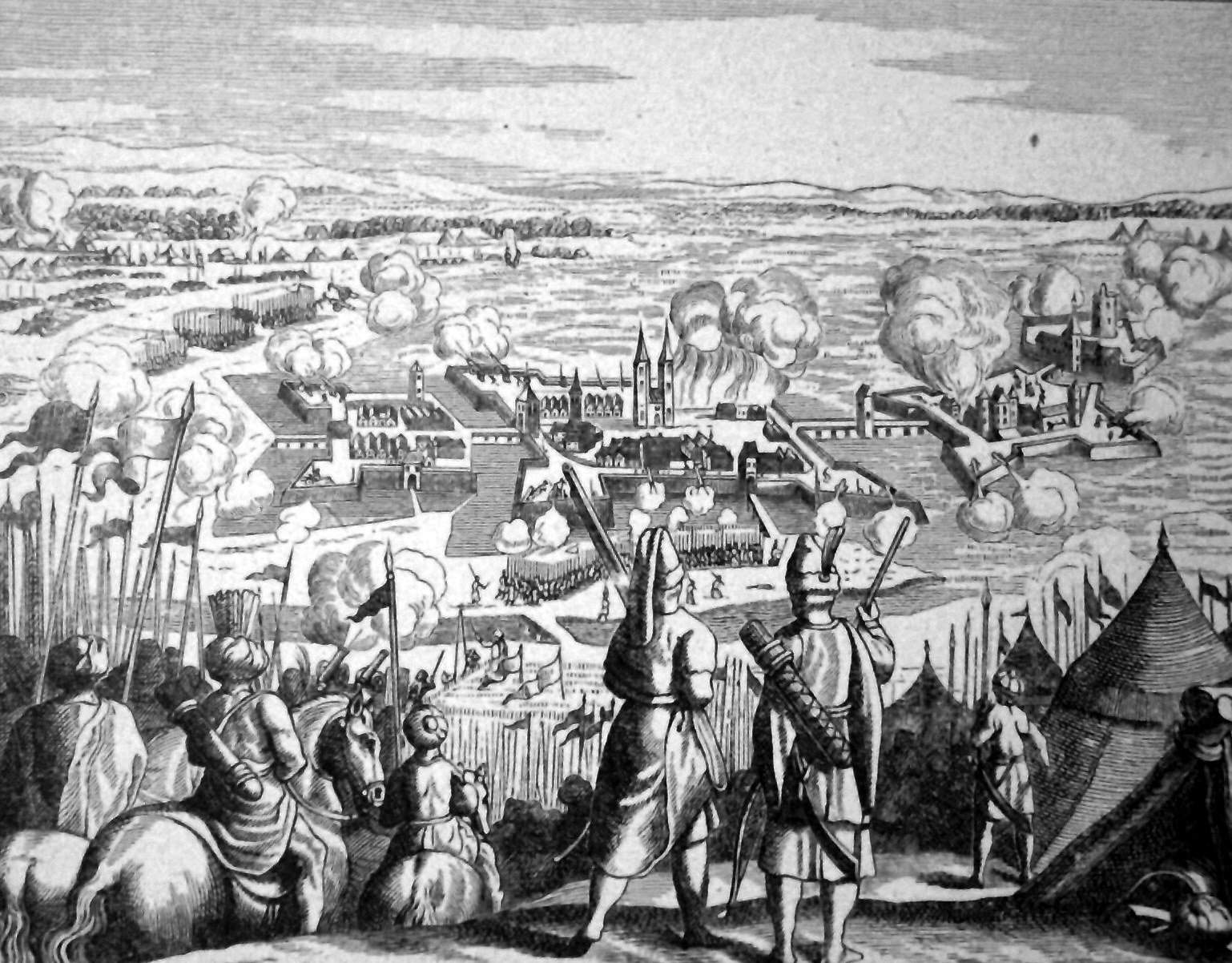
The Habsburg-ruled Royal Hungary included the Trans-Danubian and Upper-Hungarian counties. Its Hungarian aristocrats were busy trying to fight the Turks with all the money they could beg for from Vienna. On the other hand, they also tried to cling to their constitutional feudal rights against the Habsburgs’ overpower. Transylvania was a rather independent country. It gradually has become the so-called “Fairy Garden of Europe” with its rich late-Renaissance and early Baroque court. It was the country of religious tolerance and economic growth. All the fugitive Protestants of Europe found shelter here. Even the Jewish lived undisturbed, without having to wear discriminative signs. It was Prince Gábor Bethlen who granted the Jews these outstanding rights in 1620 in a document issued in Kolozsvár. The middle-section of Hungary was ruled by the Ottomans. It was practically a war-zone where the Turks could never introduce their offices and ways of life like they did in the Balkans. They were glad to control the settlements and the roads, and could barely collect enough taxes to keep their garrisons. Their forts were filled with soldiers majorly of Balkan origin, mostly Serbians. Here, the Renaissance heritage had suffered much during the 150-year-long Ottoman stay. Not only the Gothic buildings were destroyed but also King Matthias’ famous palaces and churches were ruined or neglected. Statues were broken into pieces or frescoes scratched off because of religious reasons. Churches were disassembled stone by stone. Their materials were used to build mosques, minarets, and fortifications. Even tolling the bells was prohibited and life got stricter and grimmer than ever before. King Matthias had the largest Renaissance library of the age North of the Alps. It contained 3,000 artistically bounded Corvina books. They were transported to the Sultan and the collection got scattered. Not to speak of the losses in human lives. The Muslims were selling thousands in the slave markets of Asia and Egypt. Hungarians had lost the estimated number of one million people during the 150 years of ceaseless wars. Whole regions got depopulated and an entire Hungarian dialect got extinct. The destruction foreshadowed the fate awaiting Europe. After the taking of the Buda castle in 1541, Renaissance culture could only live on in the courts of several Hungarian aristocrats. The Eszterhazy, the Nádasdy or the Croatian-Hungarian Zrinyi family supported all fields of culture and education in castles like Sárvár or Csáktornya (Cakovec). The Transylvanians provided the second center for the arts in these perilous times. Prince Gábor Bethlen and Prince György Rákóczi I’s courts were reported no worse than any other European high courts. “Rien de barbare” said Prince d’Augouléme, the relative of King Louis XIII, when he visited Bethlen’s court. The Occupied Land of the Ottomans was fringed by the longest borderland of Europe. There was the longest chain of castles for the longest period against the relentless Turkish attacks. The Muslims wanted to have their horses watered in the Seine. The smaller and bigger castles heroically slowed down or stopped the enemy to reach their first destination, Vienna.