


Márton Gyöngyösi: Premonizione di un conflitto simile a una guerra mondiale
Cambia lingua:
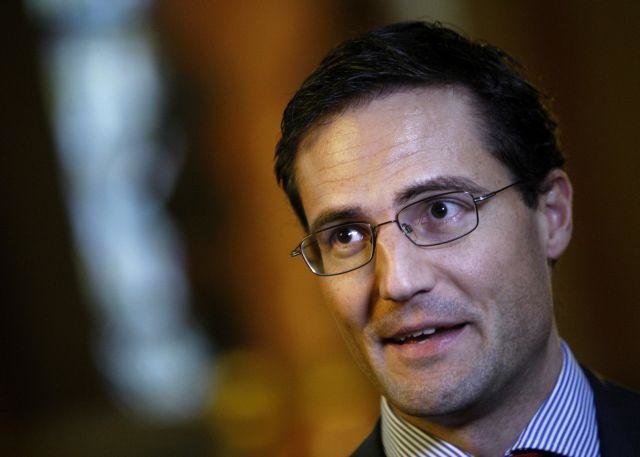
Attualmente l’unica entità interessata ad una guerra lanciata contro lo Stato siriano, ha affermato Márton Gyöngyösi, vicepresidente del gruppo parlamentare Jobbik, vicepresidente della commissione per gli affari esteri del parlamento ungherese e membro del gruppo nazionale ungherese di l’Unione Interparlamentare (IPU).
D: Sembra che gli USA quasi certamente lanceranno un assalto militare contro la Siria Quali potrebbero essere le conseguenze di un attacco militare? come riorganizzerebbero gli equilibri di potere in Medio Oriente?
A: The war propaganda conducted by the West, and especially the USA, which always precedes a military strike, does not give too much hope for peace, indeed. In spite of the loud sabre-rattling however, we saw a somewhat unexpected event which gives us a glimmer of hope: several of the most loyal allies of the United States withdrew their support for Washington this time. Great Britain and Poland who had been the first to join the Iraqi and Afghan wars which were preceded by a similar kind of sickening propaganda and smear campaign as the current one, said a definite “no” this time. Considering the firm stance of Russia and China, the two large UN Security Council members, and the palpably anti-war sentiment of the majority of people in all Western countries including the United States, we should not give up the hope that the US president will eventually come to his senses. I might be too optimistic, but I think the fact that Obama was considering to put the issue up for vote in Congress on September 9, is a positive sign. The reason why it matters so much is that the US President has the mandate to decide in the question of war and peace without the approval of the legislation. I hope that Obama, whose presidential campaign focussed on finishing the failed and irresponsible wars launched by the Republicans, is transferring the responsibility to Congress in order to use them as an escape route from the grasp of the Zionist pro-Israel lobby that puts pressure on all US presidents and governs US foreign policy from the background. Currently the Jewish state is the only entity interested in a war launched against Syria. Similarly, the provocation of the previous wars was serving Zionist interests as well. Now when lobbyists are working hard day and night to sway Congress representatives, the question is whether or not common sense and the interest of the American people will overcome the Zionist interests. However, everybody feels that a war launched without a UN Security Council mandate, in other words, ignoring international law, would create a dangerous precedent and could lead to the destabilization of Syria as well as the entire Middle East. That would amount to a premonition of world war-like conflict.
D: Che tipo di reazioni possiamo aspettarci da Mosca, Iran, Israele o Turchia in caso di un potenziale intervento militare?
A: At present, Moscow is the only player conducting a responsible and sober foreign policy in the Syrian conflict by promoting a peaceful solution in compliance with international law. On the other hand, they also expressed very clearly what they would do and where they would stand in case of an armed conflict. So the current situation is that the US would consider having to face Russia if an armed conflict broke out. As far is Iran is concerned, the reserved reaction of newly-elected President Rohani is somewhat surprising, but it is beyond doubt that Iran, aspiring to the role of a regional leading power, is fundamentally interested in and willing to make sacrifices for the survival of the Alawite-Shia Assad regime which had been a stable rock in the Sunni sea for half a century. There is no question that Israel, which governs US foreign policy from the background, would also mobilize to side with the US. It is no surprise that the Jewish state is fundamentally interested in a conflict because, ever since its establishment, it has always provoked wars against its neighbours to stabilize its own position in the region. In order to reinstate Zionist colonizing policy, the developments of the Arab Spring render military intervention necessary again, thus destabilizing Israel’s strong and stable neighbours. The real enigma is the role of Turkey. Logically, the Islamist Erdoğan government, relying on its unparalleled economic success, is aspiring to the regional leader’s role in a period when the status quo (the existing state of affairs) has somewhat been upset by the Arab Spring, and enters the decades-old Sunni-Shia duel fought by Saudi Arabia and Iran as the third contestant in order to become the dominant power in the region whose participation is essential for the resolution of the Syrian issue. Turkey is obviously not interested in the survival of the Assad regime, which enjoys the support of Shia Iran as well as Russia, Turkey’s other great historical rival. In my opinion, this aspect is dwarfed by the danger that Assad’s removal may very well destabilize Syria, which would open the way for Saudi Arabia, Qatar, and the Salafi and Wahhabi, the Islamist extremist movements that openly cooperate with Al-Qaeda and other terrorist organisations and enjoy the highly controversial support of the West as well. If you have to choose between a stable semi-dictatorship or an unstable terrorist state, no question that the former serves the interests of all closer and farther countries.
D: Come spiegheresti perché la strategia degli Stati Uniti non ha raggiunto i risultati attesi in Iraq, Afghanistan, Pakistan e Libia?
R: In effetti, non sorprende affatto, gli imperi in declino seguono tutti lo stesso corso Gli USA non sono diversi: possono solo coprire e finanziare le proprie enormi tensioni economiche e sociali interne se acquisiscono sempre più risorse lanciando una guerra dopo l’altra Analogamente all’Impero sovietico, gli USA stanno cercando di espandersi sul mondo, facendo affidamento sulla loro ideologia falsa e piena di controversie La cosa che distingue gli USA dai loro predecessori e ne consente l’espansione è l’appassionato messianismo con cui impone il proprio potere nel mondo esterno, al quale guarda con estrema ignoranza e primitivismo Gli USA hanno considerato tre aspetti in termini di guerre in Medio Oriente: la sicurezza di Israele, gli interessi economici e geostrategici degli USA Dal punto di vista della “customers”, queste campagne hanno avuto tutte successo nel breve periodo La domanda è quale effetto a lungo termine queste guerre hanno avuto sulla stabilità e sulla prosperità della regione.

D: Jobbik ha chiesto di convocare la commissione per gli esteri del Parlamento ungherese Perché è stato importante per te?
R: Abbiamo supposto che se c’è un conflitto estremamente pericoloso come quello che si sta svolgendo attualmente in termini di Siria, non sarebbe una cattiva idea discutere la questione nel Parlamento ungherese che riflette e rappresenta la volontà della nazione ungherese C’era un ostacolo tecnico nel modo della nostra mozione, avevamo bisogno delle firme di un quinto del Comitato Dato che il Comitato ha venti membri, e solo tre di loro sono rappresentanti Jobbik, avevamo bisogno di un voto in più Nonostante i nostri sforzi concertati, non abbiamo potuto raccogliere il quarto Non potevamo né influenzare alcun rappresentante di Fidesz, che automaticamente respinge qualsiasi iniziativa Jobbik, né il rappresentante pacifista di LMP Katalin Ertsey, che ha una posizione contro la guerra, per non parlare dei rappresentanti della Democrazia Cristiana, che almeno dovrebbero sentirsi indignati per il fatto che i ribelli sostenuti dai nostri alleati occidentali stanno uccidendo preti e suore cristiani in Siria Purtroppo, questa è la situazione in questo momento, abbiamo rappresentanti così coraggiosi e di principio nella Commissione Esteri del Parlamento ungherese.
D: Cosa si aspetta dal Ministero degli Affari Esteri ungherese?
R: Il grado di subordinazione del Ministero all’interesse sionista-atlantista è chiaramente dimostrato dal fatto che la leadership ungherese di politica estera è stata l’unica a rilasciare i suoi tipici comunicati stampa sottomessi che riecheggiano l’assurda propaganda e le accuse del Ministero degli Esteri degli Stati Uniti dopo il presunto attacco chimico a Damasco Questo leopardo del ministero degli Esteri non cambierà mai le sue macchie, può solo agire come la sua natura impone: per inchinarsi abitualmente all’attuale punto di vista del potere più forte, un atteggiamento riportato dai tempi sovietici Invece di promuovere la causa ungherese, serve gli interessi stranieri e non si rende conto che non si sta più scontrando con un predatore impressionante e nobile ma con una iena sporca.
D: Cosa dobbiamo sapere sul regime di Assad, sui ribelli, o come dice il governo siriano, sui terroristi? possiamo dire che questa guerra civile è in effetti una guerra religiosa o piuttosto una guerra settaria? pensi che il regime di Assad rientri nel prossimo futuro? se sì, cosa succede dopo? le idee di transizione verso la democrazia non hanno avuto davvero successo in Medio Oriente finora.
A: The Assad system has been functioning for nearly half a century, and we can state as a fact that the Assads were the only ones who could stabilize Syria in terms of economy, society, culture and religion, ever since the country broke free from France. Considering how many ethnic and religious groups live in Syria, this is quite an achievement. In such a heterogeneous country, especially if it lies in the conflict-ridden Middle East, peace and security is a rare treasure. This is what the Syrian people may have realized because the majority of the society still supports Assad, although it is not advertised in the Western media. It was the ethnic and religious diversity that was abused by the West and its regional allies, Israel and Saudi Arabia. Since Assad based his power on the rule of the minority Alawite-Shia clan, the Sunni thought it was time to take over with the support of Western and Gulf countries. In that regard, the conflict has indeed expanded into a Shia-Sunni sectarian war, where the silhouettes of Shia Iran and Sunni Saudi Arabia or Turkey are discernible in the background. In addition to a religious war however, Turkey, Saudi Arabia and Iran are competing for regional leadership in Syria. On top of that, there is a geostrategic war going on as well. On the one side, there is the Zionist-driven US interest which focusses on the security aspects of Israel and the American encirclement of Eurasia, while on the other side there is the great economic power China, which is interested in stability, and Russia, which is trying to stop the US’ encircling operation. The survival of the Assad regime is highly important for Russia. Assad means the guarantee for Russia to maintain its large fleet stationed in Syria, which is the only such fleet in the Mediterranean. On the other hand, Russia considers the Middle East as some sort of buffer zone in the way of the Northern expansion of extremist Islamic movements. Moscow is already struggling with the rapid expansion of the Salafi movements in the Caucasus, and Russia tries to fight this war in theatres that are as far as possible from its borders. I think I can go as far as to say that all sane and peace-loving people, and especially Europe are interested in a stable Syria, which could not be ensured at all if Assad was removed by force and the Jihadists were raised to power. It would entail unpredictable consequences.