


马尔顿·京杰西:对类似世界大战的冲突的预感
變更語言:
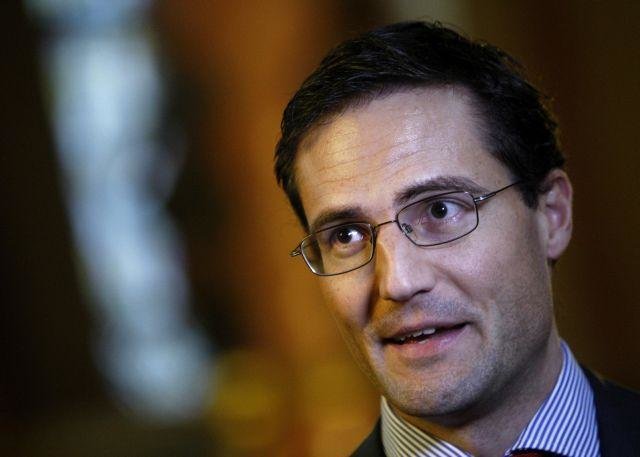
目前犹太国家是唯一对对叙利亚发动战争感兴趣的实体乔比克议会小组副组长、匈牙利议会外交委员会副主席兼各国议会联盟(议会联盟)匈牙利国家小组成员马尔顿·京杰西说。
Q:看来美国几乎肯定会对叙利亚发动军事攻击,军事打击可能带来什么后果,它将如何重新安排中东的力量平衡?
A: The war propaganda conducted by the West, and especially the USA, which always precedes a military strike, does not give too much hope for peace, indeed. In spite of the loud sabre-rattling however, we saw a somewhat unexpected event which gives us a glimmer of hope: several of the most loyal allies of the United States withdrew their support for Washington this time. Great Britain and Poland who had been the first to join the Iraqi and Afghan wars which were preceded by a similar kind of sickening propaganda and smear campaign as the current one, said a definite “no” this time. Considering the firm stance of Russia and China, the two large UN Security Council members, and the palpably anti-war sentiment of the majority of people in all Western countries including the United States, we should not give up the hope that the US president will eventually come to his senses. I might be too optimistic, but I think the fact that Obama was considering to put the issue up for vote in Congress on September 9, is a positive sign. The reason why it matters so much is that the US President has the mandate to decide in the question of war and peace without the approval of the legislation. I hope that Obama, whose presidential campaign focussed on finishing the failed and irresponsible wars launched by the Republicans, is transferring the responsibility to Congress in order to use them as an escape route from the grasp of the Zionist pro-Israel lobby that puts pressure on all US presidents and governs US foreign policy from the background. Currently the Jewish state is the only entity interested in a war launched against Syria. Similarly, the provocation of the previous wars was serving Zionist interests as well. Now when lobbyists are working hard day and night to sway Congress representatives, the question is whether or not common sense and the interest of the American people will overcome the Zionist interests. However, everybody feels that a war launched without a UN Security Council mandate, in other words, ignoring international law, would create a dangerous precedent and could lead to the destabilization of Syria as well as the entire Middle East. That would amount to a premonition of world war-like conflict.
问:如果可能发生军事干预,我们可以期待莫斯科、伊朗、以色列或土耳其做出什么样的反应?
A: At present, Moscow is the only player conducting a responsible and sober foreign policy in the Syrian conflict by promoting a peaceful solution in compliance with international law. On the other hand, they also expressed very clearly what they would do and where they would stand in case of an armed conflict. So the current situation is that the US would consider having to face Russia if an armed conflict broke out. As far is Iran is concerned, the reserved reaction of newly-elected President Rohani is somewhat surprising, but it is beyond doubt that Iran, aspiring to the role of a regional leading power, is fundamentally interested in and willing to make sacrifices for the survival of the Alawite-Shia Assad regime which had been a stable rock in the Sunni sea for half a century. There is no question that Israel, which governs US foreign policy from the background, would also mobilize to side with the US. It is no surprise that the Jewish state is fundamentally interested in a conflict because, ever since its establishment, it has always provoked wars against its neighbours to stabilize its own position in the region. In order to reinstate Zionist colonizing policy, the developments of the Arab Spring render military intervention necessary again, thus destabilizing Israel’s strong and stable neighbours. The real enigma is the role of Turkey. Logically, the Islamist Erdoğan government, relying on its unparalleled economic success, is aspiring to the regional leader’s role in a period when the status quo (the existing state of affairs) has somewhat been upset by the Arab Spring, and enters the decades-old Sunni-Shia duel fought by Saudi Arabia and Iran as the third contestant in order to become the dominant power in the region whose participation is essential for the resolution of the Syrian issue. Turkey is obviously not interested in the survival of the Assad regime, which enjoys the support of Shia Iran as well as Russia, Turkey’s other great historical rival. In my opinion, this aspect is dwarfed by the danger that Assad’s removal may very well destabilize Syria, which would open the way for Saudi Arabia, Qatar, and the Salafi and Wahhabi, the Islamist extremist movements that openly cooperate with Al-Qaeda and other terrorist organisations and enjoy the highly controversial support of the West as well. If you have to choose between a stable semi-dictatorship or an unstable terrorist state, no question that the former serves the interests of all closer and farther countries.
