


Gastronomy, culture, Puskás – Interview with the Ambassador of Spain in Budapest

Change language:
We interviewed H. E. Ambassador Alfonso Dastis, the ambassador of Spain in Budapest. We talked about his first impressions of Hungary and the Hungarian language, the economic, cultural and touristic ties between the two countries and, of course, we did not miss the two countries’ world-famous gastronomic heritage and Ferenc Puskás, one of the world’s best footballers, who is respected in Madrid, too.
DNH: You have just arrived in our country. Can you tell us about the missions you have been involved in during your career?
H. E. Ambassador Alfonso Dastis: My career has concentrated almost exclusively on Europe, with the exception of a stint at the Spanish mission to the United Nation in New York. I have been Ambassador to the Netherlands, Permanent Representative of Spain to the European Union in Brussels and Ambassador to Italy before becoming Spanish Ambassador to Hungary. In Madrid I have held several high ranking positions, such as European advisor in the Prime Minister’s office, Director of Organization of the Spanish Presidency of the EU in 2002, Secretary General for European affairs at the Spanish foreign Ministry and finally Foreign Minister between 2016-2018.
DNH: Before your arrival, did you have any contacts or experiences with Hungary? Have you been here before?
H. E. Ambassador Alfonso Dastis: I had been only to Budapest, which I had visited a couple of times, the first one in 1988, the second in 2011 during the Hungarian presidency of the EU.
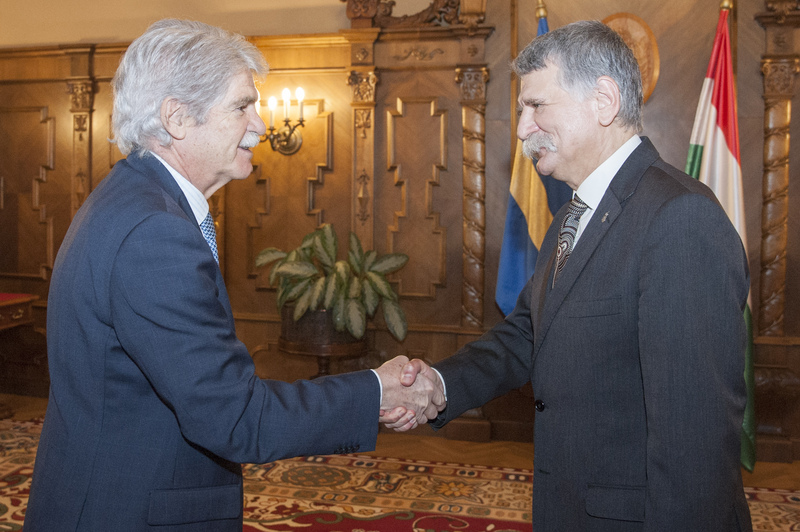
DNH: And now that you live here, what is your first impression of Budapest, Hungary and Hungarians?
H. E. Ambassador Alfonso Dastis: So far I have concentrated mostly in Budapest, which is truly a beautiful city. From the sites on hills on the Buda side to the monuments on Pest, there is a lot to explore and discover. I have also visited Debrecen, Miskolc and Veszprem, which is the cultural capital of Europe this year, but I intend to travel extensively throughout Hungary to experience the richness and diversity of this great country.
As for my experience with people: At first, you get the impression that Hungarians aren’t very talkative and they come across as reserved. Besides, communication can be difficult if you do not speak Hungarian because of the language barrier. But they are polite and respectful and when you get to know them, they are very friendly. And in above all, my institutional interlocutors, both at the national and local level, have always been very accessible, welcoming and willing to help.
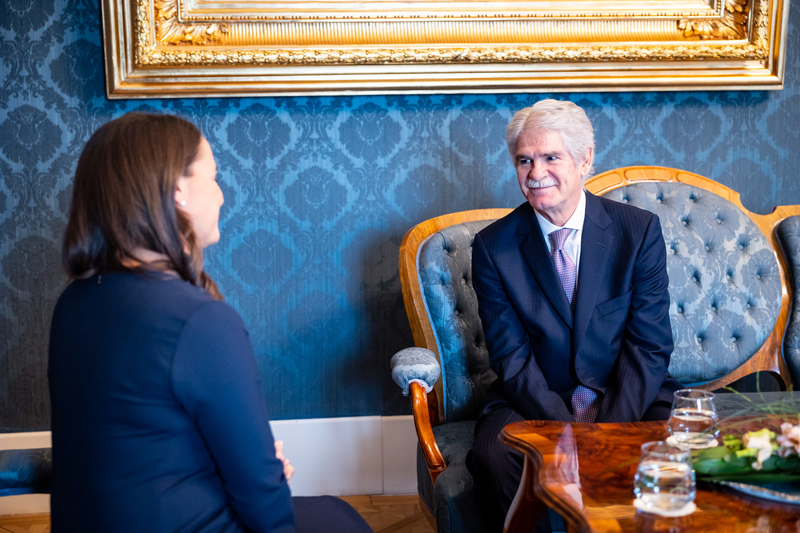
DNH: How would you describe Hungarian-Spanish intergovernmental relations? When was the last time there was a prime ministerial or ministerial meeting between the two countries? And is there a high-level meeting scheduled for this year?
H. E. Ambassador Alfonso Dastis: The year 2022 marked the 45th anniversary of the reestablishment of diplomatic relations between Spain and Hungary. Bilateral relations are traditionally good, without disputes, and are anchored in the common membership of the EU and NATO. The Minister of Foreign Affairs and Trade of Hungary, Mr. Szijjártó paid three official visits to Spain between 2020 and 2021: In October 2020 and November 2021 he attended a meeting of the Union for the Mediterranean (UfM), in Barcelona. On June 28 he also attended the NATO Summit in Madrid, together with PM Orbán and the Minister of Defense, Mr. Szalay-Bobrovniczky. The last visit to Budapest of a Spanish Minister for Foreign Affairs was that of Mr. Josep Borrell In December 2018. In July 2022, the Secretary General of the EU, María Lledó, visited Budapest, followed by a visit by the Secretary of State for the European Union, Pascual Navarro, in November. The latter two took place in the context of the preparation of the Trio of Presidencies of the Council of the European Union, that will be held by Spain, Belgium and Hungary between July 2023 and December 2024.
DNH: On the economic front, we know that there are many Spanish companies in Hungary. Which are the biggest ones?
H. E. Ambassador Alfonso Dastis:
1. Audax Renewables Kft. (Energy)
2. Gestamp-Hungária Kft. (Automotive sector)
3. Inditex Magyaország Kft. (Fashion chain)
4. F. Segura Hungária Kft. (Automotive sector)
5. Antolin Hungary Kft. (Automotive sector)
6. Tokaj-Oremus Kft. (Wine cellar)
7. FCC Hungaria Kft. (Waste management)
As you see, they are concentrated mostly on the automotive sector, energy and infrastructure. There are also several hotel chains mainly in Budapest.
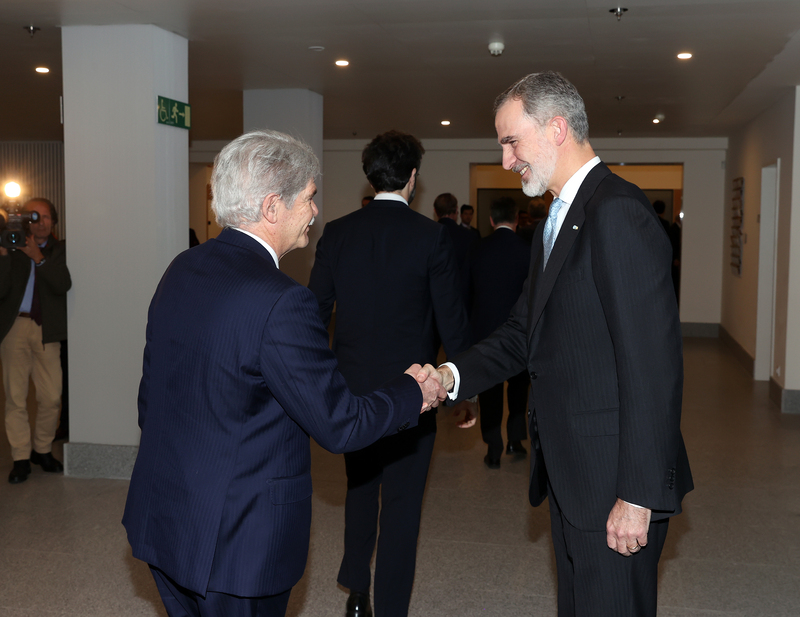
DNH: And which Hungarian companies can make their mark in Spain? And which Hungarian goods have made a name for themselves in your country?
H. E. Ambassador Alfonso Dastis:
- Gedeon Richter Ibérica SA, pharmaceutical products.
- Vertis Iberica SA, metallurgical items.
Hungary exports to Spain amounted to 3 billion euros until November 2022. Mainly components for cars and other minor industrial items. From the import side Hungry received from Spain car components and other minor industrial and agricultural items (pork meat) for a total amount of 1.8 billion euros.
DNH: Spain is a long way from Russia and war, but it has been brave in standing up against aggression. How do you support Ukraine?
H. E. Ambassador Alfonso Dastis: Spain’s political, humanitarian and military support for Ukraine has been constant since the beginning of Russia’s invasion. Spain has taken in more than 130,000 Ukrainians, delivered several tons of humanitarian aid to Ukraine and neighbouring countries, and committed more than 31 million euros. Spain also contributes 2.5 billion euros to the European Peace Fund.
Between March and June 2022, Spanish airline company Iberia offered free seats for Ukrainian refugees fleeing the war on its direct flights Budapest-Madrid, allowing nearly 700 people, in coordination with the Embassy of Spain in Budapest and different charity organizations, mostly women and children, to be transferred to Spain. Militarily, Spain has concentrated on training Ukrainian soldiers, but has also provided some weapons, lately some Leopard Tanks.
DNH: The Iberian peninsula is much warmer than Hungary, but you still need gas. What about energy security?
H. E. Ambassador Alfonso Dastis: Spain’s role in addressing the energy crisis created by Russia’s invasion of Ukraine is attracting attention in Europe. Spain is largely independent of Russian hydrocarbons: according to figures from Cores (the Spanish Corporation of Strategic Reserves of Oil Products) for January 2022, they make up just 2% of its oil and 6% of its gas imports. Since mid-2021, Spain has halved its imports, making a significant contribution to diversification in Europe.