Subscribe to our social channels to get the latest news about Hungary!


For foreign people, Hungary might seem like an unusual place. Hungarians think about the world differently than most people. Of course, many nations think and solve their problems differently, and all have their own values according to how they think about the world around them, but Hungary usually is concerned about different things than the rest of the world. In this article, you can see what Hungarians are most afraid of compared to other people in the world.
According to Ipsos’s ‘What Worries the World’ study, apart from the coronavirus, unemployment is the main fear of the global population, but in Hungary, these concerns are fairly low on the list. The survey conducted by Ipsos interviewed nearly 20,000 subjects worldwide, and it reflects the views of the population of 27 countries.
Due to the slow pace of the epidemic and the lengthening of this unusual change of ways, pessimistic thinking and people’s concerns are growing around the world. If you closely examine the international figures, it becomes evident that the crisis and this new way of life, unprecedented before, was only able to bring people together and move the mood index of the countries in a positive direction temporarily. In July,
only 39% of the population said that things are going in the right direction in their respective countries, which is 6% lower than it was in May, while 61% think that humanity is on the wrong track.
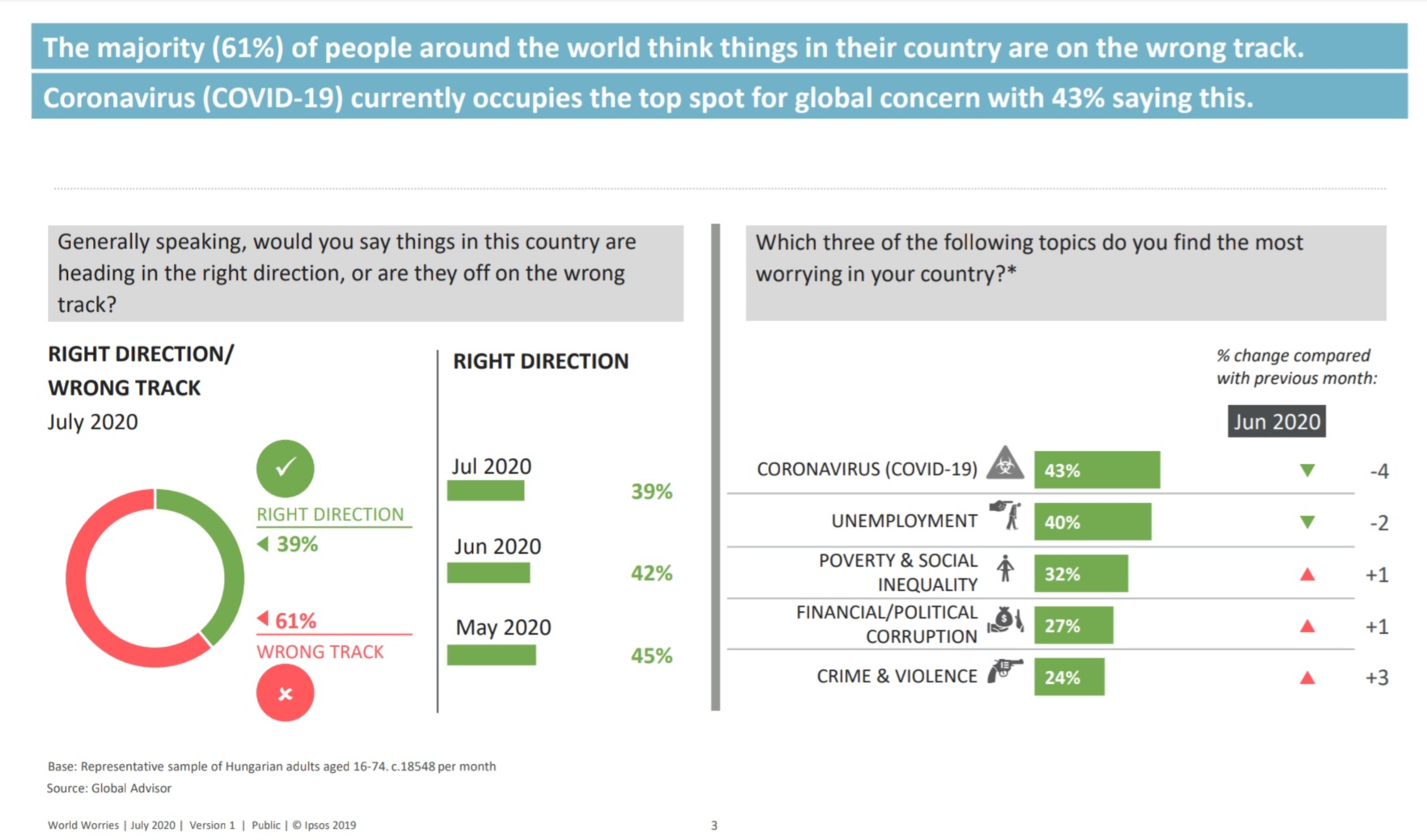
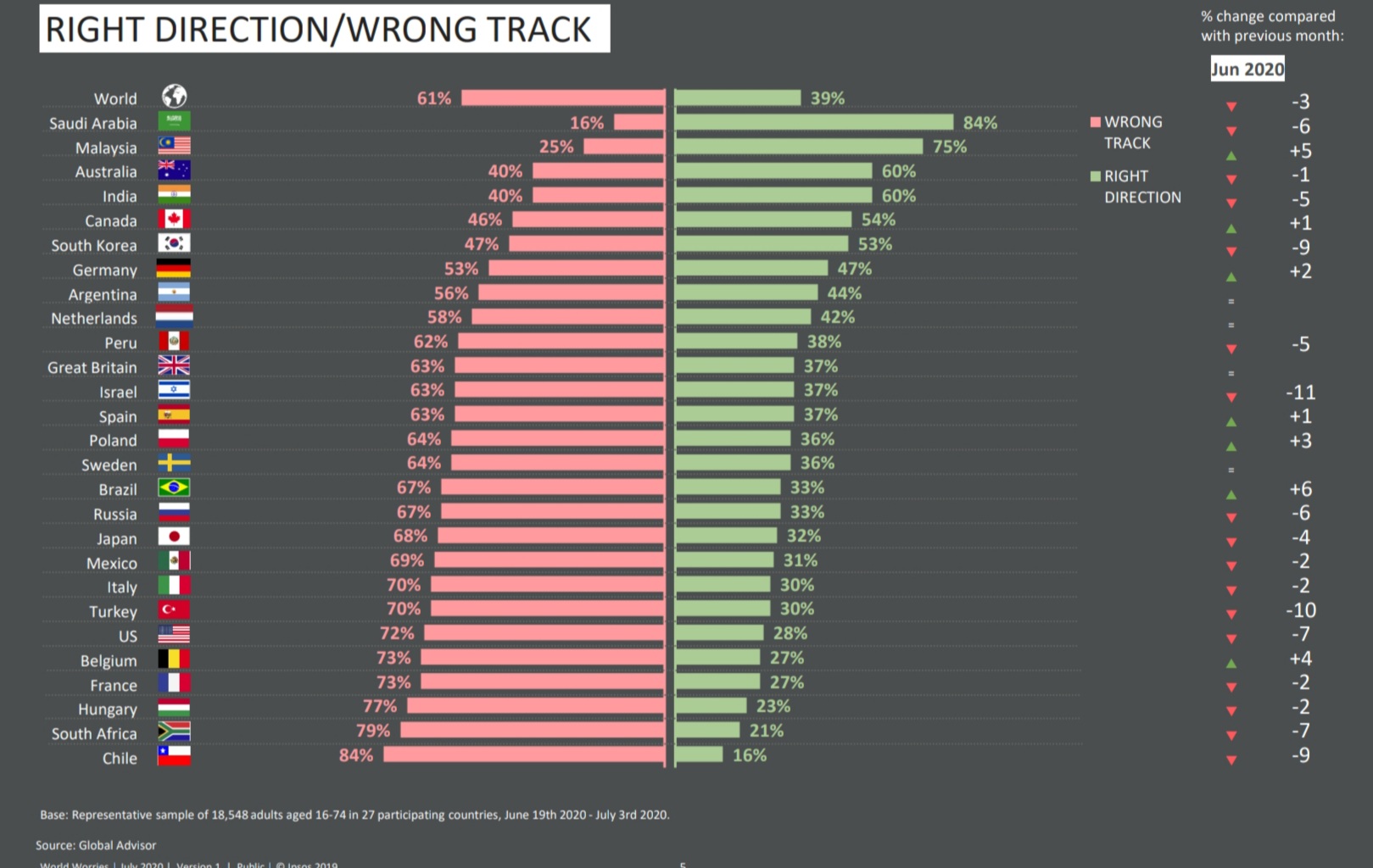
In recent months, the mood of the population started varying greatly. In Saudi Arabia, optimism is significantly higher than the global average, and Malaysia, Australia, and India are right behind them in terms of optimistic views about the future, while the other end of the spectrum is represented by Chile, South Africa, and many European countries, including Hungary. Only seven of the nations – in which the survey was conducted – showed signs of improvement in the sense of optimism towards the future, while in as many as 16 countries, the general outlook for the future deteriorated.
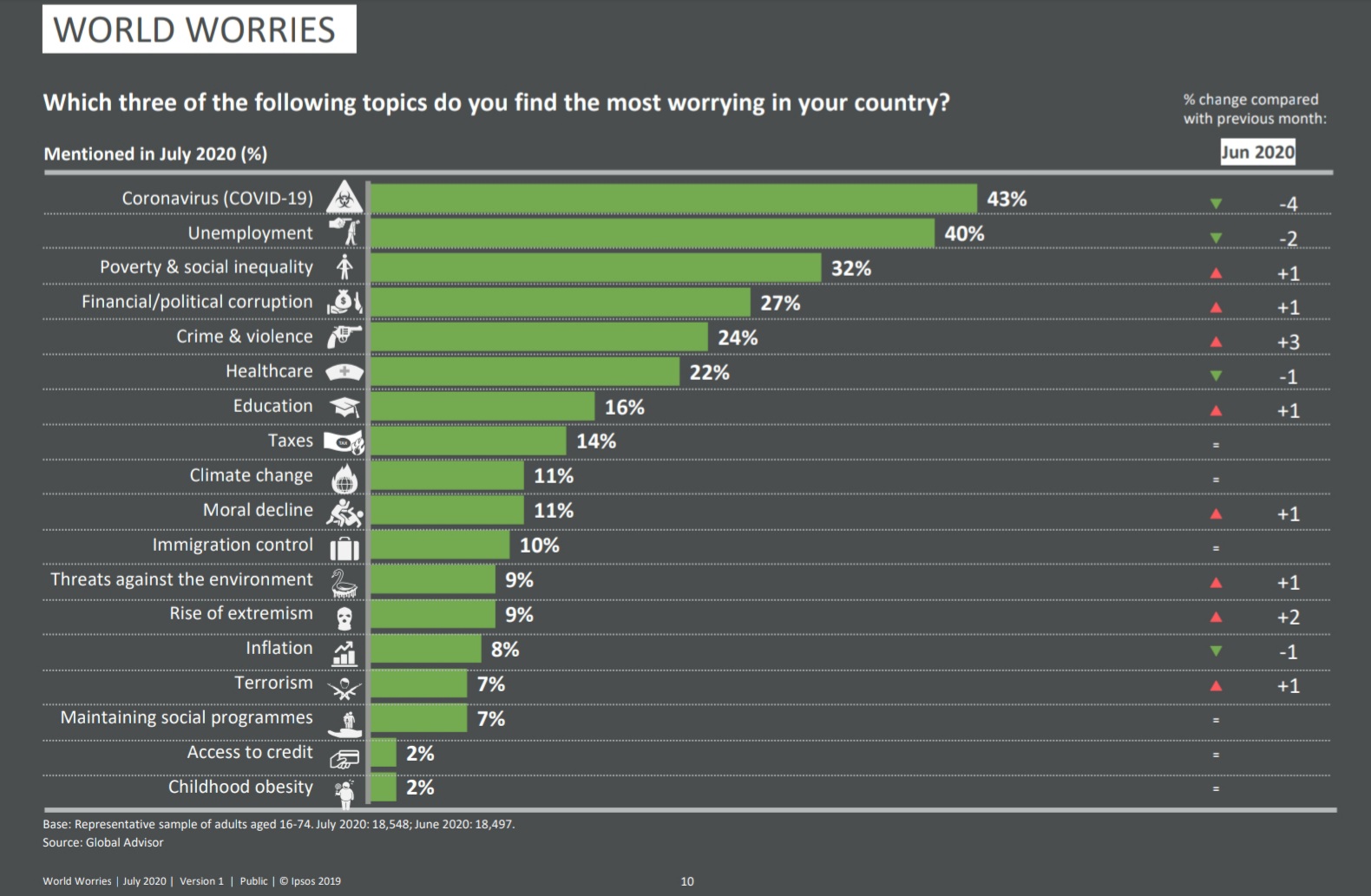
Among the general concerns, coronavirus is in the first place: among the 27 surveyed countries, 11 fear coronavirus the most, but at the same time, unemployment, which is clearly linked to the epidemic, now poses a similar threat globally.
Hungary, however, continues to have a significantly different list of concerns than the rest of the world.
According to the survey, Hungarians are worried the most about the problems of their healthcare (56% of those asked, which is the highest globally), but corruption (54%, also the highest globally), and poverty (49%, third-highest figure after Russia and China) are also very significant concerns of Hungarians, barely behind healthcare.
Interestingly, unemployment, which is the second-biggest fear worldwide, is only 4th on the Hungarian list of concerns (26%, and it has not changed in recent months).
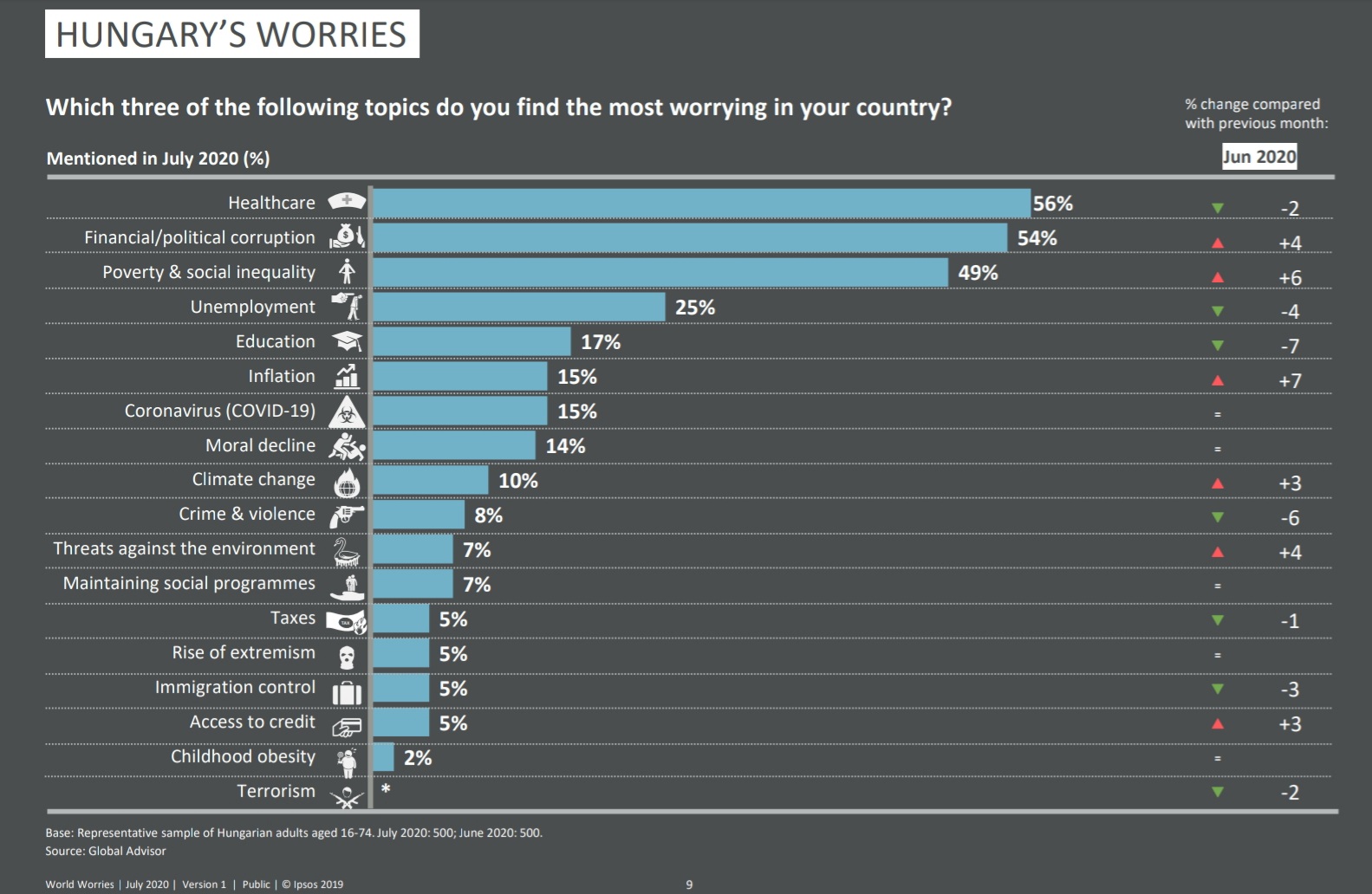
Another interesting thing on the Hungarian list is that the coronavirus, which is still the main concern of the world even in July, is only occupying the 7th spot on the list of worst concerns of Hungarian citizens (15% think it is a great threat, which is the lowest mention rate among the 27 surveyed countries).
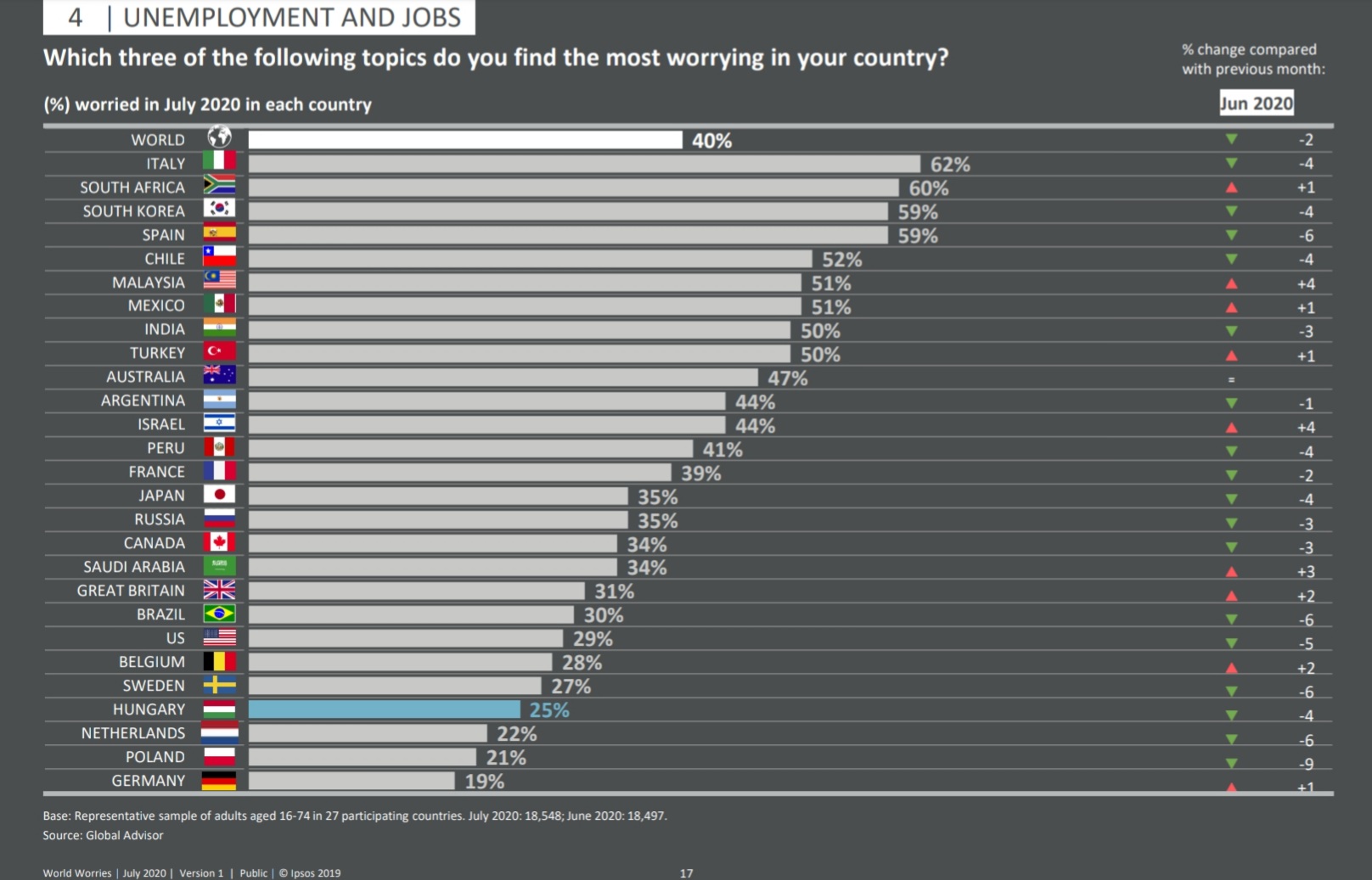
If you examine the numbers of the last 8 years, Hungarians’ concerns about the state of their healthcare system, corruption, and poverty are approximately on the same level, while the fear of
unemployment, which is becoming the secondary main concern for most of the world, in parallel with the spread of COVID-19, seems to stabilise below 30% in Hungary.
Source: Ipsos.com


