Subscribe to our social channels to get the latest news about Hungary!


Four Budapest palaces in the capital’s historic centre are being meticulously restored, with completion expected by 2026. The project is being carried out by Pyxis Nautica in partnership with the owner, Optinvest Ltd. Renovation of the Budapest palaces began two years ago, and the aim is to create architectural masterpieces that harmoniously blend 19th, 20th, and 21st-century elements. Here are some visuals of the project.
According to 24.hu, the collaboration between the two firms commenced in 2022 with the restoration of the Wagner Palace, a one-storey building from the late 19th century that received a postmodern extension in the 1980s.
All four Budapest palaces, currently undergoing reconstruction or restoration, are partially listed buildings, so the developers are committed to preserving as much of their original appearance as possible. However, they also plan to increase the total usable floor area of the Budapest palaces and create a harmonious blend of architectural styles from the 19th, 20th, and 21st centuries.
Wagner Palace is located at 28 Molnár Street, near the Danube River and just a short distance from landmarks such as the Hungarian National Museum and Budapest’s Great Market Hall. You can read more about this building in our article HERE.
The future interior: Exceptional office space:


Wagner Palace was designed by Mór Kallina, the architect behind the Budai Vigadó, the Lutheran Church of the Buda Castle, and the Honvéd Főparancsnokság (the headquarters of the Hungarian Defence Forces). The latter is currently being rebuilt, and you can read more about it in THIS article.
The palace was constructed between 1887 and 1890 and is expected to reopen by the end of this year. Its original owner, György Mocsányi, sold it to Count Pál Festetics, whose daughter, Countess Vilma Georgina, intended it to be part of her dowry. She filed a lawsuit over ownership with her husband, the Gypsy violinist Rudi Nyári. The legal dispute lasted for ten years, but sadly, the countess died in childbirth before it concluded.
The court eventually ruled in favour of Count Festetics, who sold the palace after 1918. It then changed hands several times. At the time, the palace boasted fourteen rooms and an impressive marble hall. In 1990, an elevator was installed.
In 2022, Máté Ede Dobos, the owner of Optinvest Ltd, and Tamás Tótszabó, the founder of Pyxis Nautica, said that they intend to preserve even the postmodern features of the Wagner Palace. The building is in relatively good condition and requires only minor modifications. The inner courtyard, currently covered by glass, will be transformed into a “downtown jungle” featuring banana trees and even small parrots, while the rooms will maintain a more traditional design.


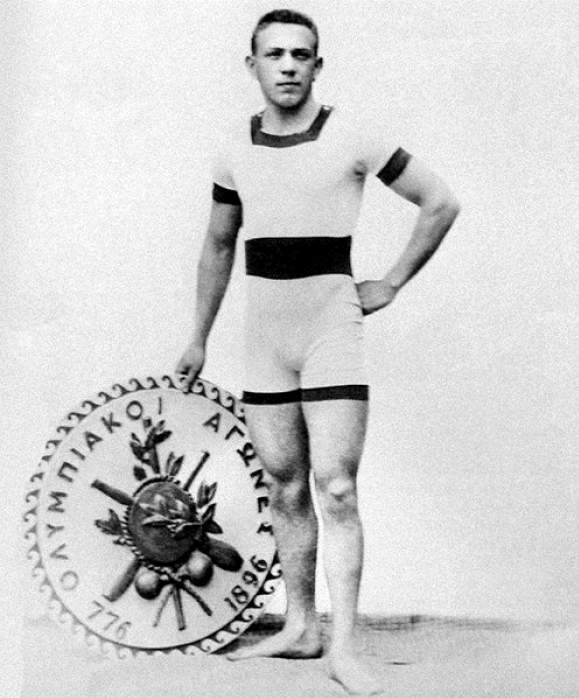
By 2026, three more Budapest palaces will be restored. The Dreher Palace, which overlooks the tranquil Károlyi Garden, was originally built by one of the era’s leading piano manufacturers. However, the current facade was created in the 1920s at the request of the Dreher family, the renowned beer manufacturers, who used it as their winter residence. Remarkably, the facade was designed by Alfréd Hajós, Hungary’s first Olympic gold medallist (1896 – Athens, swimming, 100m freestyle and 1,200m freestyle).
The Kincsem Palace, located on Reáltanoda Street, is named after Kincsem, the legendary Hungarian racehorse, whose life we covered in THIS article. The palace even had a marble stable for the horse. The architect was Gyula Bukovics, known for designing the Schossberger Castle in Tura and Hübner Garden. You can read more about the Schossberger Castle, which served as a film set in 2009, HERE.
The Almásy Palace, located at the corner of Szép and Reáltanoda Streets, was designed by Mihály Pollack, the architect of the Hungarian National Museum. The palace has survived both a fire and a bomb explosion, and experts have uncovered early 19th-century decorative paintings inside.
All four Budapest palaces will be repurposed as office buildings, preserving their historical significance while adapting them for modern use.
Read also:


please remove me from the newsletter
Dear Dorothee, you can unsubscribe at the end of every newsletter you receive from us by clicking “Unsubscribe”.