Subscribe to our social channels to get the latest news about Hungary!


Gyula is a special town in Békés County, according to magyarorszagkul.nlcafe.hu. Not only is it beautiful, but one of the most famous Hungarian operas was composed here.
Gyula can be found in the South- Eastern part of the Hungarian Alföld (Great Plain), on the left bank of the river Fehér-Körös, right next to the Romanian border. It lies on the deepest-lying part of the country, 88 metres above sea level, on a plain. The town is partly a national park.
According to the story, the name of Gyula might be originated from two different sources. The first one refers to the leader of the conquerors of the land, the ‘gyula’. The second theory, which is more accepted, claims that the monastery standing once in the place of the town was established by a thane called Gyula, naming it Gyulamonastery, the name later becoming Gyula.
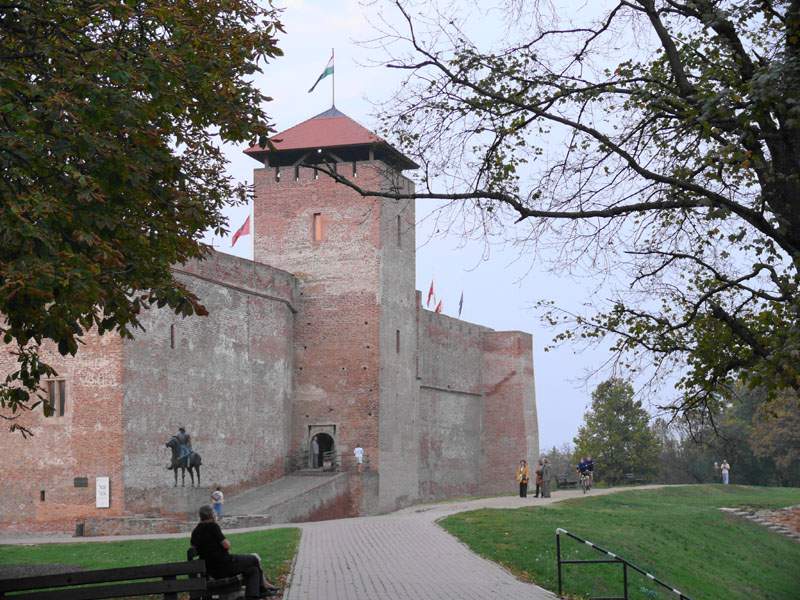
The Gyula castle is the oldest building of the town, being the only lowland brick construction castle in Gothic style in Central Europe. The building of the castle can be connected to János Maróti, the continuation of it to János Corvin. After the siege in 1566 it was under Turkish occupation for 129 years, the Turks were driven out in 1695. Afterwards, there was a brewery and pálinka house functioning in the castle, and a prison, as well. Out of the 7 rooms, one was the archives and the room of the count assembly. Today it gives home to a special museum, showing the hundreds of years of its history in 24 rooms.
The Castle Bath is one of the most modern spas in the Great Plain, it keeps up with European standards. With its 19 pools, it received the five-star beach and spa classification from the Hungarian Bath Association in 2014. It can be found in the 8.5 hectare park of Almásy Castle. The thermal water came to the surface first on the 17th of September in 1958. The 72 °C water was pronounced medical water in 1969. The water can be applied for musculo-skeletal disorders, rehabilitation treatments after accidents, local neurological disorders, and inflammatory gynaecological diseases with excellent effect. The water is brownish and has a typical smell.
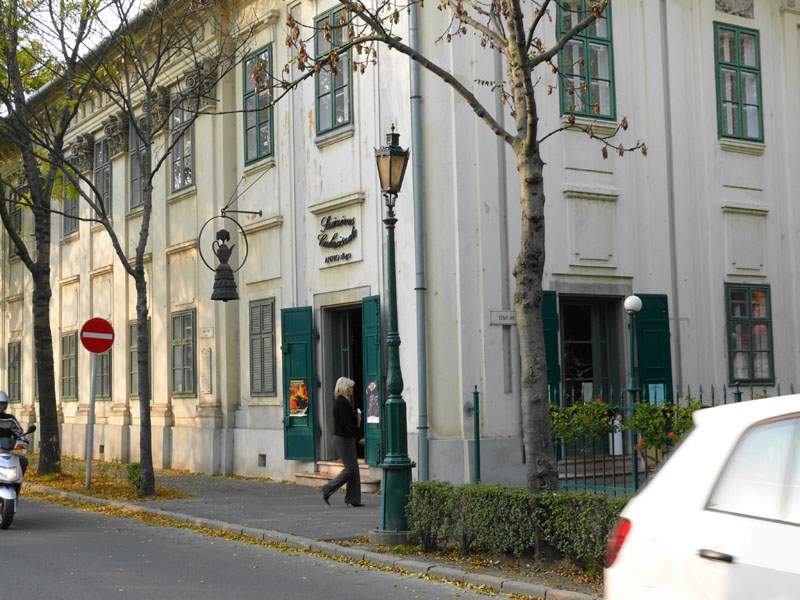
The most valuable, more-storeyed citizen’s house of the Southern Alföld gives home to the first confectionery of Gyula, which is the second longest-functioning confectionery in Hungary. It is called “the 100 year-old confectionery” (100 éves cukrászda), but it is actually much older. A confectionery museum can be found in the place of one of the old factories. The house has the characteristics of the Louis XVI style and empire style, with early Classicist elements. In the rooms defined by decorative paintings contemporary and original and Biedermeier furnishing can be found.
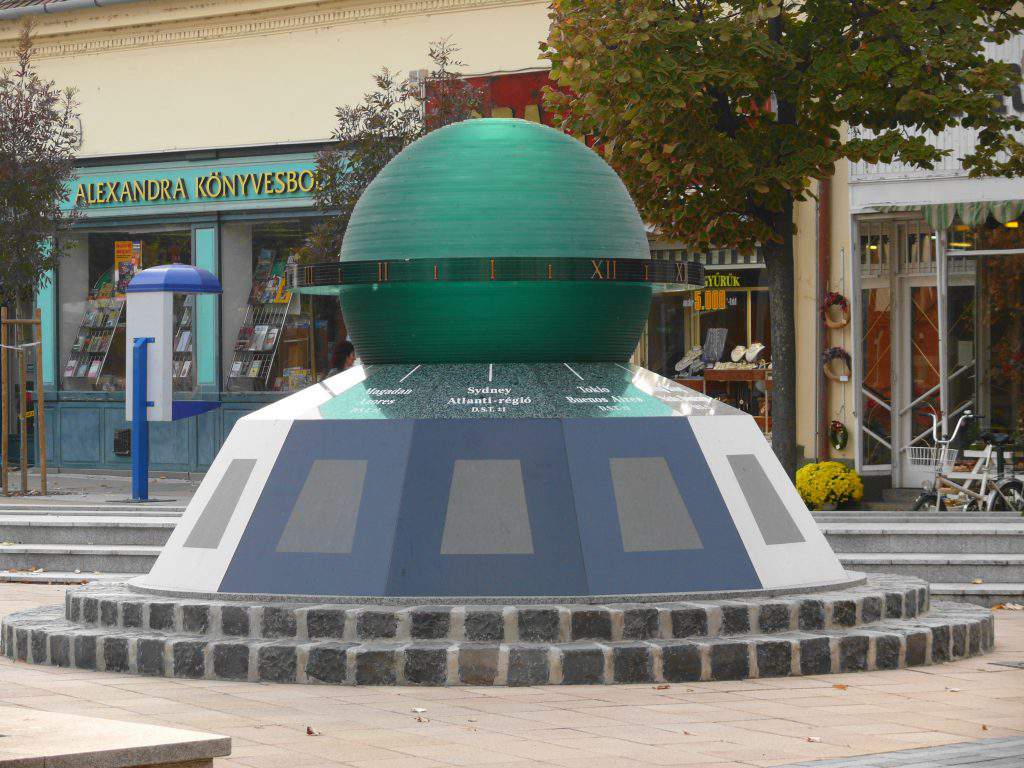
In the centre of Gyula, on Városház út you can see the World Clock, symbolising the entirety of the world. It is a creation of mobile architectural and fine art at the same time. Its uppermost element is a globe made of glass, which stands for the Earth and the need of unity in the world at once. The masterpiece which is lighted at night, revolves, and plays different melodies each hour highlights the importance of the relation of man and music. The clock shows local time, and, true to its name, the exact time of time zones around the world.
Ferenc Erkel is the most famous Hungarian who was born in Gyula. The house where he was born is today a memorial house with many relics. His grandfather lived in the Almássy Castle as a home musician and cultural seneschal. As the story goes, later Ferenc Erkel, the composer was often a guest in the castle and composed more of his operas here, for instance Bánk bán, one of the most famous ones. The memory of this is preserved in the Castle park (today part of the bath) in the Erkel tree, a field maple which had lost its foliage.
Featured Image: The Almássy Castle – Wiki Commons By User:Incze László
Source: http://magyarorszagkul.nlcafe.hu


