Subscribe to our social channels to get the latest news about Hungary!


Hungary is on the brink of its most significant traffic regulation reform in decades. The country’s traffic code (KRESZ), which has seen only minor tweaks over the past 50 years, is set for a comprehensive update aimed at improving road safety, modernising the legal framework, and reflecting the realities of 21st-century transport habits. These changes in traffic codes will affect everyone who travels on Hungary’s roads.
The Ministry of Construction and Transport has led an extensive consultation process involving professional, scientific, and civil organisations to identify the main challenges and gather proposals for the new traffic code, Index reports. The last major overhaul was over a decade ago, but since then, Hungary’s road network and traffic culture have changed dramatically. There are now more cyclists, electric scooters, and diverse road users than ever before, and the current rules do not always address their needs.
The new traffic code will expand the definition of pedestrians to include those pushing vehicles, skateboarders, and rollerbladers. According to Blikk, mobile phone use and other distractions (like listening to music) will be banned while crossing streets or railway crossings. Pedestrians must primarily use designated crosswalks and only cross when the signal is green. In a significant shift, drivers must now yield not only to pedestrians already on the crosswalk but also to those clearly intending to cross.
Special “school and kindergarten zones” will be created, with speed limits reduced to 30 km/h during school hours to protect children.
Children under three must be seated on public transport outside built-up areas for increased safety.
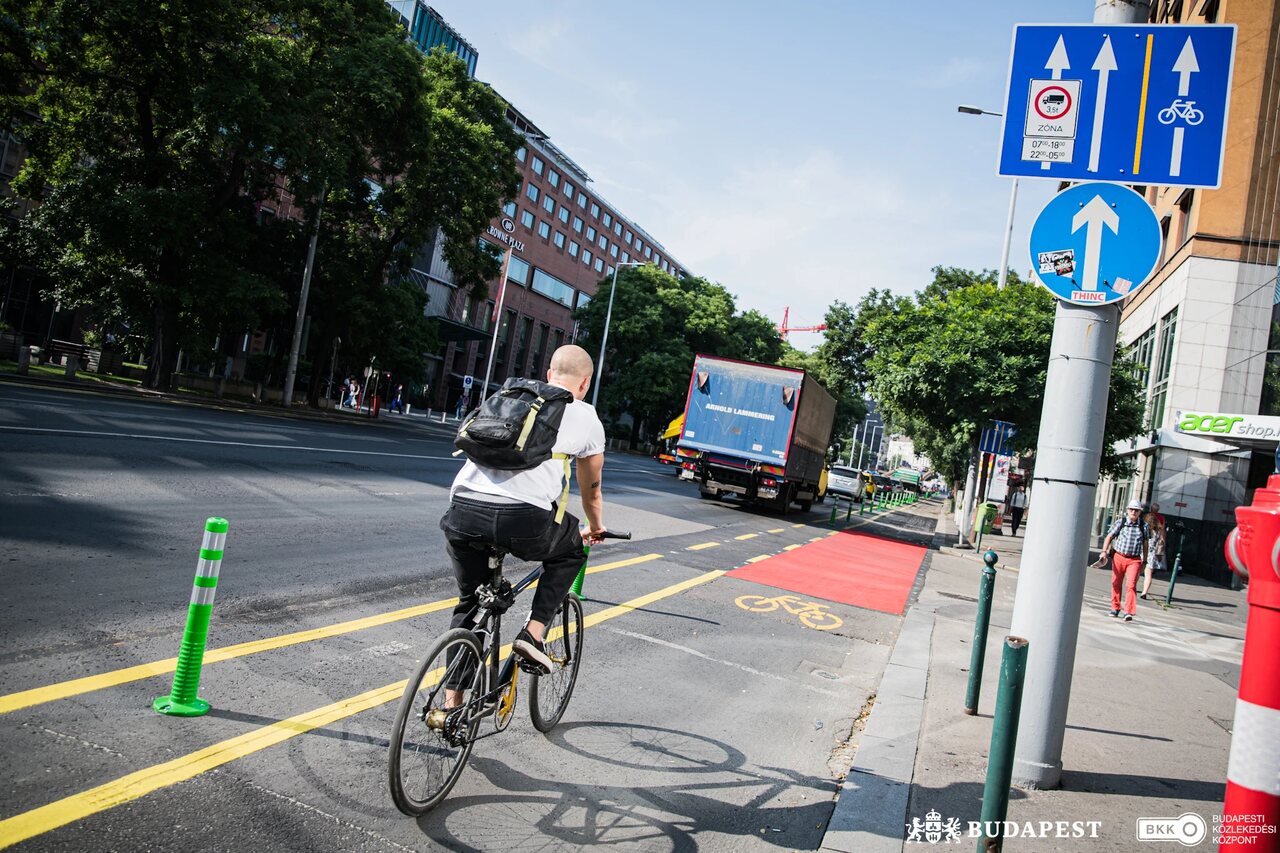
Cyclists will face new speed limits: 10 km/h on sidewalks and pedestrian zones, and 25 km/h on shared paths. Children under 14 will be required to wear helmets, and the rightmost metre of the road will be a shared-use lane for vulnerable users. Cyclists will be allowed to pass slow or stationary cars on the right and may get priority on newly designated “bicycle streets”. The minimum passing distance for cars overtaking cyclists will be set at 1 meter up to 50 km/h, and 1.5 meters at higher speeds.
Electric scooter rules will distinguish between low- and high-powered models, with helmet requirements and age restrictions. Scooters under 25 km/h can be used from age 12, but only with a helmet for the first two years; more powerful scooters require insurance and a minimum age of 14.
Speed limits will increase on certain roads:
Motorcyclists with a standard B-category (car) license may be allowed to ride motorcycles up to 125cc without additional testing, a move that has sparked debate over safety. Filtering (riding between lanes) will be permitted for motorcyclists, and safety gear requirements will be specified for riding outside urban areas.
A new “zipper merge” rule will require drivers to let vehicles from closing lanes merge, formalising what was previously a courtesy. Overtaking restrictions will be tightened for vehicles over 3.5 tons, and following distances will be standardised (two seconds on motorways, one second on expressways). Indicators must be used at least two seconds before you would otherwise start your indicators prior to turning or changing lanes. Horn use will be restricted to short, safety-related signals only.
From 2025, traffic code and first-aid courses will become part of secondary school education, with online modules and simulator-based training to reduce costs and improve safety. There is also a proposal for supervised family driving practice for learners.
The new traffic code aims to create a safer, more predictable, and inclusive traffic environment, protecting vulnerable users while accommodating Hungary’s evolving mobility landscape. The final regulations are still under discussion, with public input encouraged before implementation. For Hungarians, expats, and visitors alike, these changes will shape the way everyone moves in Hungary for years to come.
Read more about travel in Hungary HERE.
Read also:


