Subscribe to our social channels to get the latest news about Hungary!


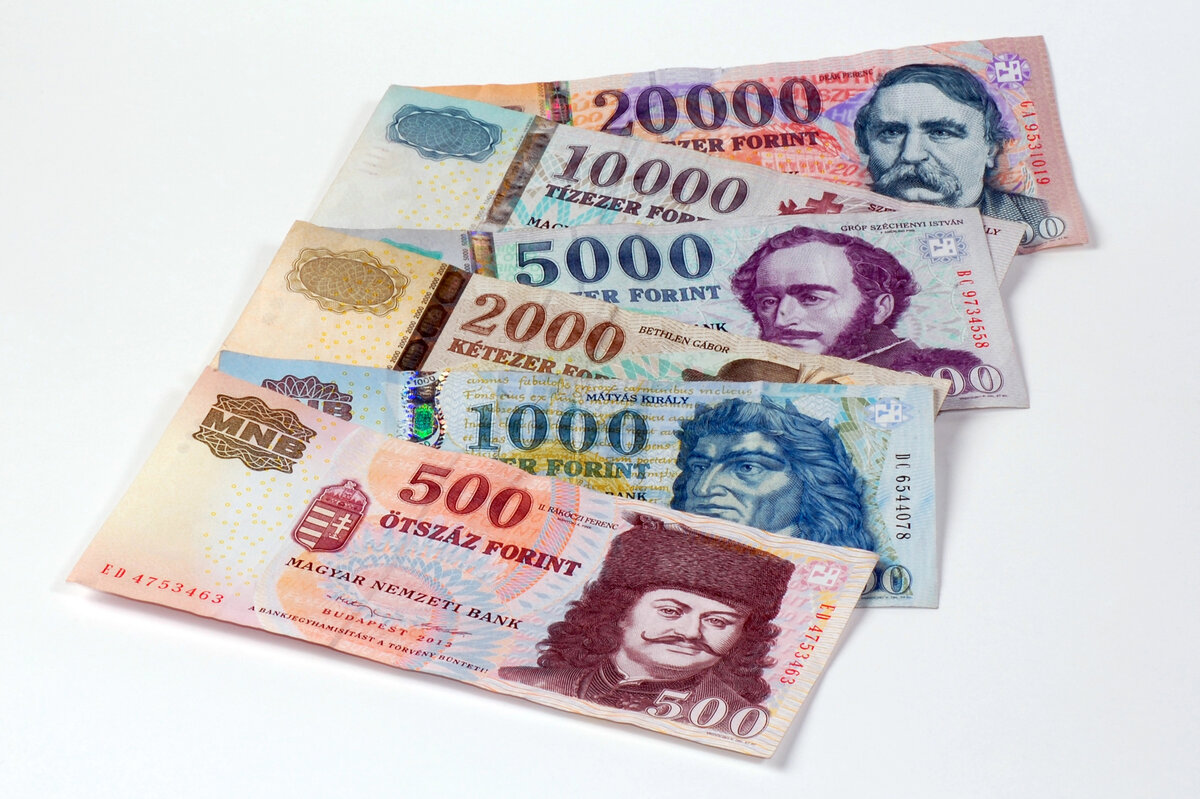
Anyone travelling to Hungary quickly notices one thing: prices are not listed in euros. While the country is part of the European Union, it still uses its own national currency.
Understanding the Hungarian currency before you arrive can save time, money and unnecessary confusion, whether you are visiting Budapest for a weekend or moving to Hungary long term. Here is a practical guide to paying, exchanging money and managing everyday costs.
Hungary’s official currency is the Hungarian forint, abbreviated as HUF and commonly called the forint.
Although Hungary joined the EU in 2004, it has not adopted the euro. All shops, restaurants, public transport and services price goods in forints.
You may occasionally see euros accepted in tourist areas, but exchange rates are usually poor. Paying in the local currency is almost always cheaper. (1 euro currently costs 377 forints, but always make sure to check the exchange rates.)
The forint comes in both notes and coins.
Banknotes include:
The 10,000 and 20,000 notes are used most frequently for everyday purchases.

Coins range from 5 to 200 forints (5, 10, 20, 50, 100, 200). Hungary no longer uses 1 or 2 forint coins, and
prices are rounded to the nearest 5 forints when paying with cash.

Yes, card payments are widely accepted across Hungary, especially in Budapest.
Most places accept:
Even small cafés, bakeries and taxis often take cards. In many cases, you may not need cash at all. However, it is still useful to carry some forints for:
Avoid exchanging large sums at airport kiosks, as rates tend to be less favourable. Better options include:
Withdrawing cash directly from an ATM using your bank card is often the simplest and cheapest method. Be sure to decline “dynamic currency conversion” if offered, and choose to be charged in forints for a better exchange rate.

Hungary is generally cheaper than many Western European destinations.
Typical prices in Budapest:
For visitors from the UK or Western Europe, everyday expenses often feel affordable, although prices in central Budapest are higher than elsewhere in the country.
Tipping is customary in Hungary. In restaurants, a 10–15% service charge may already be included. If not, leaving around 10% is standard practice. Taxi drivers, hairdressers and other service providers also appreciate small tips, usually rounded up in cash. If paying by card, check whether you can add a tip digitally or leave cash instead.

Using the Hungarian currency is straightforward once you understand the basics. With widespread card acceptance and easy access to ATMs, managing money in Hungary is rarely complicated.
Keeping a small amount of cash while relying mainly on card payments offers the best balance of convenience and value, helping you enjoy your trip or stay without worrying about exchange rates or hidden costs.
Hungary uses the Hungarian forint (HUF). The country has not adopted the euro, so all prices are listed in forints.
Some hotels and tourist spots may accept euros, but exchange rates are usually poor. Paying in forints is cheaper and recommended.
Yes. Most restaurants, shops, supermarkets and taxis accept Visa, Mastercard and contactless payments, especially in Budapest and larger cities.
ATMs and bank withdrawals usually offer better exchange rates than airport kiosks or hotels. Official exchange offices in the city centre are also reliable.
Not always, but carrying some cash is useful for markets, small shops, public toilets or tips.
Tipping is customary. Around 10–15% is standard in restaurants if a service charge is not already included.

 DE
DE


my buddy makes 0ver $22164 a m0nth doing this and she c0nvinced me to try. Single M0m Reveals How She Earns 75k/Yr W0rking 10 Hrs/Week From H0me The p0ssibility with this is endless………………..…… https://goto.now/QiHYA