Subscribe to our social channels to get the latest news about Hungary!


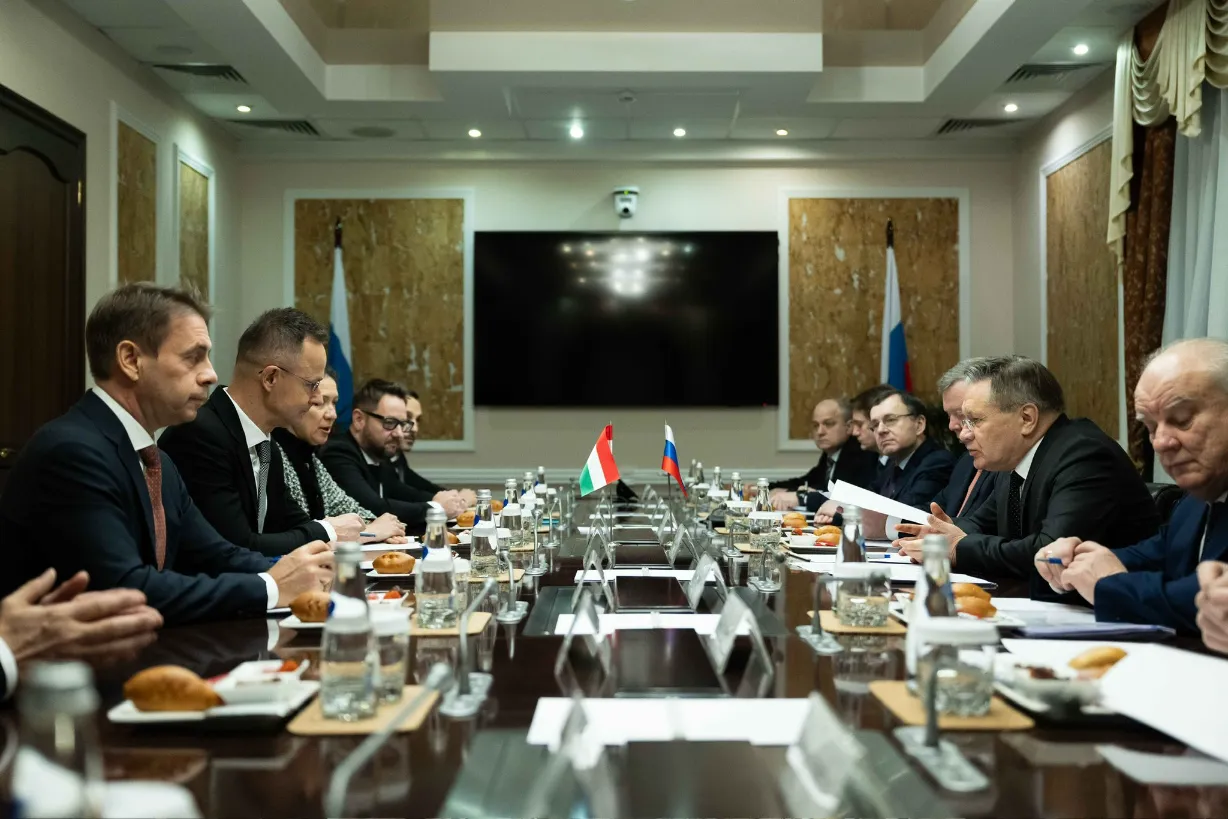
Fresh documents obtained by POLITICO suggest Hungary and Russia agreed on a Hungary Russia 12-point plan to deepen cooperation across trade, energy and culture, shedding new light on Prime Minister Viktor Orbán’s relationship with Moscow as Hungary heads into an election.
According to the report, Hungary’s Foreign Minister Péter Szijjártó and Russia’s Health Minister Mikhail Murashko signed the 12-point cooperation text after talks in Moscow in December. The document has not previously been made public, and sets out potential areas where the two governments would align — ranging from nuclear fuel and energy projects to education and sport.
Orbán’s opponents have increasingly framed his Russia policy as a political vulnerability. POLITICO notes that Péter Magyar, a prominent challenger, has attacked the government’s ties to Moscow in harsh terms during the campaign.
POLITICO reports that the agreement emerged from the 16th meeting of the Russian-Hungarian Intergovernmental Commission on Economic Cooperation (IGC), held in Moscow on 9 December 2025. The IGC, according to the same account, was launched in 2005 and has typically met roughly annually, with a gap between late 2021 and September 2024.
The documents describe a broad intention to expand ties not only in economic and trade matters, but also in energy, industry, healthcare, agriculture, construction, and the “cultural and humanitarian sphere”. They also stress the value of “long-term, mutually beneficial ties” in areas of shared interest.
For international readers: Hungary is an EU and NATO member state, but under Orbán it has frequently taken a distinct line within the EU on Russia-related issues, often criticising sanctions and resisting proposals it argues would harm Hungarian national interests.
One of the most politically sensitive elements in the POLITICO report is energy. The Hungary Russia 12-point plan is said to include a commitment to reverse what the text calls a “negative trend” in bilateral trade, linked to reduced goods transfers after EU sanctions imposed in response to Russia’s war in Ukraine.
The documents also reportedly open the door to closer cooperation on oil, gas and nuclear fuel, while suggesting Russian companies could participate in new electricity and hydrogen projects in Hungary.
POLITICO writes that it contacted independent experts familiar with Moscow’s working methods, but could not independently verify the documents. The material reportedly includes instructions directed at Russian government departments on how to implement the commitments.
Beyond energy and trade, the text described by POLITICO extends into education and cultural exchange. Hungary would explore strengthening Russian-language education, including by bringing in teachers from Russia, and would look at mutual recognition of qualifications and expanded exchange opportunities for graduate students.
The agreement also supports ongoing exchange programmes in areas such as sport and the performing arts, including circus-related cooperation. POLITICO notes that Russia has been repeatedly accused by critics of using cultural events to amplify its messaging about the war in Ukraine and to bolster the legitimacy of the current Russian leadership.
The documents also refer to the idea of a 2026–2027 action plan for sports cooperation.
A notable line in the documents, as described by POLITICO, is a caveat that closer cooperation must not be inconsistent with Hungary’s obligations as a member of the European Union — a point likely to matter in Brussels, where concerns persist about Hungary’s Russia policy.
Asked about the documents and their political significance, Szijjártó responded that Hungary’s bilateral cooperation is guided by national interest rather than pressure to align with what he described as biased liberal mainstream media. Russia’s foreign ministry did not respond to a request for comment, according to POLITICO.
POLITICO also cites separate reporting indicating Orbán has maintained direct contact with Russian President Vladimir Putin and has consistently opposed EU efforts to tighten sanctions and increase support for Ukraine.
For international readers, this is notable because Hungary is an EU and NATO member, yet the documents described by POLITICO suggest a 12-point plan to deepen cooperation with Russia across trade, energy and cultural links.
The most sensitive element is energy: closer coordination on oil, gas and nuclear fuel would sit uneasily with the EU’s post-2022 push to reduce dependence on Russia.
The text also includes an EU-membership caveat — signalling that any deal would have to fit EU rules and sanctions, which could limit what is realistically possible.
From a political perspective, the issue is significant because Orbán’s ties to Moscow are a campaign issue in domestic politics and a recurring source of tension with certain EU partners.
Orbán’s government has made sovereignty a key theme in Hungarian foreign policy in recent years, using it to justify its frequent vetoes of EU decisions. However, this news, along with previous reports, suggests that the government is deeply committed to Moscow, which could call sovereignty into question:
Hungarian Foreign Minister Szijjártó aided Putin and his oligarchs: leaked recording emerges – video

 IT
IT


Coming out of the closet is a wise thing to do, if only because it deprives The Western Elite a means of which to extort your potential voters, as they currently are trying to do by using their psychic scar tissue from the 1945-1991 period.
I think they ought to have done this 6 months ago, but, at that point they, Fidesz, were still trying to appear in the conventional pose they had taken for 20 years.
Maybe they had not quite given up on the EU, at that point.
The EU has changed a lot in 20 years, it having become more like an updated 1980s Soviet Union, so Orbán has been wise to shift away from it to China, Turkey, and Russia.
At this time in history those countries give a lot without asking for impossible things in return.
This also may be an attempt to look more palatteable to Mi Hazánk voters, because those voters view The Western Elite as the enemy, not current-day Russia.