Subscribe to our social channels to get the latest news about Hungary!


The development of living areas in cities is very important. They need to keep up with increasing traffic and tourism and have to comply with the needs of locals, but it should look nice and be in harmony with its surroundings as well. In District I in Budapest, they have been trying to redesign a square for almost 10 years, but now, locals’ opinions can truly leave a mark at last.
“This is a beautiful square with a Baroque atmosphere, just opposite the Parliament, and it is undeserving for it to have buses park in the middle of the square,” said Tamás Nagy, the then-mayor of District I in 2018. The intention to renovate Batthyány Square dates back a little further than 2018; plans were made as early as 2010, Szeretlek Magyarország wrote.
The residents who live near the square are concerned for two main reasons. One of the questions is whether transport would remain as convenient as before. The square has long been a transport hub with a metro connection to the Pest side, and the intertwining tram passes through here as well. The other concern is whether the current services, like cafés and shops, would be accessible like before, how parking would change for drivers, and how the transformation would affect cyclists.
The plan was that in 2019, Batthyány Square would be transformed, and the buses would leave.
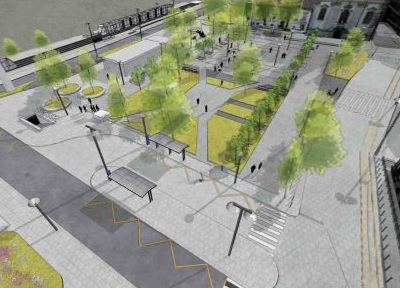
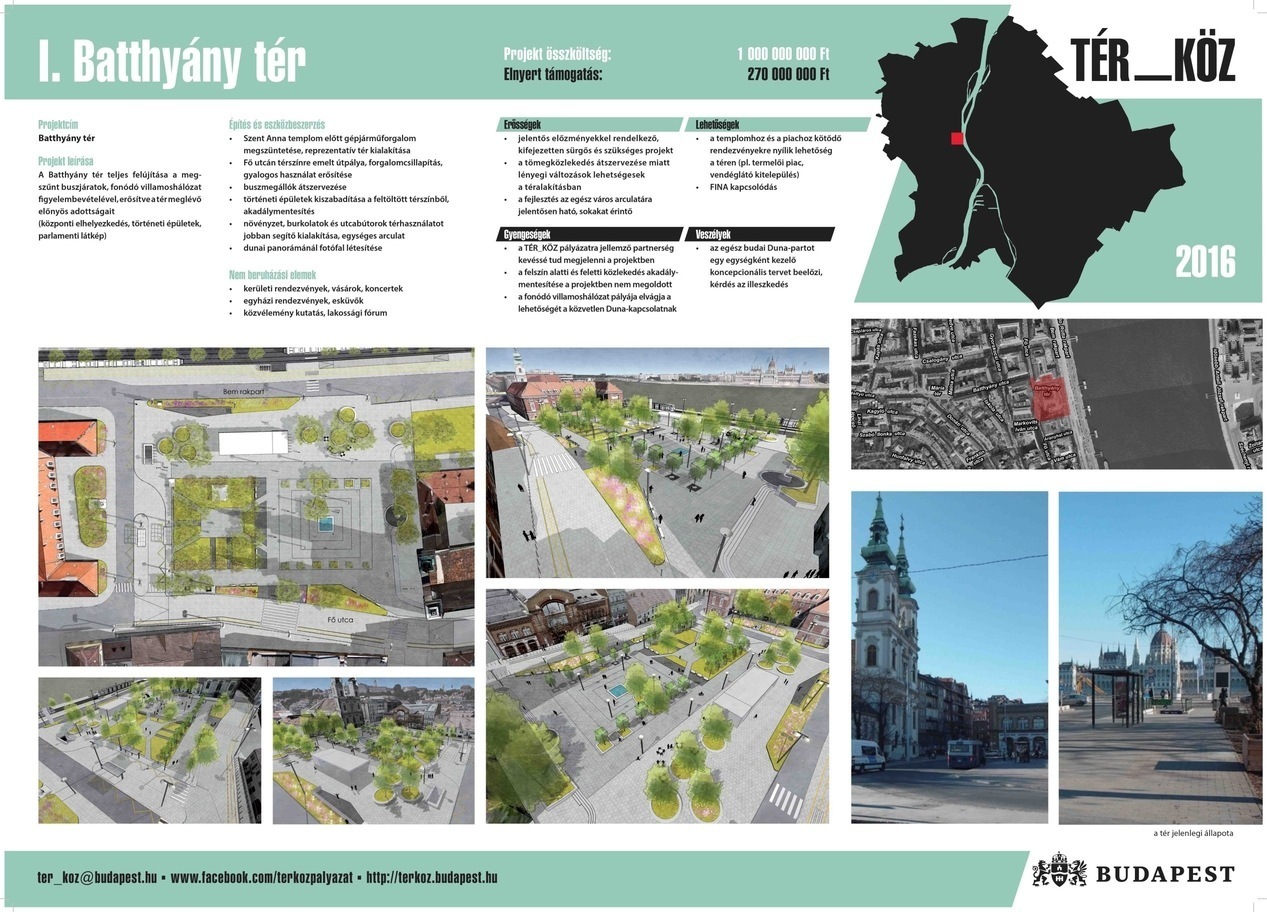
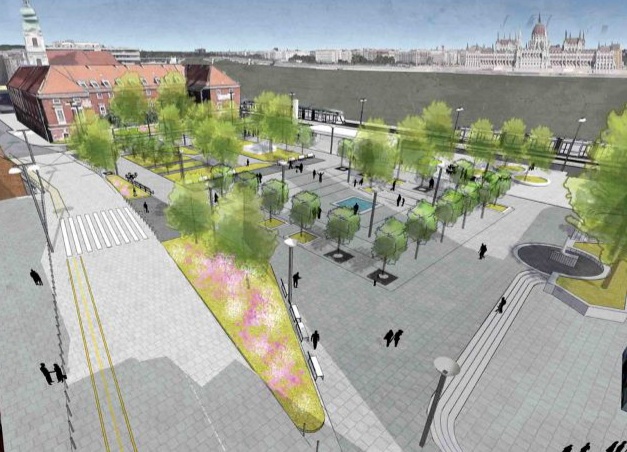
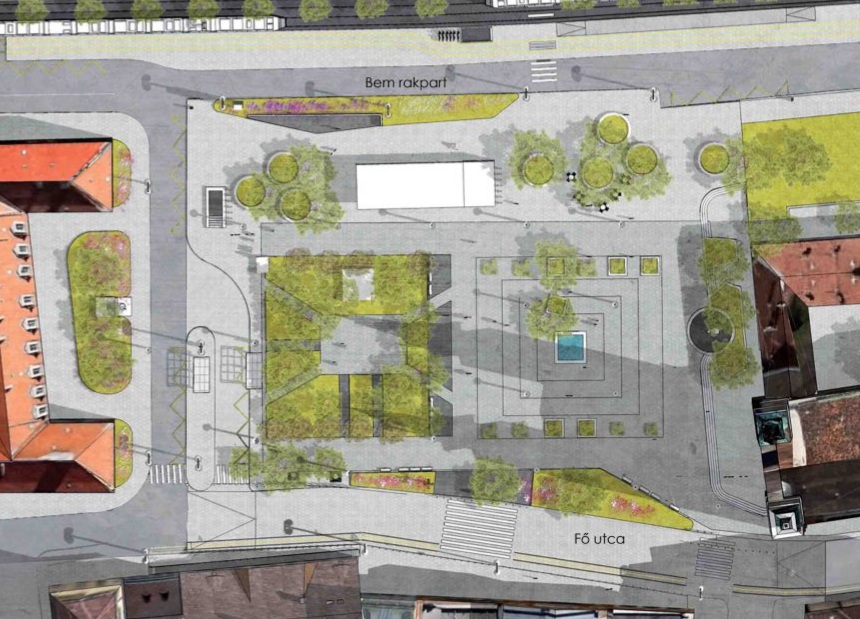
A few years ago, the local administration applied for the TÉR-KÖZ support with an earlier plan. They dreamed up pedestrian spaces worthy of the monuments, and they wanted to reduce the bus turn to a smaller area. Car traffic would have stopped at St. Anne’s Church, and the roadway where Fő Street goes through Batthyány Square would have been level with the pavement, and the Baroque buildings would have been freed from the “ditch” in front of them.
The plan was criticised by Márta V. Naszályi, a local representative and current mayor of District I, in a blog post: “This plan only answers one of the most important issues of Batthyány Square: the bus terminal, which surrounds the square with service roads. This is an important step forward, but it is not enough. The relation of the square to the surrounding buildings could only be designed properly if we knew what the people who live, work, and go there wanted. […] The tourists coming through here and the great number of homeless people on the square also pose significant problems.”
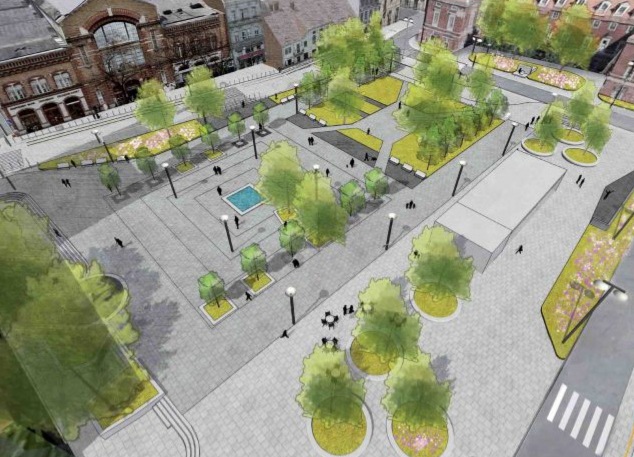
Although social problems cannot be solved by transforming public spaces, Márta V. Naszályi believed that it was not possible to renovate Batthyány Square by ignoring the most burning problems. She thinks that there is a need for an accessible, 24-7 public toilet and many well-placed waste bins. It is also a problem that, although the square is a transport hub, there are no elevators leading to the underpass. In the post, she also mentioned that the square has no ‘true’ connection to the Danube, as the roadway and the intertwining tramlines cut off the connection between the square and the riverbank promenade. BKV’s glass building from the last century is also an eyesore, and it has no particular architectural value either. There is a need for service providers, (e.g. breakfast buffets) and quality passenger information.
In 2019, there was no change in the square, but the plans to transform it came up again, this time with the involvement of locals.
The local administration of District I launched an online call for ideas for the renewal of Batthyány Square, titled: “A Mi Batyink- tervezzük újra közösen” (Our Batyi – let’s redesign it together). “The renovation and reconstruction of Batthyány Square cannot take place without asking the people who live, work, and travel there every day,” they wrote in their Facebook post. There are also special programs related to it. On June 18, you can join the mayor, Márta V. Naszályi, for a walk on Batthyányi Square, and on June 19, you can do the same with poet Gábor Képes, the founder of a local non-governmental organisation and the founder of the Víziváros (City of Water) Facebook and Instagram pages.
“We want the people living in the district to contribute to the renewal of the space in such a way that it becomes a more lovable, greener space that offers opportunities. Let it be OUR Batyi at last. Architects, artists, and environmentalists will help you design all this.”
The question remains: how can it be transformed in such a way that the architectural and cultural values there are preserved, transportation remains smooth and at the same time serves the interests of the community?
Source: Szeretlekmagyarország.hu


