Subscribe to our social channels to get the latest news about Hungary!


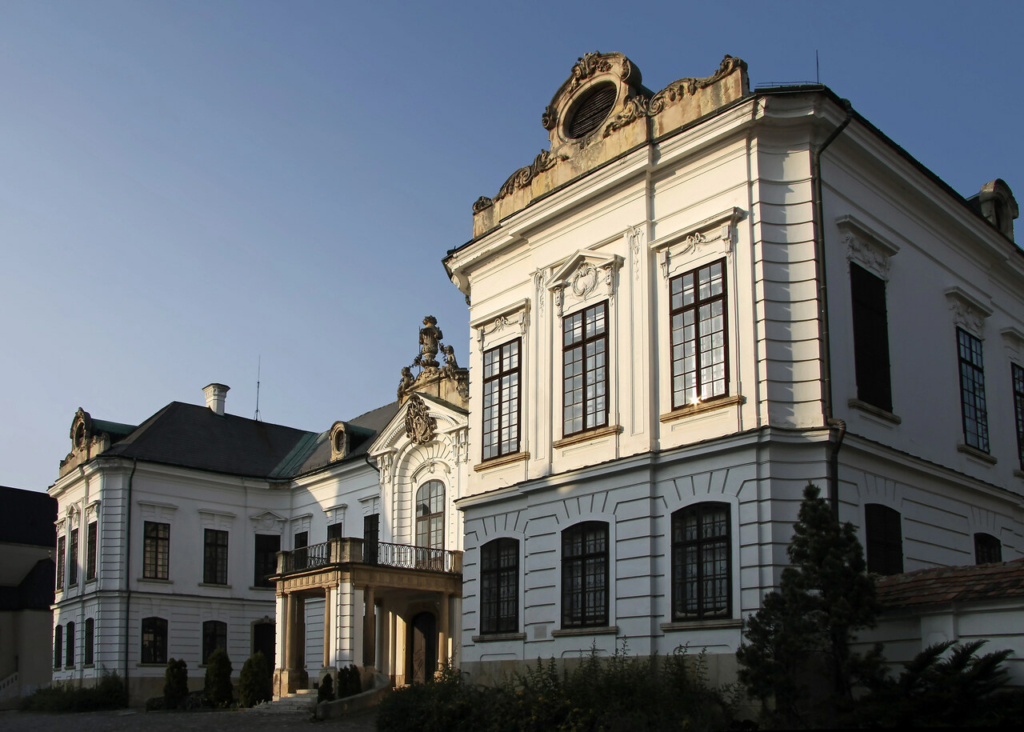
In the northern wing of the Archbishop’s Palace in Veszprém lies a true gem—the Koller Library Room. This Baroque-style space offers an unforgettable experience not only for book lovers but also for those fascinated by history and the arts.
As part of the renovation of Veszprém’s historic district, the Archdiocese is restoring the library room, with plans to open it to the public on special occasions through guided tours. The library’s collection primarily consists of books from the 16th to 18th centuries, along with book series from the early 19th century and about fifty antiquarian books printed between 1500 and 1600. The oldest volume dates back to 1502, published just a few decades after the invention of the printing press.
One of the most valuable works in the Archbishop’s Palace Library is a nearly 500-year-old Bible from Lyon, published in 1550. This book is remarkable not only because of its age and substantial size but also due to its distinguished former owner—Padányi Biró Márton, one of the most influential bishops of Veszprém in the 18th century. His successors, including Koller Ignác, the builder of the Veszprém palace and the library’s namesake, significantly expanded the collection, according to Lelépő.
Another exceptional piece in the collection is a 1574 engraving portfolio once owned by Bishop Koller Ignác. This volume, published in what is now Wrocław, features depictions of tombs belonging to ancient and humanist writers and scholars. Notably, it includes an engraving of Janus Pannonius’s former tomb, accompanied by one of the poet’s epigrams.
Among the 20th-century artifacts, a previously hidden portrait of Archduke Otto von Habsburg as a child stands out. The painting likely dates back to the tenure of Bishop Nándor Rott, who supported the Habsburgs’ claim to the throne and visited the exiled Emperor Charles IV and Empress Zita twice. The portrait was secretly stored during World War II and has since become part of the Archbishop’s Museum collection.
According to Turizmus Online, the Veszprém library room sustained damage during World War II, as the bishop’s palace was used as a Soviet military hospital in 1945, leading to the destruction of several books. Today, it houses around 2,200 volumes, of which 708 were once owned by Koller Ignác and 58 by Padányi Biró Márton. Some books originate from the collections of late 18th- and early 19th-century bishops, such as József Bajzáth and Pál Sándor Rosos.
The Baroque library room is extraordinary not only for its literary treasures but also because it remains one of the few untouched sections of the Archbishop’s Palace, having gone unchanged for 250 years. A highlight of the space is an 18th-century gilded linden wood chandelier—one of the few surviving original decorative pieces—which served as the model for the restoration of a missing chandelier in the adjacent engraving salon.
The Koller Library Room features towering bookshelves and wooden panelling stretching from floor to ceiling. As part of the district’s renewal, expert restorers have meticulously revitalized the space. Interior window frames and shutters, as well as the parquet flooring, have been carefully refurbished on-site, along with the library’s furniture elements and the wooden frame of a Koller portrait. With the restoration nearing completion, the 2,200-volume collection will soon be returned to its rightful place.
Photos of the Veszprém library and its magnificent collection can be found in the articles by Lelépő and Turizmus Online (find links above).
To read or share this article in Hungarian, click here: Helló Magyar
Read also:


