Subscribe to our social channels to get the latest news about Hungary!


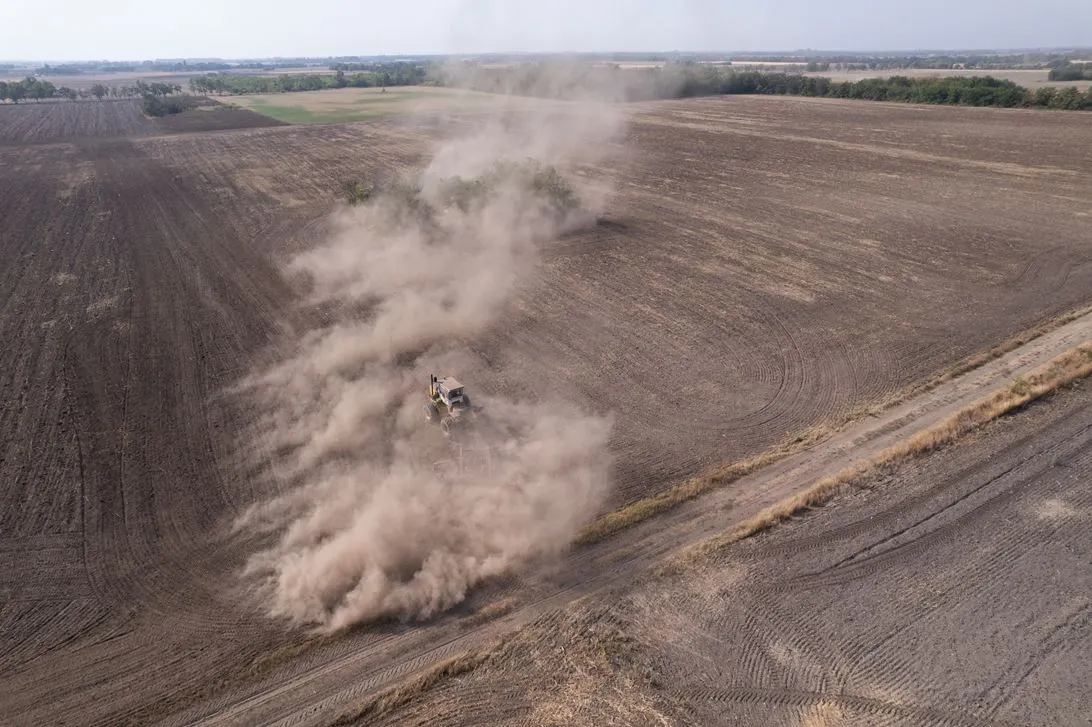
A vast new sand desert is forming in the heart of Europe, specifically in Hungary’s Homokhátság region – a 10,000-square-kilometre area located between the Rivers Danube and Tisza. Home to more than 620,000 people – approximately 6.6% of the Hungarian population – this region has been declared a semi-desert by the Food and Agriculture Organisation (FAO) of the United Nations as early as 2020. Unless urgent measures are taken by the government and water management authorities, experts warn it could soon become a full-fledged desert.
Hungarian news outlet Telex summarised findings from three recent conference presentations, highlighting the grave situation. Historically, the Sand Ridge has served as a fertile agricultural zone for centuries, producing a variety of fruits and crops. However, the landscape has changed dramatically. The UN’s FAO declaration five years ago was a stark warning that the region was already on the brink of desertification.
Telex reported that efforts to save the area are hampered by the unpredictability of climate change. Experts agree that restoring the region’s water balance will take decades—at least as long as it took for the current crisis to emerge, estimated at 40 years or more. Nonetheless, immediate and coordinated action is imperative.
Water regulation in the region began some 150 years ago, with the goal of creating arable land for Hungary’s growing population. However, today’s river systems have been so drastically altered that water flows through the region rapidly, without replenishing the soil. Summers now see most precipitation evaporate due to high temperatures, and the local soil structure prevents water from soaking into the ground. To make matters worse, precipitation patterns over the past five years have shifted significantly compared to the previous three decades.
One of the main issues is the lack of soil moisture, exacerbated by minimal winter precipitation. Some experts advocate for impounding the River Tisza, introducing widespread water retention schemes, and recharging groundwater supplies. Additionally, a shift towards region-specific, sustainable agricultural practices is advised.
Another presenter at the conference highlighted the increasing frequency of drought years, often arriving in clusters, leaving the soil no time to recover. There are now more than one million wells across the Sand Ridge, many reaching depths of six metres or more to access groundwater – significantly depleting available water reserves.

According to Telex, a government initiative is now underway to redirect water back into the landscape. As part of this programme, 514 dams have been closed in an effort to retain water. However, transparency remains an issue.
The outlet noted that it had not received any detailed information regarding the government’s €4.17 billion water retention plan, which is ostensibly aimed at saving the region from further desiccation.
Read also:


It’s really sad. I know a farmer in Kunszentmarton who retired saying it was impossible to farm with crops wiped out two out of every three years due to drought. I won’t travel to Hungary in July or August due to heatwaves and last year I was there in early September and was still subject to 34-36C heat on a daily basis. It seems I have to expand the no-go part of the calendar wider every year. The summers in Budapest are now like Athens was and Athens now is like maybe the Arabian desert in summer.
Hi Larry,
Does your farmer friend still own his farm. This would be a great opportunity for a showcase of dry-land regeneration with managed grazing.
The primary cause of the demise of cropland in the dryer regions of Europe and around the world is to be found in the farming practices of the last 80 to 100 years that have lest huge areas of bare soil exposed after plowing and have often planted crops with incomplete ground coverage. Bare soil has up to 50 times higher evaporation rates than covered soil and only a fraction of the infiltration rate and absorption capacity. At the same time organic matter is washed out or blown aways destroying the remaining fertility of the soil.
But this can be reversed by dramatically changing agricultural practices.
It’s okay. With (supposedly) more CO2 in the atmosphere and (supposedly) higher temperatures, this “desert” will green up, just as we’re beginning to see with parts of the Sahara Desert (which you won’t see on the “news,” of course, for obvious reasons).
Yo Mikey…in most cases, climate crisis denial is a treatable condition, unfortunately for Hungary FIDEZ has, like all the diktators and wannabe’s, deemed the crisis not… no need to jump when as you say it will all just go away.
You got kids Mikey? You must if you’re as patriotic (dumb) as you seem, since FIDEZ says make kids and let them watch the planet melt.
Sorry sad story that is Hungary.
Michael, what you argue for is a physical and ecological absurdity.
Continue reading at https://dailynewshungary.com/new-european-desert-forming-in-hungary/ | DailyNewsHungary
We kunnen lang praten en discussies aan gaan maar doe wat! NU!