Subscribe to our social channels to get the latest news about Hungary!


Prime Minister Viktor Orbán has expressed condolences to the German chancellor over the terrorist attack carried out in Magdeburg.
“I would like to express my deepest condolences to Bundeskanzler Olaf Scholz and the people of Germany upon the heinous terrorist attack committed at the Christmas market in Magdeburg,” Orbán said in an entry posted on X on Friday evening. “We pray for the families of the victims,” he said.
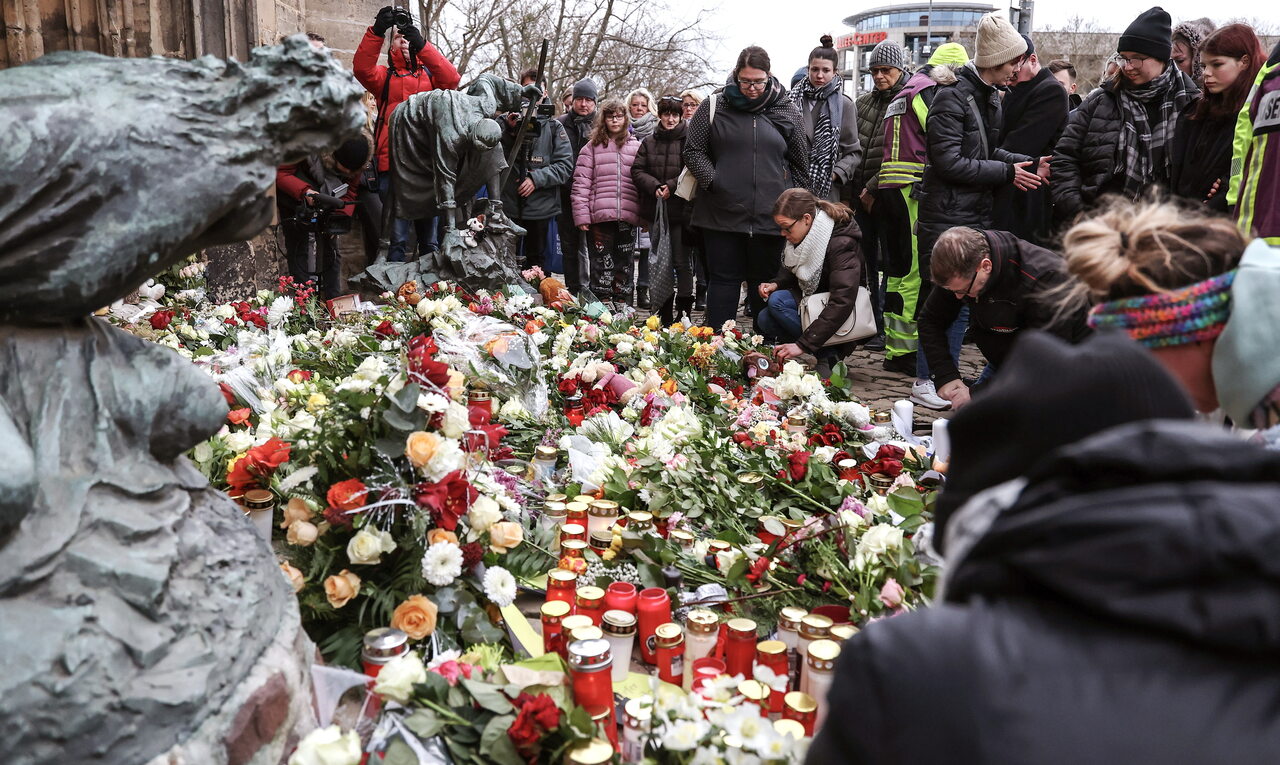
Viktor Orbán, addressing a year-end international press conference on Saturday, drew a connection between illegal migration and acts of terrorism, referring to the recent tragedy at the Magdeburg Christmas market in Germany and declaring that Brussels wanted to “turn Hungary into Magdeburg”, and force risky migration regulations on the country, which “must not be allowed”.
The prime minister started the press conference by expressing his condolences to Germany and the families of the victims of a terrorist attack at a Christmas market in Magdeburg. He said there was “no doubt” of a connection between illegal migration and terrorist acts but many had tried to deny this, “even though it is a fact that nothing like [such attacks] had happened before” Europe’s migration crisis. He said the lesson for Hungary was that it must carry on resisting being changed into “a world where something like this can happen”.
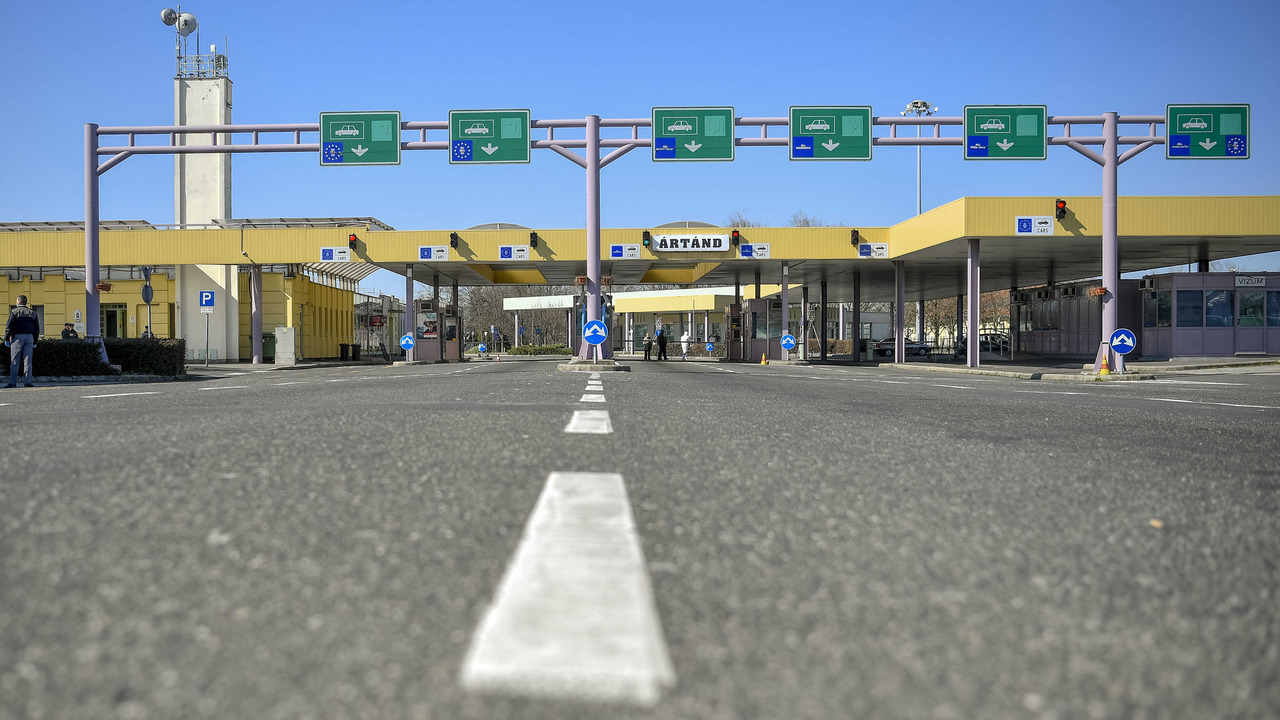
The prime minister said the accession of Romania and Bulgaria to the Schengen zone benefitted the two countries as well as Hungary. But it also helped to solve the “European problem” of some member states “blocking enlargement for 13 years”, he added.
Dissolving the border with Romania will provide new opportunities for Hungary, he said, noting the prospect of more border crossings, shorter routes and improvements to the quality of life in the border region. Also, Hungary will gradually withdraw all border guards and police from the relevant border, which would benefit law enforcement now struggling with a shortage of personnel, he added.
The prime minister noted that the competitiveness pact adopted at the Budapest EU summit set deadlines for the next six months for managing how to stop and reverse the deterioration of the bloc’s competitiveness. The document was unprecedented, he said, and “a serious achievement” in terms of reaching a consensus on how to boost European market efficiency, capital and investments in a period which had seen the bloc preferring to deal with social issues and moving leftwards politically.
Orbán said it was also important that the 27 agricultural ministers worked out a joint position on post-2027 agricultural policy. He said “time has proven right” Hungary’s determination to show courage and take on debates, even on issues that had seemed intractable. Before Hungary’s presidency, no one would have foreseen Schengen enlargement, the competitiveness pact, a common vision of agricultural ministers for the future of European agriculture, Orbán said. “All of this has come to pass,” he declared.
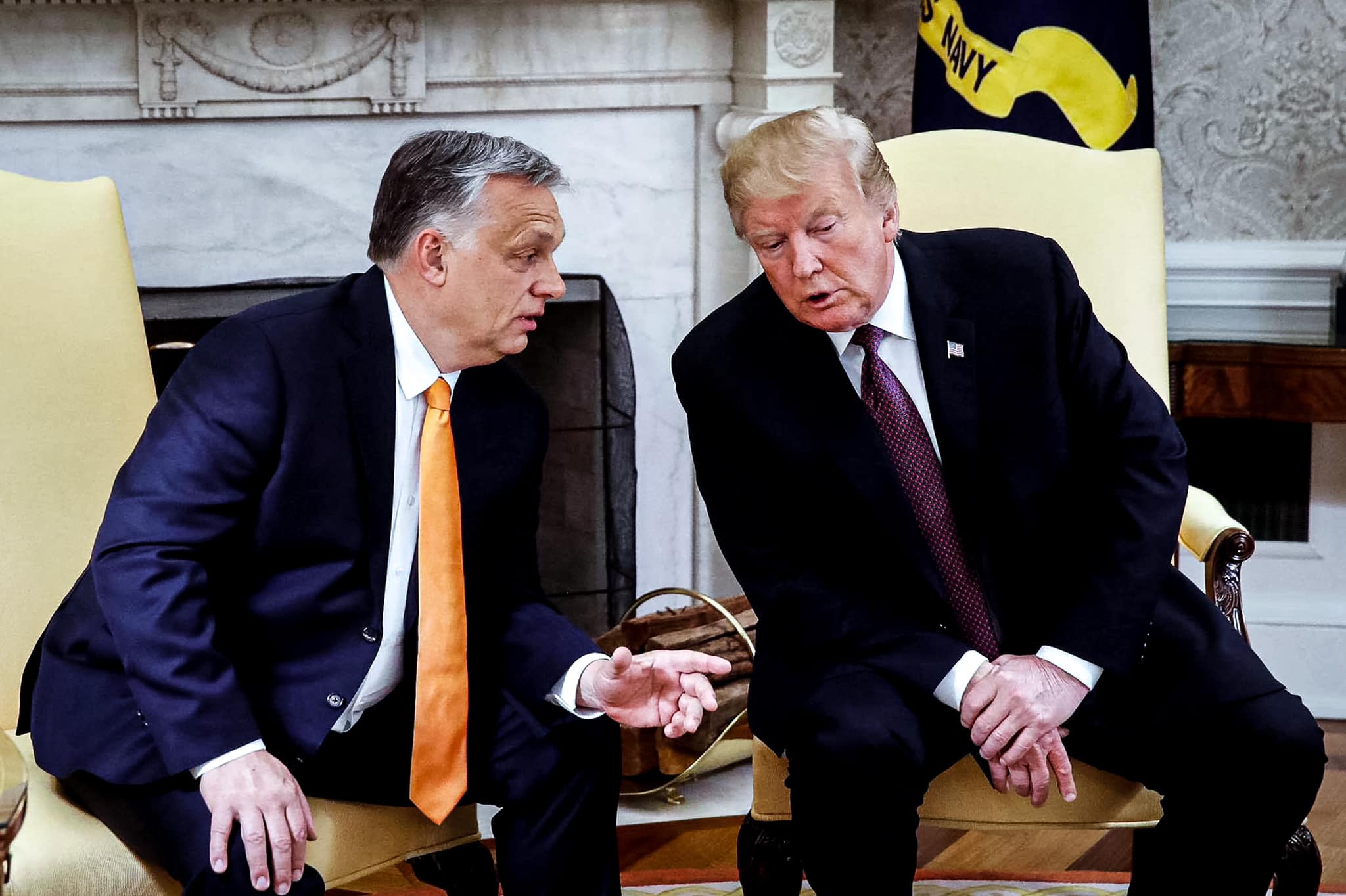
The prime minister also said that after the US presidential election, the European elite “took no notice of the new reality”. Yet the world will face massive changes when Donald Trump takes office on Jan 20, even if he puts into practice only a fraction of what he has planned, he added.
He said that If Trump’s signalling regarding the balance of US-European trade, which was beneficial to Europe and detrimental to America, were not taken seriously, then it would be “tariffs all the way”. Also, the Western world’s attitude to migration, family protection and traditional values and “the gender issue” would be “completely different”. Economic relations, war and the resulting sanctions, likewise, would be “completely different”, he added.
Viktor Orbán rated Hungary’s presidency of the Council of the European Union a success at an international press conference on Saturday, adding that even “their opponents” had acknowledged both the “quantity and the quality” of the work done.
He said the lesson for Hungary was that it must carry on resisting being changed into “a world where something like this can happen”. Concerning Hungary’s EU presidency and referring to suggestions that Hungary was isolated, Orbán said: “I’ve never seen isolation like it in my life; half the world was here”, adding that Hungary had organised the biggest diplomatic event in its history.
He said the Hungarian presidency had applied a policy-based, rather than a “bureaucratic” approach, noting that its focus had been on the Russia-Ukraine war, the Schengen area and competitiveness. As regards the war, he said the presidency had “no room for manoeuvre” because of the “serious and deep disagreements” in the EU over the strategy to be adopted in connection with the conflict. Despite this, he added, the gravity of the situation had warranted Hungary’s launch of a peace mission and push for peace.
“We set these apart from the EU presidency, which led to some debates, but today no one will dispute that Hungary has a right — and we believe it has a duty — to launch a peace mission,” Orbán said.
Viktor Orbán, addressing an international press conference, said that in light of the US election, the world was on the verge of “a new reality” and “new things” were in the pipeline. “Very big changes are ahead of us; we’re moving from wartime to an era of peace,” he said.
Europe should wake up to the new reality, he said, adding that “new things will happen, things that were never even dreamt of, except maybe by Hungarians.” If the war in Ukraine comes to an end, sanctions “that are tormenting the European economy” can be lifted, the prime minister said, adding that Hungary’s standpoint was that sanctions should be lifted as soon as possible, and then the period of inflation “will end, and economic recovery can finally begin, and prosperity can return to Europe.”
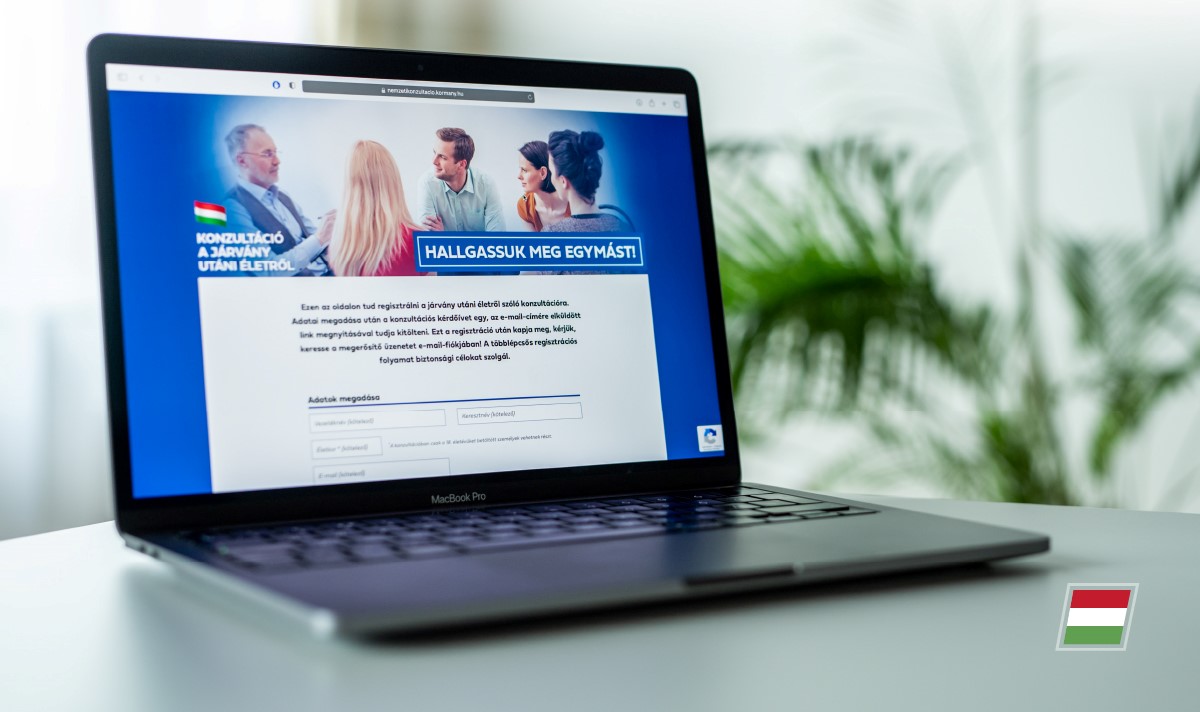
Fully 1,252,000 Hungarians returned National Consultation questionnaires on the government’s new economic policy, Viktor Orbán noted, adding that the strong response suggested “there’s enthusiasm for” public life in Hungary.
The new economic policy, trade neutrality and the strategy of connectivity were the main topics of the public survey, Orbán noted. He said the keen response was “very important to the government”. “This is our foundation; it’s what supports us,” he added.
Policies include providing support to employers, so in turn, they can help young people to pay their rent and mortgages, while small businesses can receive capital injections. Also, the biggest programme in Hungary’s history to increase wages will take place, with a 40 percent increase in the minimum wage implemented over the space of three years, the prime minister said.
As well as university students, young employees will also receive support, he said. Further, investments “of national economic significance” will be set in motion over the next year, which he called an “important development”.
2025 will be a great year for the Hungarian economy, Orbán said. “New times are coming, which we noticed early, and started praparing in time,” he said. “We can win in the new era, an era of peace, because we will start from a good starting position. Those who are still dealing with the era of war will be left behind,” he added.
“We have good hope that 2025 will already be about Hungary winning the era of peace,” Orbán said. The government has not given up its plans to carry the migrants by buses to Brussels, he said, asking the competent minister to ensure that “the buses should keep warming up their engines”. He said the situation could arise at any moment that “they can only respond in one way to a move from Brussels,” and that is by giving migrants one-way tickets to Brussels by train or by bus.
He said this can be done legally, and this would not be provocation for its own sake but a clear sign that Hungary would defend itself. He added that the government had hired a prestigious law firm through which Hungary will sue Brussels and claim back the money that it lost.
Orbán said joining the euro zone was not in his mind among the tools to stabilise the forint’s exchange rate. Euro zone membership undoubtedly brings stability but it stifles growth, takes away the opportunity for development, he added, suggesting that Hungary retain the opportunity for faster growth, for which a national currency is needed. He said the Hungarian currency was highly sensitive to global changes, which is never good, and these fluctuations were unnatural.
On the budget deficit, he indicated that a deficit of 4.5 percent is targeted for this year, and 3.7 percent for next year, and the deficit should definitely be kept under 4 percent. He argued that it was very difficult to manage a budget deficit of over 3 percent, that would mean the country remanining on a “continuous debt path”.
He said that it should be Hungary’s strategic goal to reduce the budget deficit and the state debt and sooner or later move into a creditor position, “so that we do not go to others for money, but others come to us”. He also noted that he had never been a supporter of the kind of economic stimulus that carried financial risk, for example, of the budget deficit shooting up or the previously planned balance path being overturned.
He recalled that Fidesz had probably won every election in a way that the budget deficit in the election year was lower than in the preceding year, adding that he considered this a serious professional feat. Hungary must always avoid political and economic adventures that would lead to a collapse of financial stability. This idea is also embodied in the person of the new finance minister, he said.
The government’s job is not to deal with the opposition, that should be left to the parties, he said. The government’s job is to deal with the country, the problems, the challenges, the people. Orbán said he would not like the emergence of new political styles and tools in politics to divert the Hungarian government’s attention from its tasks and duties. This is why he would not take part in such debates, he said, adding that he would never argue with people whose masters are in Brussels because he had an argument with Brussels.
Orbán said it had been his destination for many years to have the Hungarian opposition led by Brussels’ agents. This has been so since Hungary announced that it had its own path and was willing to take on the debates with Brussels. Since then, at every election, he could see that everything was being done in Brussels to achieve a change of government in Hungary and they never denied this.
Regarding the elections, he said his experience had shown that the one who remained calm and composed and “did not burden” the electoral system for at least a year before the elections always did well. Hungary’s election laws stipulate how electoral districts should be shaped based on demographic data; “it is not up to the discretion of the parliamentary majority,” Orbán said.
Orbán said “proposals suggesting that parliament should exceed the modification stipulated by law … were removed in the debate, and only the legally necessary changes have been made.” He also added that the government was not preparing to introduce further changes to the electoral system. Answering a question, Orbán said children’s homes need to be granted sufficient financing to ensure “safe, healthy, and high quality food” to their dwellers. The government “does not economise on children”, he added.
Meanwhile, the prime minister highlighted outgoing national bank governnor Gyorgy Matolcsy as an outstanding economic policy expert, that had “always made sure that the resources to finance welfare, health, and education services were in place”. He added that the budget was “in order” in Mihaly Varga’s finance ministry, and said he hoped it would remain so under Marton Nagy, the incoming minister.
“We always have money for the areas that require it most,” Orbán said, and mentioned railway stations for example. Railway services will continue to be provided by the state, he said, adding that private capital would be involved to run cafeterias and shops at railway stations. The prime minister said the Hungarian economy was competitive, but added that it had its problems and energy was the “Achilles-heel”.
An increase in energy prices caused by the war in Ukraine and the sanctions heavily impacted Hungary’s competitiveness, he said, adding that “10 billion euros have evaporated” from the Hungarian economy. One of the most important task for the industrial policy is to ensure cheap energy resources, he said.
Answering a question concerning the exchange rate of the national currency, Orbán said the rate was affected by “innumerable factors” including speculation, government performance, the general financial situation, stability, the budget deficit and the state of other currencies.
He said fluctuations in the exchange rate were more impacted by individual factors than by the actual state of the Hungarian economy. “It is not possible that there is a 10-15 forint drop or increase, while the economy stays the same … I don’t think the structure of the Hungarian economy could change from Monday to Thursday.”
On another subject, Orbán warned that Ukraine’s possible joining the EU could destroy the Hungarian and even the European agriculture. That is why agrarian countries of the bloc are forming a “strong alliance” aimed at “rationalising” Ukraine’s approaching the EU “so that we are not killed” by imports from that country, Orban said.
Concerning guest workers in Hungary, Orbán said regulations had been made to allow for an opportunity to expel guest workers from the country, and “allowed each country sending workers to Hungary some time to pass their own legislation ensuring return”. He said Hungary would not receive guest workers from countries failing to pass such legislation or failing to sign a relevant agreement with Hungary, starting on January 1. Under the changes guest workers from “ten or so” countries will not be received in Hungary from January 1, he said.
Concerning his peace mission, Orbán said he could “hardly wait for somebody to take over”, adding that it would happen when the new US president were inaugurated. He added that the mission was above Hungary’s means and “Donald Trump’s entry will restore the correct order of things.”
On the subject of community funding and Hungary’s possible losing of 400 billion forints, Orbán said “Hungary will not lose out on any resources … one loses a handkerchief, not their resources … it is not possible.” He said the government would “secure the funds due to Hungary”. “Hungary will get all funds it is entitled to,” he added.
Referring to Poland’s Mateusz Morawiecki, the new leader of European Conservatives, Orbán said he had had a decade-long friendship with him, adding that they had had talks since Morawiecki’s election. Orbán said his Patriots group and Conservatives were “different camps” but they saw eye to eye on major issues and the two groups could even build institutional cooperation in the long run.
“When that happens we will open a bottle of champagne and overcome the Socialists in the European Parliament,” Orbán said. “When we have grown large and have greater gravity, we’ll accept parties from the European People’s Party, and we’ll be the greatest,” he added.
Concerning his visit to Bulgaria the previous day, Orbán said energy deliveries to Hungary via Ukraine were going to get more dificult and it was better to assume that nothing would come from there. With the help of Bulgaria and Romania, in cooperation with them, Hungary has the routes and the resources to ensure that Hungarian households and the economy do not suffer, he said.
Fielding another question, he said the government would not give up its energy procurement plans, it is negotiating with both the Russians and the Ukrainians. He noted that Russia’s Lukoil wanted to sell one of its refineries in an open tender, and Hungarian oil and gas company MOL is one of the seven bidders, as the only European Union company. The decision will be taken by the Bulgarians, he added.
In Romania, MVM has indeed bought out one of E.ON’s companies, he confirmed to another question, adding that there were unclear issues and the Romanian prime minister also suggested that a working group be set up to clarify these.
On the Romanian presidential election, he said he believed Romania had acquired very valuable knowledge. “They know something that we don’t, something happened there that hasn’t happened here yet,” he said. Orbán said he had asked the Romanians to hand over all the information, and he received a promise to do so from the Romanian prime minister, after the investigations were concluded.
Orbán said he did not want to raise the issue of the political asylum of former Polish justice minister Marcin Romanowski to a prime ministerial level. He said his aim was to keep Hungary’s conflicts with Poland at a manageable level, so he would not comment on the Polish rule of law situation either.
The decision on granting political asylum has a procedure that must be followed, he said. A study was prepared that fully revealed what the situation was in Poland, and the minister who has the right to decide on political asylum made a decision based on this, he added.
On Hungarian-Polish relations, he said the two countries had common interests, especially in Brussels, that neither country can enforce separately, only together. This is an interstate relationship that must be saved from the world of party relations because the latter are in a terrible state with the Polish governing party at the moment, he said.
On the fact that Hungary granted a loan to North Macedonia with very favourable conditions, the prime minister said it was Hungary’s interest that there should be political stability in the region south of it. He said the government also gave a loan to Bosnia and negotiated with Albania as well.
On the situation in Gaza, he said it was unacceptable that people should be held in cellars as hostages, and on Syria, he said that a change had begun but there was as yet no one in control of the processes. Several countries must cooperate here so that the recent developments will not lead to a second terrorist state but to consolidation, he said.
On a possible expansion of the NATO budget, Orbán said it was already tough on Hungary that defence spending had to be raised over 2 percent of GDP, adding that he would like to see conditions allowing this to be reduced but the world was moving in the opposite direction.
This 2 percent has been treated by everyone as a matter of loyalty in the recent period, he said, so Hungary had to meet this. If the 2 percent had to be increased, that would “shoot the Hungarian economy in the lungs,” he said. Even if Hungary did come under pressure to do this, Orbán said he could only conceive of a staggered increase, adding that he would like to avoid this, and he had not yet talked about the issue with President-elect Donald Trump.
Answering a question on the national consultation, Orbán said it was clear that the Hungarian public was the most interested in economic issues above anything else. He said the result of the national consultation confirmed the government’s work and made it easier and simpler, so the consultations will be continued.
The prime minister dismissed it as a rumour that under construction minister Janos Lazar’s direction, the Information Office kept the staff of the European Union’s Anti-Fraud Office under surveillance.
Fielding a question, he said the renovated building of the Finance Ministry would be handed over next February, and the Interior Ministry would move there (as the Finance Ministry would merge into the National Economy ministry from January). The government is also considering the possibility of the Ministry of Defence moving into the current building of the Interior Ministry, he added.
He noted that the state currently paid 60 billion forints a year on renting government properties, and it is unhealthy that the state should be present on this market with such weight. The aim is to have state institutions in their own state-owned properties in the long term, he said, adding that this was not as important as the issue of hospitals, education or justice, but this must also be taken care of. He said it was a financially sensible solution.
Concerning a question about his family’s assets, Orbán said his asset declarations were public, and his family had always observed the relevant law. “My life is an open book; I am always at the public’s disposal,” he said. Orbán said the prime minister was not supposed to deal with business but “with public affairs only”.
Answering another question about the ramifications of a scandal around a presidential pardon earlier this year, Orbán suggested that it had not impacted his Fidesz party’s position, with Fidesz garnering 45 percent of the votes in the European parliamentary elections.
He also suggested that a dispute that broke out within the Reformed Church after the scandal was their internal affair. He also added that decision makers must not pass responsibility for their own moves onto their advisors. He said advisors should take “spiritual responsibility” for possible incorrect advice “but that is no longer our business.”
Orbán said religious organisations operated separately from the state, without any state intervention. “The church discussed and settled this case within their own circles and the atmosphere may have calmed down,” he said.
Read also:


While i do not want certain groups coming to europe, it is always the same fear propaganda that orban uses all the time.
” He said there was “no doubt” of a connection between illegal migration and terrorist acts but many had tried to deny this, “even though it is a fact that nothing like [such attacks] had happened before” Europe’s migration crisis”
You can see here information about the suspect:
https://edition.cnn.com/world/live-news/magdeburg-germany-christmas-market-attack-12-21-24#cm4y25jdy000l3b6m4ei5t6v1
It does not seem like someone that arrived recently illegally. and heck, it is coming from a rich country.
If orban has some other sources, he should share them instead of saying the same bs all the time
The music never changes, does it.
“…drew a connection between illegal migration and acts of terrorism, referring to the recent tragedy at the Magdeburg Christmas market in Germany..”
Reading from multiple news sources around the web, it is already known that the driver is a doctor from Saudi-Arabia who has lived in Germany from 2006 with a permanent residency. He came legally to work as a psychiatrist. He was against Islam. He was under the influence of drugs.
Those are the facts and somehow Orbán makes a connection between this horrific incident caused by the driver under the influence of drugs AND illegal migration politics. What a sickening opportunist.
Orban is right.
The bottom line is that the attacker was not German. He had no German roots, no German identity, no German (or European) affinity.
As far as him being “against Islam,” he wrote in a very recent “tweet” (in Arabic): “We will bring Hamas back to Gaza and even to your house.”
These people have no business being in Europe. MASS DEPORTATIONS NOW!
I guess it is convenient for Orban to ignore the fact that the perpetrator of the incident in Magdeburg was a physician and legal resident of Germany and an avowed anti-islamist. It remains to be seen what his motive, if any, was. But this incident is certainly is not connected to illegal immigration.
Steiner we don’t live in the Middle Ages where a king can proclaim the expulsion of an ethnic group from the lands of the realm. Once you have status the only way anyone can be deported is possibly through conviction of a serious criminal offence so spare everyone the inflammatory rhetoric. You don’t have to have German roots to live in Germany just as you don’t have to have Hungarian roots to live in Hungary. Hungary is full of Germans and now Russians. There is obviously a definite problem with extremist elements in the Muslim community in Europe and that has been the case in France for decades going all the way back to their colonization of Algeria. This terrorist was ironically an “ex-Muslim” who affiliated with the AfD. He was a nutbar. The Saudis were warning the German government about him. At this point Europe needs to put more resources into counter-terrorism and do effective screening of anyone who comes in. It’s not an easily solved situation. There aren’t going to be mass-deportations except in the minds of right-wing extremists.
Lately, all terrorist attacks in the EU were done by Muslim migrants, whether legal or illegal. 50% of 2015 Muslim migrants are still living on welfare, in other words, supported by the German taxpayers.
The terrorists’ attacks include beheading of a priest and other French citizens, bombing, establishment of no-go-zones and sexual assaults.
Hungary has the right attitude. If Alice Wiedel gets elected in Germany, Germany will follow a logical migration policy of Orban. The loss of one European citizens’ life due to an illegal alien is unforgivable and should not be accepted as the norm. The Netherlands are also closing her borders to uneducated illegal migrants.
Most commentators forget to mention that there is a legal way to enter the EU, refer to the Dublin Regulations. It is totally unfair to put the financial burden on the Europeans instead of holding native countries’ governments of migrants responsible for looking after their citizens.