Subscribe to our social channels to get the latest news about Hungary!


Szeretlekmagyarorszag.hu reveals the story of the legendary life of Saint Margaret of Scotland, descendant of King Stephen I, the founder of the Hungarian nation.
Saint Margaret of Scotland was born on the 10th of June in 1047 in Hungary and died on the 16th of November in 1093 in Scotland. The Scottish Queen consort of Hungarian origin is still respected in her home country, where she had a great impact on the whole of Scotland as the wife of Malcolm III. First of all, her religious work was remarkable, she familiarised Scotland with the Christianity based on Roman Catholic liturgy.
Many people still know the queen, pilgrims often visit the memorial sites of the Queen in Dunfermline, just like szeretlekmagyarorszag.hu did.
The town is a short car ride away from the Scottish capital. It is proud to have such a historical figure who once lived among its walls. The legendary burial site, the abbey and the land are still taken good care of.
Margaret’s family lived through hard times. Her father, Edward the Exile, escaped to Hungary and married Saint Stephen’s daughter (or sister, according to other sources). From this marriage he had a daughter, Margaret, who had two siblings.
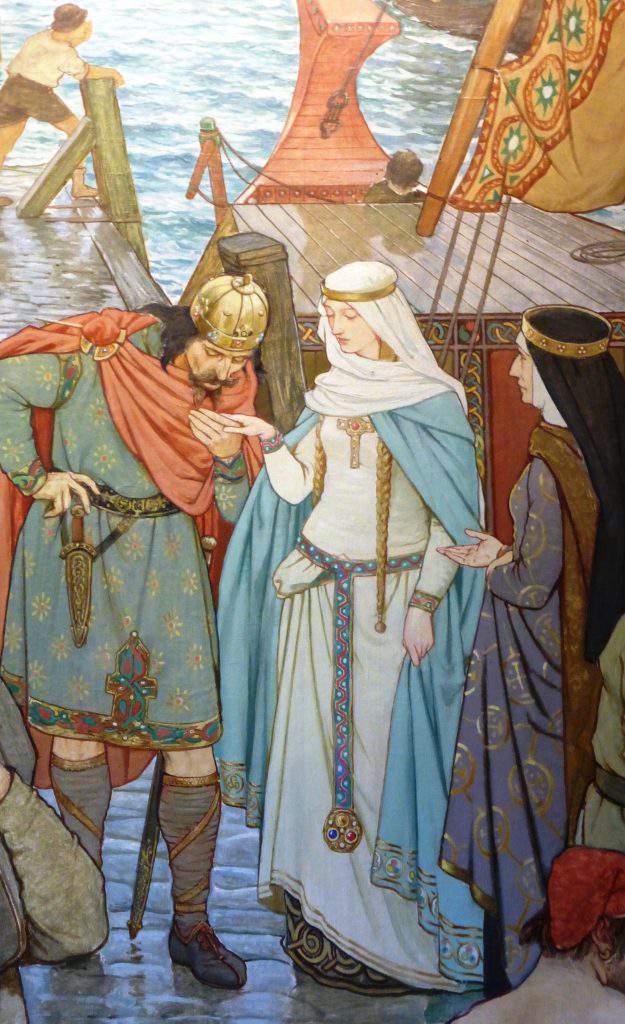
The family returned to England in 1057. The children were well-educated and spoke several languages. On their return, the young Edgar, Margaret’s brother was to defeat William the Conqueror. But he had no chance and the family had to escape to Scotland, where Malcolm III reigned. Margaret wanted to enter a convent but the king (and her family) persuaded her to marry Malcolm.
Margit was also referred to as the Pearl of Scotland (since her name comes from the Greek word maragon, meaning pearl). She reformed the court, her husband, and the religious life in Scotland as well.
She had a great impact on English kings as well, she was the “mother” of all English queens. She had eight children, six boys and two girls.
She spent her last days in the castle of Edinburgh. She lived in a small house which was a piece of art of Norman architecture. She died there, three days after the death of her husband and her oldest son, who passed away in the battle against the English army. Her younger son had to tell her the news.
Margaret was respected by the nation as a saint. She was canonised in 1261. The remains of Margaret and Malcolm were taken to Spain during the Reformation, later they got back to Scotland, to their final resting place, Dunfermline, to the Benedictine monastery established by her, together with her husband, son, and other Scottish kings and aristocrats.
According to the legend, during the canonisation ceremony, Margaret’s grave was opened and her remains were put on a silver bier, to take them to the sanctuary, but when the march passed by Malcolm’s grave, they were unable to proceed. Then an old man suggested the took Malcolm’s bones out too and put them next to Margaret’s. They did so and were able to walk on. They regarded this as a sign that
Margaret succeeded to ‘tame’ the bloody-handed king and rendered him by her side in death too.
In Scotland, going on pilgrimages is a living tradition. In Saint Margaret’s honour, the first one was started years ago. Some of them include Dunfermline, the centre of the Saint Margaret cult. This location used to be one of the main destination of pilgrims before too.
Dunfermline Abbey is one of the most important cultic places in Scotland. In the 12th century there was a Roman style church here. Later, in 1128, David Scottish king established the abbey in the place of this. In the 1300s, part of the building burnt down. It was reopened in the 19th century, and still can be visited today.
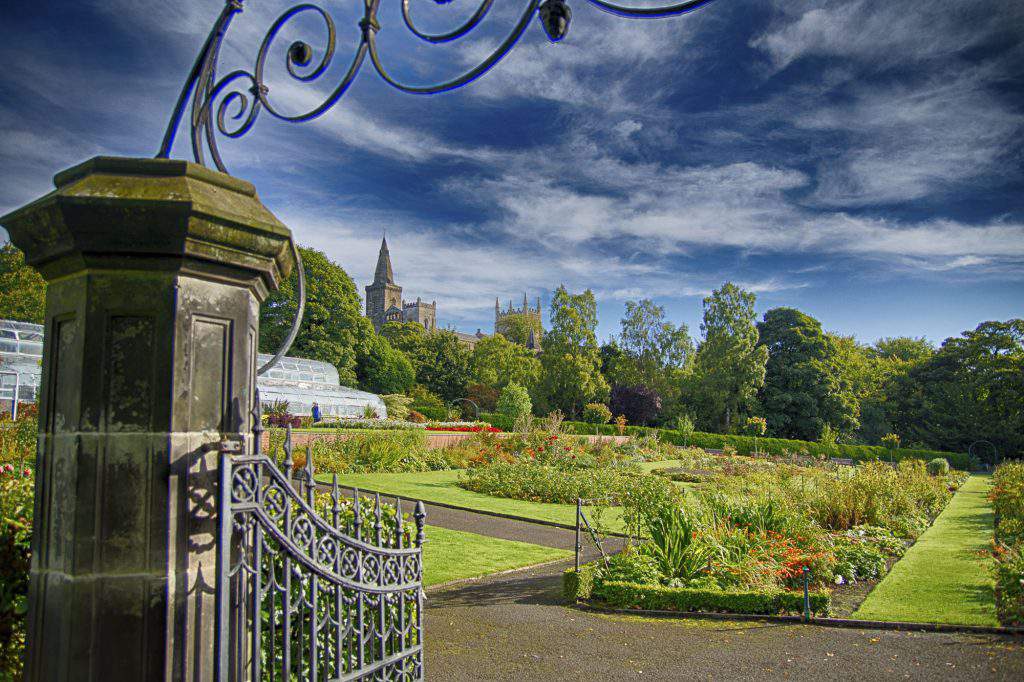
The park next to the abbey was created by Andrew Carnegie. He purchased the land in 1902 and gave it to the inhabitants of the town in the following year. In the park you can find a house from the 17th century, which functions as a museum today. The park is suitable for a romantic walk, there are even small waterfalls in it, and beautiful flower gardens. There are also playgrounds for children and it is the favourite of dog owners as well, and events are often held here.
Source: szeretlekmagyarorszag.hu


