Subscribe to our social channels to get the latest news about Hungary!


For a long time, Japanese cuisine was a mysterious and distant world in Hungary. However, two dedicated professionals, chef Gábor Vellai and his wife, Harumi Nomura, who is of Japanese origin, have been working for a quarter of a century to bring authentic Japanese flavours closer to the Hungarian public. Their journey together began by chance, and today they are responsible for the sushi menu at Spago Budapest by Wolfgang Puck.
Harumi Nomura was originally a fashion designer in Tokyo before coming to Budapest to teach, while Gábor Vellai joined the kitchen of a Japanese restaurant in the mid-1990s. What started out as a coincidence has since become a consciously built career and even a special “love” for Japanese cuisine and for each other. The restaurant is preparing special dishes for the Hungarian Formula 1 race, which gave them the opportunity to talk about their beginnings, compromises on quality, and the true nature of Japanese cuisine.
When asked whether their commitment to Japanese cuisine was clear from the beginning of their careers, they both emphasised the role of chance.
“A very good friend of mine invited me to work at the first ‘Japanese restaurant’ in the 8th district in the mid-1990s,” recalls Gábor Vellai. “At that time, we knew much less about these cultures. The restaurant was opened by a lady living in Japan who wanted authentic, high-quality Japanese cuisine. We sourced the ingredients from abroad, often having to bring them from Vienna or Germany because they simply weren’t available in Hungary. Of course, the situation is much better now.”
Harumi Nomura’s journey was similar. “At that time, you couldn’t even get Japanese rice or soy sauce in Budapest. I hadn’t even thought about cooking Japanese food back then. When I came to Hungary, I was teaching at a Japanese school. A lady who worked there told me that there was an opportunity to help out at a restaurant. The Japanese owner was looking for someone to supervise the chefs in the kitchen to ensure that Japanese standards were maintained. I didn’t cook at the time, I was just a taster. But I got bored and said I’d like to work in the kitchen. I feel very lucky to have gotten into this—I had wanted to cook for a long time.”
Gábor emphasised the importance of Harumi’s role in the beginning: “Harumi was really needed. Hungarians tend to cut corners and want to do things the easy way. Harumi’s job was to supervise us chefs and tell us how things should be done in a Japanese kitchen. Because the more corners you cut, the more the end product changes and is no longer the same.”
Harumi has been living in Europe for more than 25 years, in Hungary since 1999, and she has worked with her husband almost the entire time, with a brief stint in Norway.
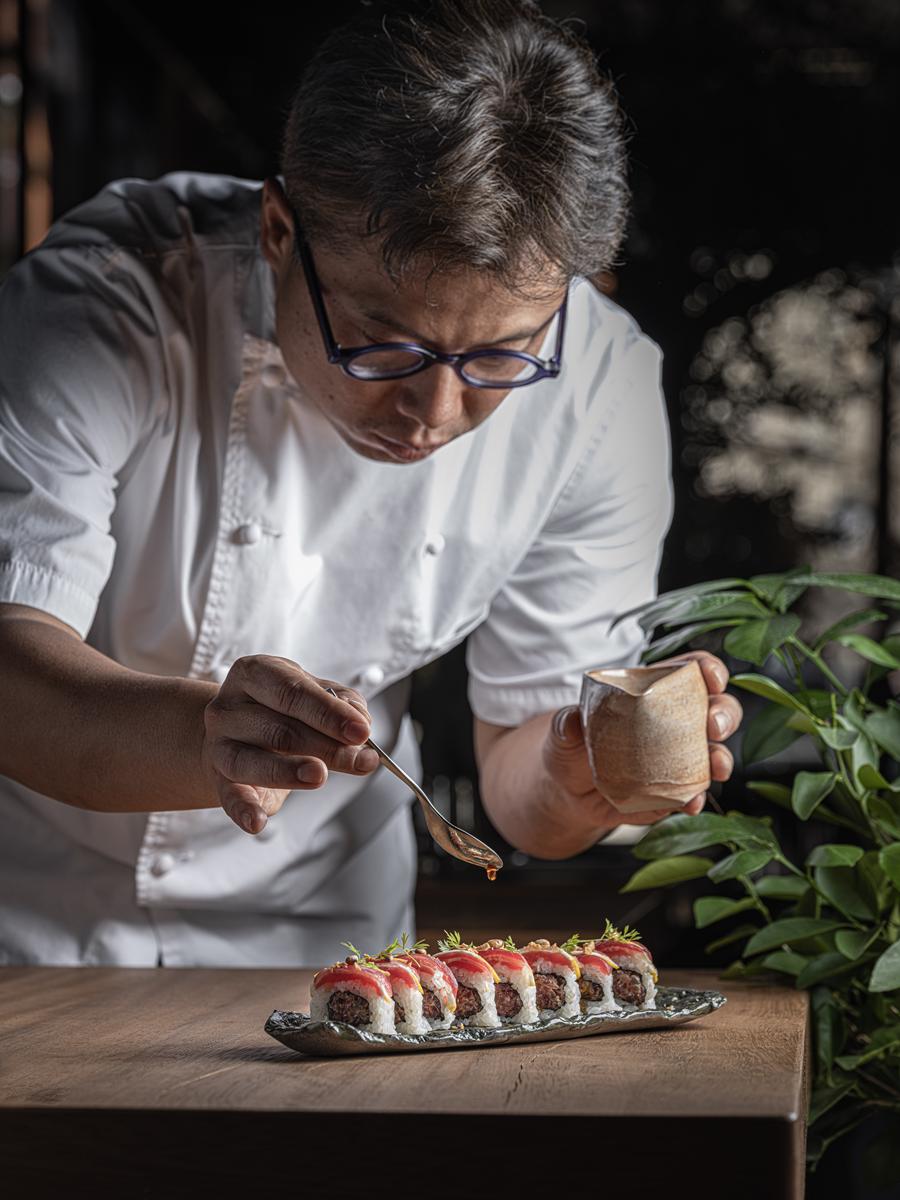
Japanese cuisine has come a long way in Budapest in recent decades, but with the proliferation of cheaper sushi bars, the question arises: where is the line between “real” sushi and average sushi?
“Even today, [good quality sushi] is considered a luxury,” says Gábor Vellai.
“Good quality sushi simply cannot be produced cheaply.” Harumi Nomura added: “All the ingredients are expensive, especially if they are of high quality.”
Gábor spoke candidly about the cheaper sushi that arrives on a conveyor belt: “All sushi is real, there’s nothing wrong with it. There are many price categories in Japan too. I’m happy to eat a simple salmon and avocado or tempura shrimp maki at a random place. I know what I’m getting—the rice is different, the fish is different—but it can still be delicious. However, we try to offer the best of everything: rice, nori, wasabi, ginger – we look for quality in everything. Once you encounter sushi made from high-quality ingredients and prepared well, because it’s also important that it’s prepared well, you immediately taste the difference and realise this.”
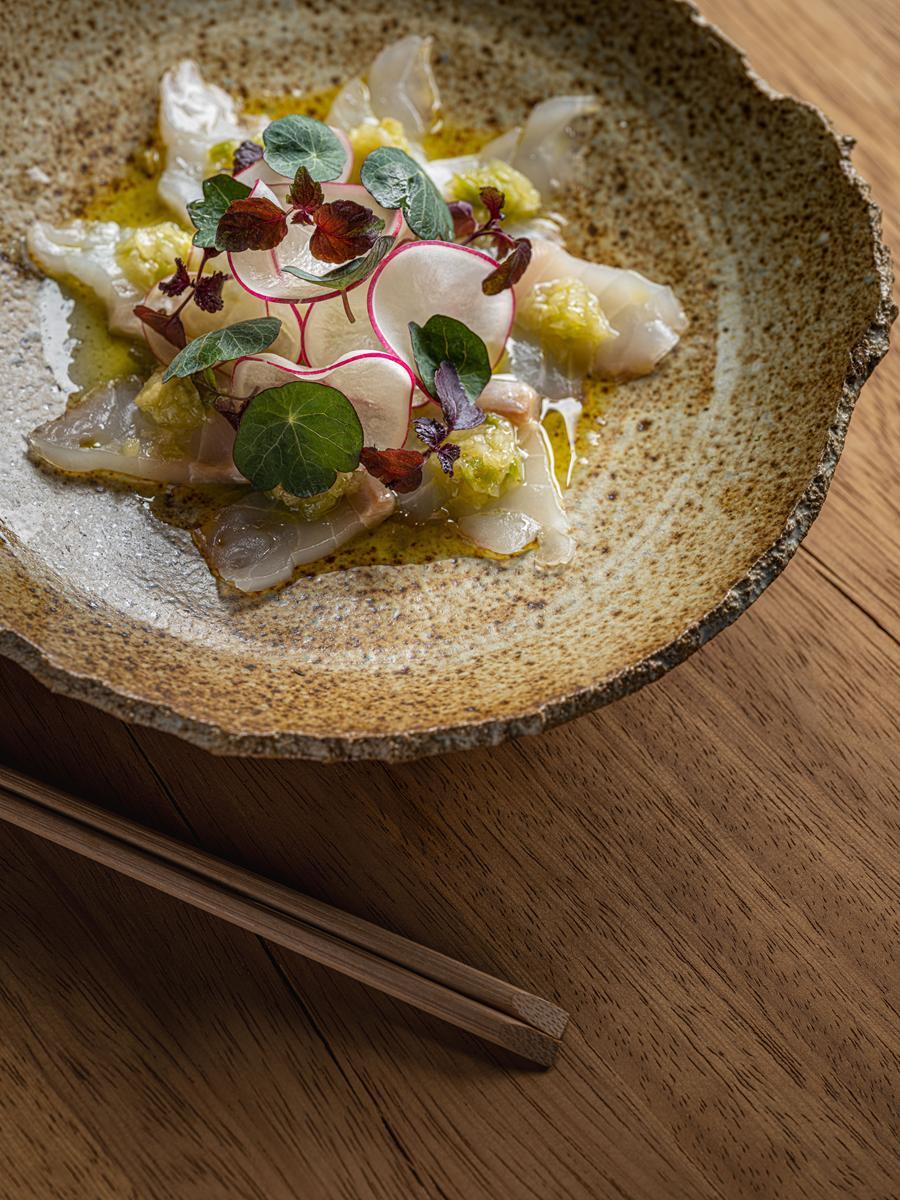
Is it possible to innovate in a cuisine as steeped in tradition as Japanese cuisine? “It is possible, and indeed it is necessary,” says Gábor Vellai. “Even the choice of rice and nori is a matter of style. It’s the preparation that really counts. The freshness, cutting and storage of the fish are very important.”
Gábor also said that incorporating international ingredients creates new opportunities: “You can combine really good ingredients in ways that would never occur to you in Japan. For example, we use a lot of South American flavours, jalapeño peppers and coriander.”
Harumi Nomura also emphasised flexibility: “I was born in Japan, but I’ve been living in Europe for 25 years, so I’ve almost forgotten what real sushi tastes like because I’ve acquired European tastes. When I go home, I’m sometimes surprised that this is really how it’s supposed to be made.” She emphasised that Spago is not a classic Japanese restaurant, but rather represents a slice of Japanese cuisine on the menu, complementing the other offerings.
This openness is also reflected in the fact that, at the suggestion of Wolfgang Puck’s executive chef, Tetsu Yahagi, olive oil was added to the maki at Spago. “I’ve never done this in my life,” says Gábor, “But now when I make a new maki, I sprinkle a little olive oil on it as naturally as if I’d always done it that way. And this is something I don’t think they do much elsewhere. It doesn’t detract from the flavours.”
The lemon tuna roll is another perfect example of innovation: “I always learned to keep raw lemon and tuna away from each other when making a sashimi platter. Then Tetsu came to me with one of these maki, and I just stared at it. It’s one of the most popular rolls right now. It was first served at Spago restaurants in Budapest, and now you can find it everywhere.”
The use of sauces is also a frequent topic of debate in the world of sushi. Gábor Vellai stated unequivocally: “I don’t like teriyaki sauce, it’s too dominant. We don’t have it. The sauce shouldn’t take away from the real flavour of the food.” Harumi adds: “Those who don’t know quality may use sauce to hide cheap ingredients.”
However, both accept the use of mayonnaise and even use it themselves. “I would be deceiving myself and being snobbish if I didn’t use it,” says Gábor. “I like it too, and I think it goes well with sushi. We also make versions flavoured with truffles or yuzu, but we don’t pour it all over the plate. These sauces don’t exist in Japan, but we need them here, especially at this level of fusion.”
One of the most important pillars of Japanese cuisine is cutting technique. “Cutting technique is extremely important in Japanese cuisine,” explains Gábor Vellai. “Even at home, they cook like we do in a fine dining restaurant. If the spring onion is sliced thinly on top, it’s like a good hairstyle that crowns the dish. This is very important to them.”
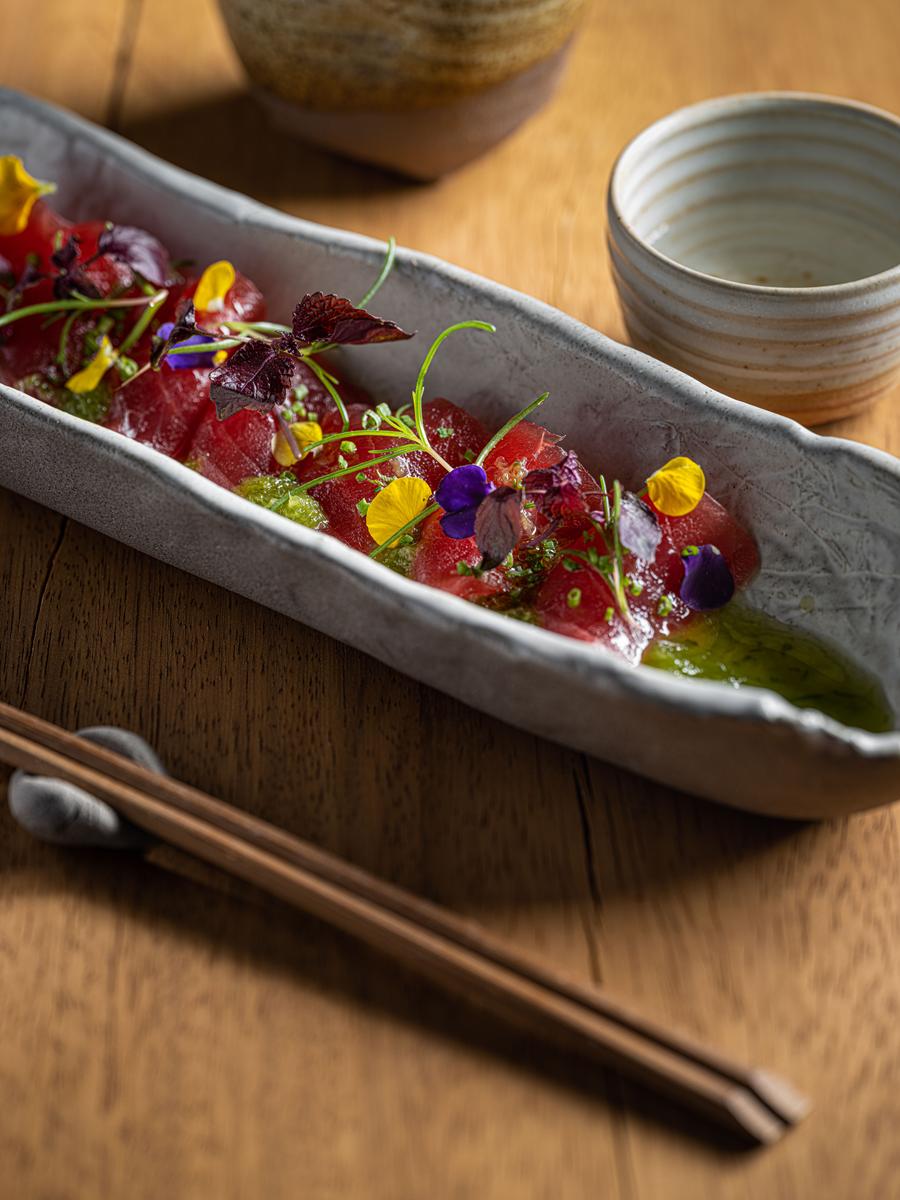
Harumi Nomura emphasises the precision of fish cutting: “When we cut tuna, we always cut it crosswise. If we didn’t, there would be a hard layer between the two slices of fish. When I cut crosswise, it creates little strips that you can’t feel. With nigiri, we also tilt the knife at the last moment to create a small line on the fish. When we dip the fish in soy sauce, the soy sauce runs along that little line.”
Both chefs believe in the power of knowledge sharing. “I always explain and teach everything from the basics,” says Gábor Vellai.
“I try to convey why this is the case, where it comes from, how to do it, and what else we use this ingredient for. I think it’s important, there’s no point in keeping it a secret.” Harumi has also held vegan sushi-making courses, passing on her experience.
Although sushi is only one segment of Spago‘s menu, both chefs enjoy the creative freedom and opportunities offered by their environment.
Although sushi is only one segment of Spago’s menu, both enjoy the creative freedom and opportunities offered by the environment. “Sometimes we miss a thing or two that we really like to do, but that’s not the point here, because this isn’t a Japanese restaurant,” says Gábor. “But we have creative freedom, which we really love. We really like our colleagues and the atmosphere here. It’s good to be here.”
The main goal for this year is to introduce seasonal dishes. “In the summer, we want them to be a little lighter and more refreshing. For example, ceviche is now on the menu,” reveals Gábor. For the Formula 1 season, they are preparing special dishes that are not usually on the menu.
The story of Gábor Vellai and Harumi Nomura is not only a reflection of the development of Japanese cuisine in Hungary, but also an example of how passion, precision and openness can build bridges between cultures and flavours. Through their work, they offer not just food, but a true gastronomic experience, building Hungarian sushi culture grain by grain.


