
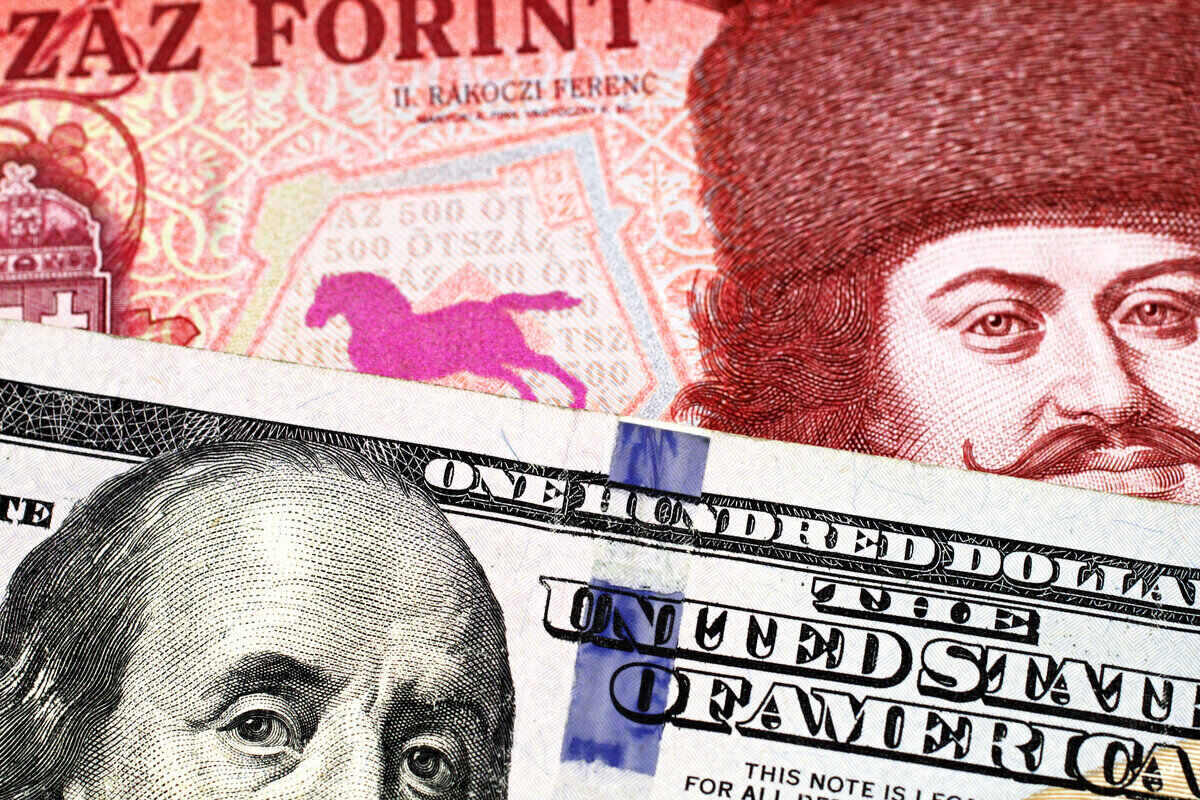
The Hungarian forint came under pressure on Thursday: a powerful rally of the US dollar swept through global currency markets following the US Federal Reserve’s latest policy meeting.
Hungarian currency weakens against both the US dollar and the euro
While investors continue to monitor geopolitical developments and signs of easing tensions in the Middle East, it was the Fed’s hawkish tone that dominated trading and sent the Hungarian currency lower against both the dollar and the euro.
By the close of trading in Budapest, the forint had lost significant ground, with the US dollar climbing above HUF 306 and at times approaching HUF 308. Against the euro, the Hungarian currency weakened by around 0.4%, with the exchange rate hovering near HUF 352.3 after briefly moving above the HUF 353 mark during the day.
Fed outlook boosts the dollar
The latest moves were largely triggered by Wednesday evening’s Federal Reserve announcement. Although US policymakers left interest rates unchanged, they raised their inflation forecasts and signalled that interest rates could remain higher for longer than previously expected.
Market participants interpreted the updated outlook as a sign that rate cuts are unlikely in the near future, while the possibility of further tightening has not been completely ruled out. The result was a sharp strengthening of the dollar, which reached its strongest levels in roughly three months against the euro.
As the dollar gained momentum globally, emerging-market currencies, including the forint, came under pressure. Analysts noted that the EUR/USD exchange rate remains one of the key drivers of sentiment towards Central European currencies.

Forint loses ground against regional peers
The Hungarian currency not only weakened against major international currencies but also underperformed compared with its regional counterparts, writes VG.hu.
During Thursday’s trading session, the Czech koruna strengthened by approximately 0.3%, while the Polish zloty gained around 0.15%. This left the forint as one of the weaker performers in the Central European region.
After showing some resilience early in the morning and briefly strengthening towards HUF 350 per euro, the currency’s gains quickly evaporated as the dollar rally intensified. Attempts to recover later in the day proved short-lived, with the euro once again moving towards the HUF 353 level.
Despite the setback, market analysts believe the broader trend that has supported the forint in recent months has not necessarily been broken. The Hungarian currency remains relatively close to its strongest levels in several years, suggesting that the latest weakness could represent a temporary correction rather than a lasting reversal.
Hungarian stock market also ends lower
The stronger dollar and cautious market sentiment weighed on Hungarian equities as well. The benchmark BUX index slipped 0.4% to 138,405 points, with turnover exceeding HUF 30.5 billion. Among the major blue-chip stocks, only Magyar Telekom managed to post gains, rising 0.4%.
Oil and gas company Mol emerged as the weakest performer of the day, with its shares falling 1.7%. Pharmaceutical giant Richter also struggled, declining 1%, while banking heavyweight OTP Bank slipped 0.3% despite receiving a highly optimistic target price from investment firm Roemer Capital.
Bond yields rise ahead of central bank meeting
Hungarian government bond yields also moved higher on Thursday, particularly on longer maturities. The benchmark 10-year yield increased by 11 basis points to 5.21%, reflecting changing market expectations following the Fed’s announcement.
Investors are now turning their attention to next week’s meeting of the National Bank of Hungary (MNB). The central bank’s Monetary Council is widely expected to deliver its second interest rate cut of the year.
Analysts suggest that until then, currency markets are likely to remain heavily influenced by international developments, especially movements in the dollar. Should the greenback continue its advance, the forint could remain under pressure despite its otherwise favourable longer-term outlook.
In case you missed it: Hungarian forint breaks records. What lies behind the surge — and can it last?
What comes next for the forint?
While Thursday’s trading highlighted the vulnerability of the Hungarian currency to shifts in global monetary policy, many analysts are cautiously optimistic. The forint’s recent strength has been supported by improving domestic fundamentals and investor confidence in the region.
However, this episode shows that when the US dollar gains strength, even one of Europe’s strongest-performing currencies can quickly find itself on the back foot. For now, all eyes will remain on the Federal Reserve, the dollar’s next move and the National Bank of Hungary’s upcoming rate decision.
Read more: Hungarian forint soars to 4.5-year high against the euro. Here’s what happened



