Subscribe to our social channels to get the latest news about Hungary!


Over the past decades, numerous artificially deformed “alien-like” skulls have been found in a Hungarian cemetery. These skulls are more than 1,000 years old, and they provide an insight into the social changes that occurred during the so-called Migration Period, approximately between the 4th and 8th centuries.
The large-scale migrations that took place during the 4th and 5th centuries brought Slavic and Germanic tribes, such as the Goths, Vandals and Franks, into closer contact with the Roman Empire and culture. Skull binding is a type of artificial cranial deformation that was practised by people in central Europe, mainly in the 5th century. The deformed and elongated head shapes evoke the aliens of sci-fi movies, LiveScience wrote.
The region’s most extensive collection of skulls was found in a graveyard in Mözs-Icsei dűlő, Hungary, first excavated in 1961. A new study argues that skull-binding communities presumably co-existed with other cultures during the 5th century, and this body modification practice might have been shared between the groups.
The practice of artificial cranial deformation involves binding a child’s head from infancy to deform the skull. It has been practised since at least the Neolithic period in cultures all over the world and has persisted to modern times, German lead author Corina Knipper and Hungarian co-authors István Koncz, Zsófia Rácz and Tivadar Vida reported. In Europe, this type of skull deformation practice appeared in the 2nd and 3rd centuries and reached a high-point in the 5th and 6th centuries.
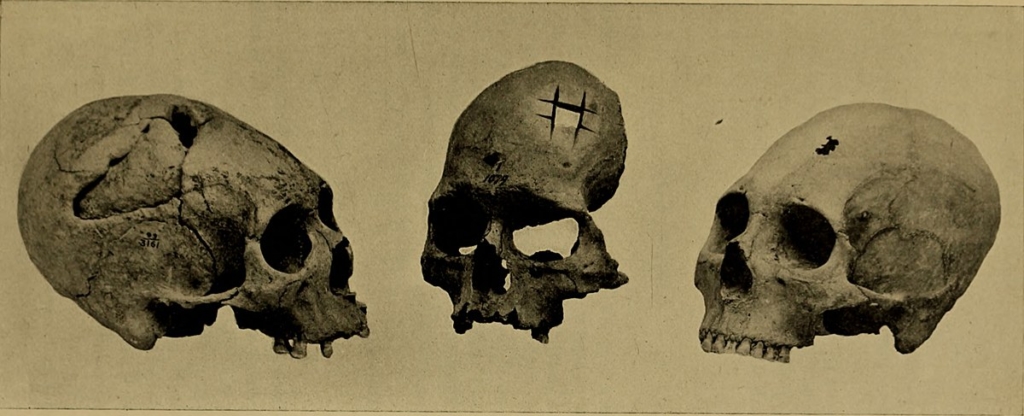
“The site of Mözs (in the former Roman province known as Pannonia Valeria) that we studied represents this period and is an excellent example of a community in which the custom was widespread,” the co-authors said.
Researchers examined 51 elongated skulls and 96 burial pits that were used between 430 and 470. These graves were divided into three groups corresponding to the three populations buried there. The site of Mözs reflects the cultural diversity: the first and oldest burial group consists of Roman-style graves, the second has a foreign style, and the third reflects the combination of the two traditions.
All three burial groups contained artificially deformed skulls in the following ratio: 32% of the remains in the first group, 65% in the second group and 70% in the third. The difference between the direction and the location of grooves in the skulls also confirms that the groups did not share the same cultural background, and they used different binding techniques.
The isotopic analysis further confirmed the different cultural backgrounds of the individuals buried in the site of Mözs. The fact that people of diverse origins were buried together suggests that these groups were in close interaction with each other, and they established a community where the regional cultural habits were shared and adopted.
“The application of new technology — isotope analysis — helped enormously to comprehend community formation and lifestyle during the fifth century,” researchers said. “We revealed information about diet and evidence that people actually moved, which would not have been accessible by classic anthropological and archaeological methods alone.”
Source: livescience.com


