Subscribe to our social channels to get the latest news about Hungary!


The Zsolnay brand is a mysterious entity in the history of Hungarian art. The tradition of the unique production techniques goes back to 161 years. Even though the porcelain products of Zsolnay are made in factories, they reflect the elegance and quality of the pieces of fine art. That is why these china plates, cups, pots and other pieces of ceramics can be easily differentiated from others.
Though the technology improved by time, the style remained the same through more than one and a half centuries. The brand has always attracted the greatest scientists and artists of each era. There were known geniuses working in the factory, like József Rippl-Rónai, Ferenc Martyn, Victor Vasarely or Ödön Lechner.
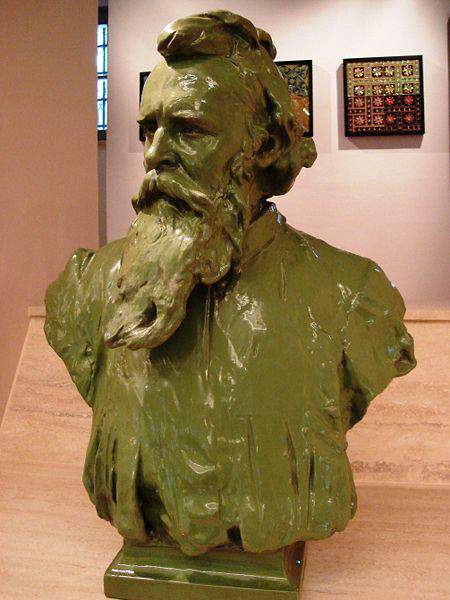
The factory was founded by Vilmos Zsolnay, a potter from Pécs, who wanted to bring innovation into his profession.
He invested an enormous amount of money, time and work into his vision, and cooperated with the best experts he could invite. Their inventions were the Zsolnay porcelain, eosin and the pyrogranite. The artists of the factory combined Eastern motifs with the current period’s style.
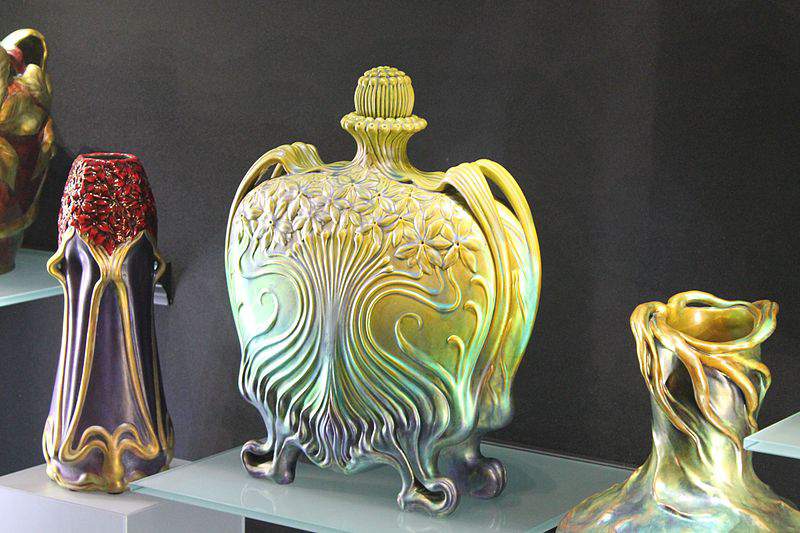
Sándor Apáti Abt and Lajos Mack merged the style of Secession and the unique technology named eosin. The most iconic technology of the factory was developed in the 1890s.
Eosin — which means “the light of the dawn” in Greek — uses glittering ceramic glaze to emphasize certain parts of the whole product with glimmer.
The other new technology of the brand was pyrogranite, an antifreeze type of ceramics. This material was applied by Ödön Lechner and Marcell Komor in architecture in the form of pyrogranite tiles. The buildings of the Budapest Industrial Design Museum, Matthias Church and the Geological and Geophysical Institute of Hungary are great examples for the usage of this technology. We can also find representatives abroad: the Hungarian Embassy in Berlin and the Mexican Fine Arts Museum also feature ceramics decoration and eosin roof, respectively.
The development of Zsolnay porcelain is still in progress today. Several contemporary ceramic artists like György Fürtös, János Török or Márta Nagy has been working on the new products of the factory.
The factory has won several awards during the past couple of decades, including the Hungarian Heritage Award in 2004 and Magyar Minőség Háza Díj (House of Hungarian Quality Award) multiple times. The product of the manufacture received Superbrands prizes six times between 2005 and 2014.
Vilmos Zsolnay is a widely celebrated person in Hungary, especially in his hometown, Pécs. A whole quarter of museums, libraries, university campus and other cultural institutions is labeled with his name. The square where his famous former workshop can be found is also named after him: “Zsolnay-ház” can be easily recognized because of its trademark eosin roof, and a group of statues stand in the middle of the square depicting the five sciences that are related to porcelain making (pottery, chemistry, architecture, sculpture and painting).
The works of Zsolnay factory have been so significant and determining in Hungarian art that it was announced as a Hungaricum in March 2014.
Moreover, Zsolnay Quarter in Pécs soon followed this example two months later, so this name is recorded twice in the “hall of fame” of Hungarian culture.
The most significant features of the Zsolnay products are their hand-painted design and durability, which make the objects of the brand some of the highest quality ceramic objects in the world.
Featured image: facebook.com/pg/zsolnaybrandshowroom
Ce: bm
Source: Zsolnay.hu


