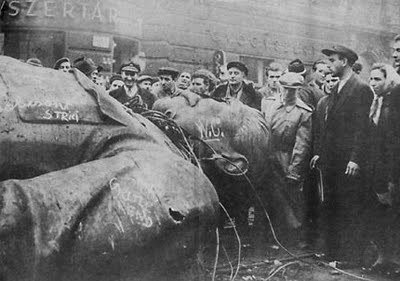
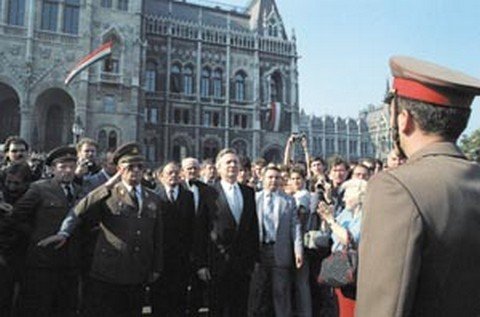
1956, October 23 – Start of the Hungarian Revolution

Change language:
The Hungarian Revolution of 1956 or Hungarian Uprising of 1956 was a spontaneous nationwide revolt against the government of the People’s Republic of Hungary and its Soviet-imposed policies, lasting from 23 October until 10 November 1956.
It was the first major threat to Soviet control since the USSR’s forces drove out the Nazis at the end of World War II and occupied Eastern Europe. Despite the failure of the uprising, it was highly influential, and came to play a role in the downfall of the Soviet Union decades later.
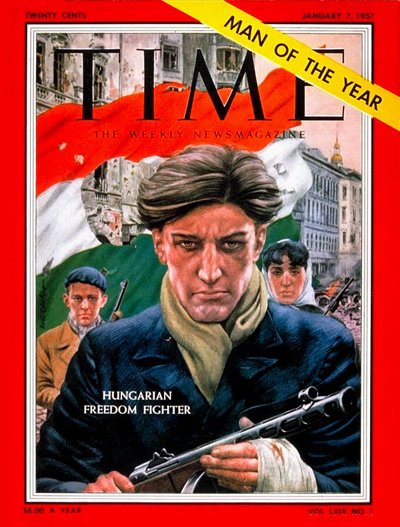 The revolt began as a student demonstration, which attracted thousands as they marched through central Budapest to the Parliament building, calling out on the streets using a van with loudspeakers via Radio Free Europe. A student delegation entering the radio building to try to broadcast the students’ demands was detained. When the delegation’s release was demanded by the demonstrators outside, they were fired upon by the State Security Police (ÁVH) from within the building. As the news spread, disorder and violence erupted throughout the capital.
The revolt spread quickly across Hungary and the government collapsed. Thousands organised into militias, battling the State Security Police (ÁVH) and Soviet troops. Pro-Soviet communists and ÁVH members were often executed or imprisoned and former prisoners were released and armed. Radical impromptu workers’ councils wrested municipal control from the ruling Hungarian Working People’s Party and demanded political changes. A new government formally disbanded the ÁVH, declared its intention to withdraw from the Warsaw Pact, and pledged to re-establish free elections. By the end of October, fighting had almost stopped and a sense of normality began to return.