Subscribe to our social channels to get the latest news about Hungary!


Two second-half goals from Botond Birtalan gave Vasas a 2-0 victory over DAC 1904 Dunajská Streda/Dunaszerdahely as they opened their new Illovszky Rudolf Stadion in front of a near-capacity crowd.
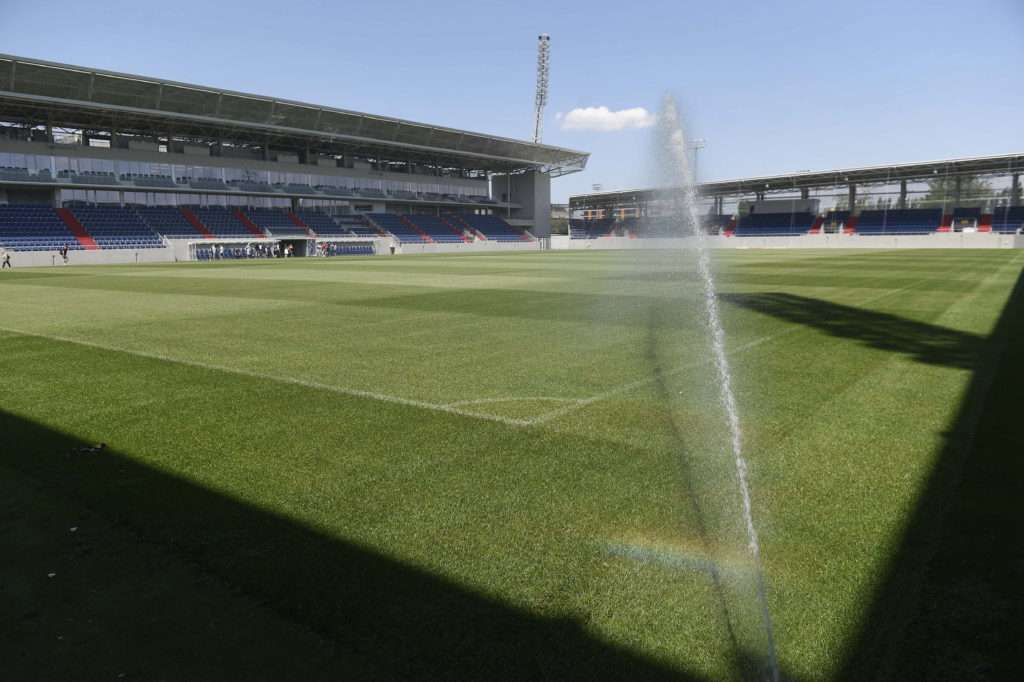
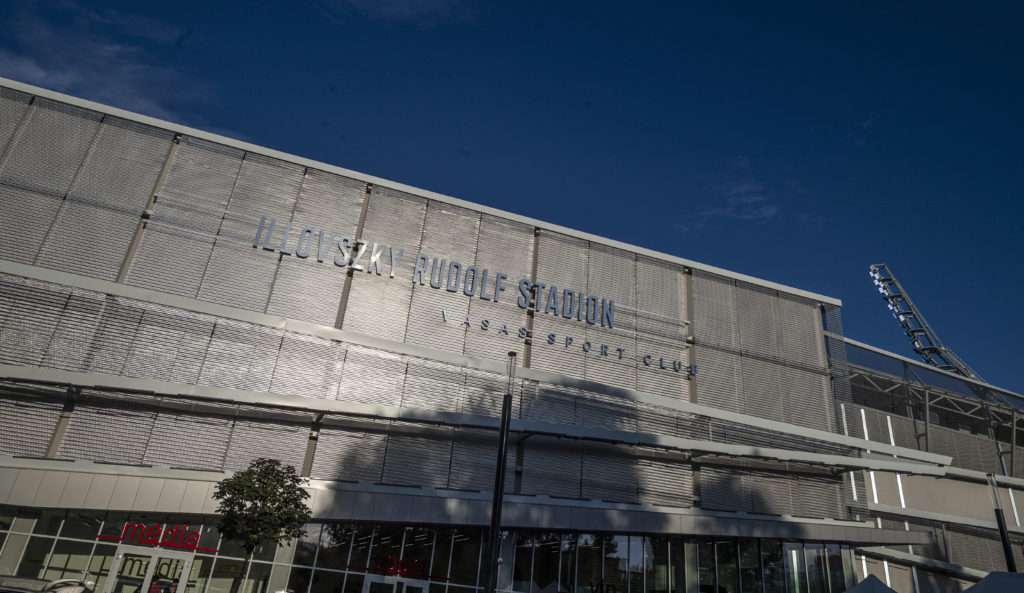
Having spent the past three years as tenants at Újpest’s Szusza Ferenc Stadion, Vasas began life back in Budapest’s 13th district by taking on last season’s Slovakian runners-up DAC 1904 Dunajská Streda in the inaugural match at their new 5,154 capacity Illovszky Rudolf Stadion last Friday evening. Historically one of Hungary’s most successful clubs, Vasas will be hoping the move back to their spiritual home of the last sixty years will coincide with them regaining top-flight status, the club having been relegated in 2018.
The stadium lies on the site of the old Fáy utca stadium which had been the club’s home from 1959 until 2016.
Vasas had already played briefly in what is now Budapest’s 13th district from the 1930s onwards, first at the original Fáy utca stadium (right next to the current one), and then at the Elektromos stadium on Latorca utca, but it was only in 1959 that they made a more permanent move back to Angyalföld.
Set up in 1911 by workers of the Iron- and Steel Workers Trade Union, Vasas led a nomadic existence during their first forty-eight years of existence, playing most home matches at MTK’s Hungária út, Ferencváros’ Üllői út, in the Népliget and, after 1953, at the Népstadion – which they continued to use for big matches up until the mid-1980s.
The new stadium bears the name of Rudolf Illovszky, a man whose name has become synonymous with the Vasas club.
A Hungary international left winger, Illovszky spent fourteen years as a player before winning four of the club’s six league championship titles, the Mitropa Cup, and Hungarian Cup during seven managerial stints between 1957 and 1995, during which time he also led the club to the European Cup semi-finals. He also took Hungary to the European Championship semi-finals in 1972, but it was at Vasas where he felt at home, spending much of his retirement at his office at the Fáy utca stadium – which took on his name in 2002 – right up until his death in autumn 2008.
Prior to the headline match, spectators were entertained by a Hungary Old Boys against Vasas Old Boys match, a match between players from the Vasas Kubala Academy players against club employees, sponsors, supporters and the Hungary Actors national team and live music.
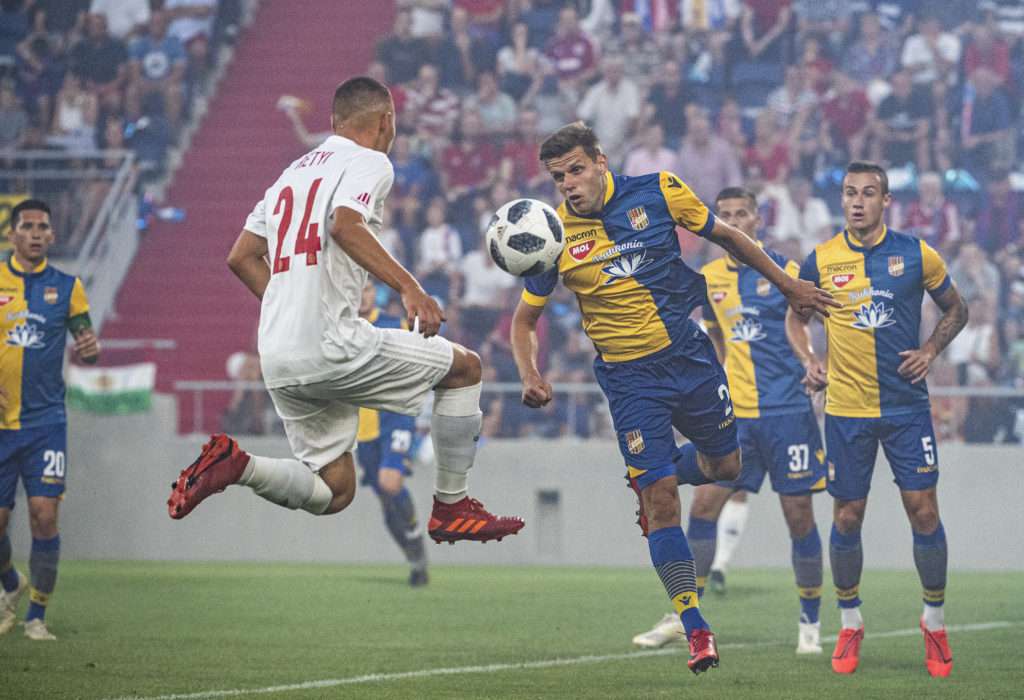
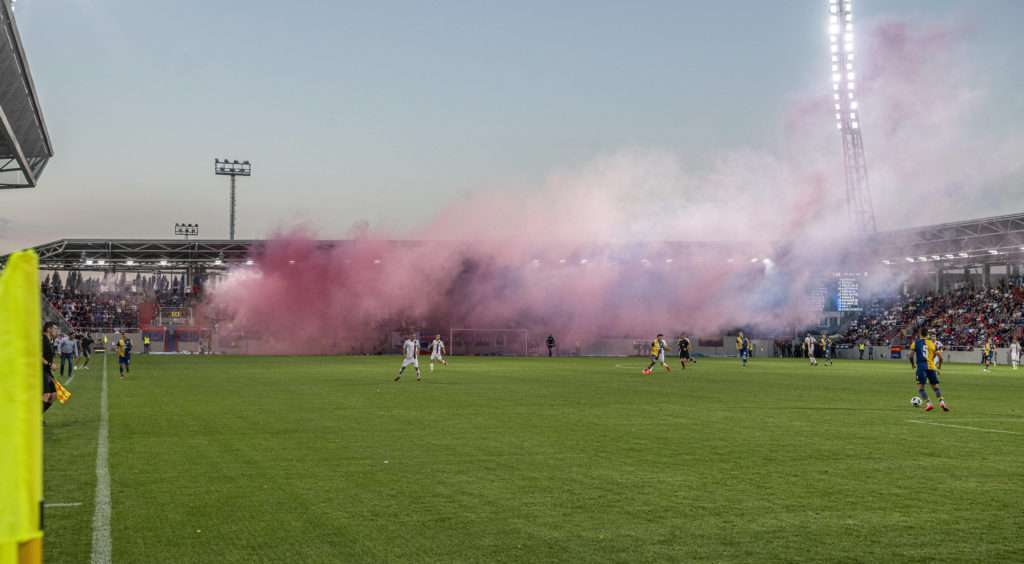
As to the match itself, Botond Király came close to opening the scoring for Vasas in the first half, but it took the home side until the 78th minute to break the deadlock, Botond Birtalan scoring the first goal in the new stadium courtesy of a penalty kick. Birtalan settled matters with three minutes remaining, scoring his second of the evening with a low drive.
Vasas will play their first league match at the new Illovszky Stadion in week two of the 2019/2020 Merkantil Bank Liga, against Soroksár on 7 August. Before that, the stadium will be used by Budapest Honvéd for their Europa League qualification matches, starting with Zalgiris Vilnius this Thursday, Honvéd’s Bozsik Stadion being rebuilt and the stadium of landlords MTK being used for the European Maccabi Games at the end of July.
Vasas 2–0 DAC 1904 (0–0)
Goalscorer: Birtalan 78’, 87’
Attendance: 4,900
Vasas: 1st half: Rados – Terbe, Szilágyi, Tóth B., Lakatos – Hinora, Kovács M., Daróczi – Rétyi, Balajti, Király
2nd Half: Szmola (Bősz) – Hinora, Viczián, Tóth D., Hajdú – Kovács M. (Ferenczi, 81’), Gál, Szatmári – Tóth L, Nagy Z., Birtalan
Europa League: Three Hungarian teams, three win
Source: MLSZ – press release


