Subscribe to our social channels to get the latest news about Hungary!


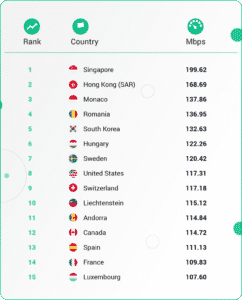
According to Coworker Lab, when analyzing the improvement of internet speeds in recent quarters, 2018 was mostly a good year. On a global scale, both download and upload speeds have increased on fixed broadband and mobile. With gigabit services continuing to expand and 5G on the horizon, the internet is an undeniable driving force of every country’s economy and a basic component of modern life.
Yet, the online ecosystem isn’t homogenous among global nations. When assessing a country’s technological advancements and online infrastructure, different countries have varying characteristics and opportunities. These differing attributes directly affect internet speed, which is affected by:
— where the individual accessing the internet is located,
— where the web destination is hosted, and
— the quality and specific network properties that the internet connection must travel through along the way.
Trends in internet speeds typically reflect a country’s political system and the state of its technological progress. For example, countries with the highest speeds are leaders in innovation and personal liberties, whereas lower speeds denote poor internet infrastructure and, in some cases, a violation of civil liberties (with censorship and government surveillance impacting equipment efficiency).