


Hungary’s most peculiar formations

Change language:
Hungary is an area rich in natural values, many of the beautiful assets of which we have already tried to present to you numerous times before. Wandering through the landscapes of Hungary, you could find “miracle-making” springs, you could walk on the shores of Transdanubian lakes or in Roman Baths, or you could find Göcsejt or Göncö, the shining jewel of the Zemplén Mountains.
We have introduced several locations throughout Hungary over the years. We have even shown you some of the most endangered flowers in Hungary. This time, with the help of Sokszínű Vidék, we have been able to track down unusual geographical formations that are unique in their kind, special in appearance, and definitely worth exploring.
The rhyolitic tuff of Kazár
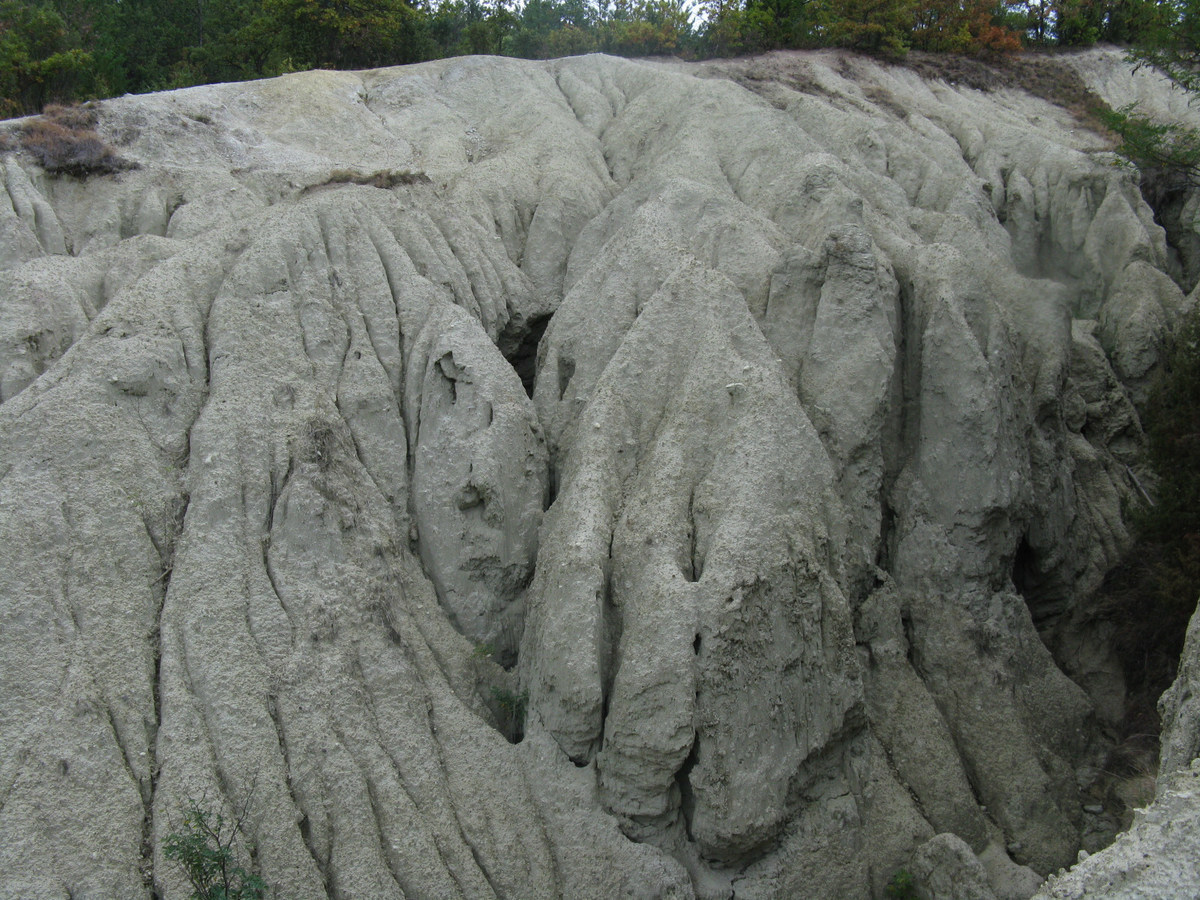
Next to Kazár, there is a natural formation in Nógrád County of which there are only 6 in the world and which is unique in Europe. The surface rhyolitic tuff at Kazár is quite enchanting, covering almost a hectare. This protected natural value is about 20 million years old. It was presumably created by the volcanic eruptions of the Mátra. The white, easily decaying soil surface was shaped by water, which created the intricately diversified ditches, ridges, and strange cones.
There is no such formation anywhere else in Europe.
The closest to this Hungarian treasure is the rhyolitic tuff of Cappadocia in Turkey. The view is fantastic, so it is definitely worth visiting, and now it is accessible via a convenient hiking trail.
Beehive stones in Szomolya

On the border of Szomolya, above the Beehive Valley (Kaptár-völgy), on the western slope of Old Hill (Vén-hegy), you can find the rhyolitic tuff range divided by rock ridges, which consists of eight beehive stones, on which there are 117 niches. This is the group of hive stones with the most niches in Hungary.
Numerous legends and theories have emerged over the years about what the beehive stones’ niches may have been for, when they were created, and by whom.
One theory was that they were used as memorials for the dead. According to another theory, the niches played a role in beekeeping, and people kept beehives in them. However, archaeological excavations have not supported any of these hypotheses.
Their material is mostly rhyolitic tuff, which was formed many millions of years ago as a result of intense volcanic activity during the Miocene. The beehive stones are natural values and cultural monuments, as they were declared a nature reserve in 1960. The site can be approached via a nature trail lined with signs that lead from the centre of Szomolya to the cones.
Movable stones of Pákozd
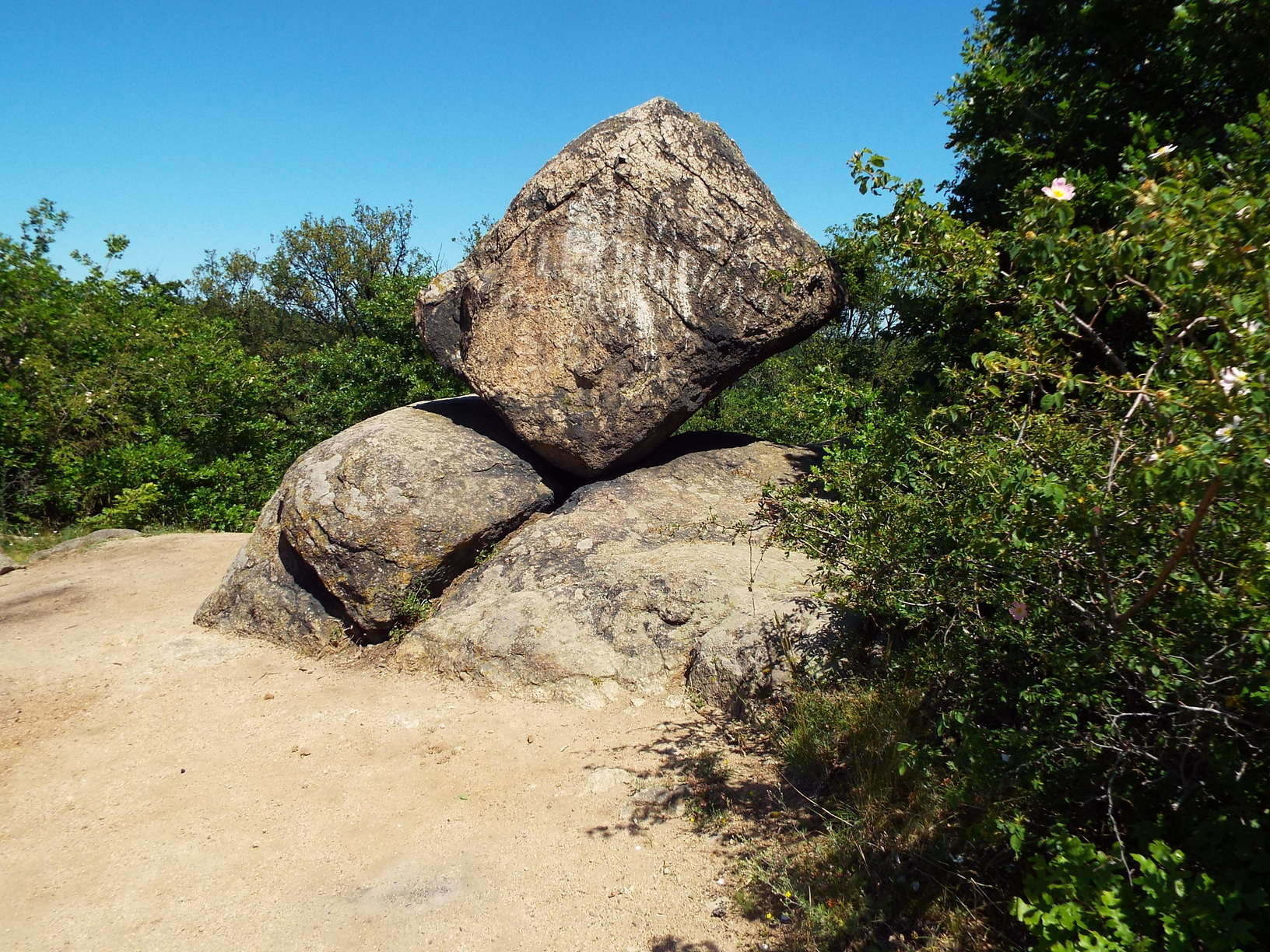
One of the most exciting sights of the Velence Mountains is the movable stones of Pákozd, which are located in the 44-hectare nature reserve managed by the Danube-Ipoly National Park in the Velence Mountains, in the administrative area of Pákozd and Sukoró. The granite that forms the mass of the mountains was formed roughly 300,000,000 years ago. Such granite can only be studied directly on the surface in two places in Hungary, here and in the Eastern parts of Mecsek. The granite blocks emerging from the decayed surface have resisted erosion, and they emerged in the form of clusters of rocks with rounded edges protruding from their surroundings, stacked upon one another.

What is “Göcsejt” and “Göncö”???
I’m sure you know Göcsej is in Zala and Gönc is – Gönc…
Neither is mentioned in the article, though.