Subscribe to our social channels to get the latest news about Hungary!


Despite Hungary having formed officially more than 1000 years ago, its capital didn’t always bear its current name. Budapest, as we know it today, came to life with the unification of 3 separate cities called Pest, Buda and Óbuda on 17 November in 1873.
Let’s learn a little bit about this beautiful capital with the help of Turul.info.
The first paragraph of the 1872 XXXVI. law unified the city: under the name Buda-Pest, Buda and Pest as free royal capital cities and Ó-Buda as a country town together with the Margaret island were merged to form a new legal authority.
The Greatest Hungarian, count Széchenyi István was the first to use the Budapest name, many years before.
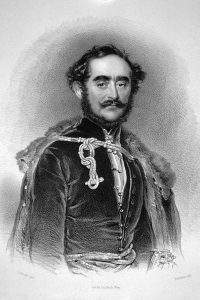
He first wrote down the word Budapest in one of his works called Világ in 1831 but in a way as if it had been coined by an English friend of his. As if we could take a peek into an English gentleman’s letter to a Hungarian lady proposing the changing of the name of the capital, that could sound “as easy and as common as the name Bucharest, and that could bring the unification of two cities opposing each other” at that time. He also says that “the newly formed capital would be a flourishing centre to the country”. He also proposes the relocation of the Parliament to Budapest, to the heart of the country, which was at that time in Pozsony. He also adds that he coined the idea because there was jealousy between Buda and Pest, but it shouldn’t be that way because they should be one single capital and not ”two opposing hearts”.
The name Budapest became more and more accepted, and organisations with their centre in Pest-Buda started to call their location Budapest, too. Széchenyi had quite a big role in this. In 1845 the Budapest Tunnel Association was formed, responsible for the construction of the Buda tunnel, which was linked to his name.


The statue on Géllert hill is 4 and a half METRES tall, not meters!! A meter (in english) is a measuring device not a measurement. I despair….
That’s nitpicking. Everyone knows by its’ context.
@Attila: the devil is in the detail. Articles purporting to be written in english should, at the very least, get the spelling right.
Hungarians love their vowel harmony, which helps language to flow, and which is actually present in every language, including English.
For example, eeny-meeny-miney-mo – try saying eeny-miney-meeny-mo: there are countless other examples, such as Marks and Spencer.
Budapest follows the general rules of vowel harmony regarding the flow of a word, PestBuda does not.
I suspect that may be the real reason behind the order.
@Turner: you are referring to what is known as ‘Ablaut Reduplication’ which is one of those ‘unknown’ rules of grammar (in English at least): “ So, to explain the rule: if you have three words, then the vowel order has to be I, A, O. In the case of two words, the first is almost always an I and the second is either an A or O. For example, Mish-mash, chit-chat, dilly-dally, tip-top, hip-hop, flip-flop, tic tac toe, sing-song, ding-dong, King-Kong, ping pong. You get the idea…”