


Ominous signs: strife between Uber and Budapest taxis might be imminent

Uber returned to the Budapest taxi market in June in a partnership with the Főtaxi group. Their cooperation seems to work well in the summer, but sources say that the balance of power between the two operators could change with the drop in tourist traffic in September.
Uber is back on the Budapest taxi market amid new regulations
On 13 June, after an eight-year hiatus, Uber restarted its operation in Budapest, in partnership with Főtaxi in a surprising move. As Index recalls, it was initially pressure from taxi drivers that made the company’s existence in Hungary impossible. Eight years ago, when Uber first arrived in the country, it operated as a ride-sharing service and thus was able to provide far cheaper prices than taxi services.
Soon after, regulations passed made it unfeasible for Uber to continue operating in the country. Meanwhile, however, Bolt has also burst onto the Hungarian market, threatening other taxi companies.

As a result, the Főtaxi-group announced in February that Uber would return to the country through a partnership with them. Uber reappeared to the market changed, though, now operating as a passenger transport service. In practice, this means that Uber cars are painted yellow and equipped with all the apparatus needed for taxi services. Moreover, as Index points out, the fare of travel is fixed.
Although at the time of Uber’s relaunch, the managing director of F Mobilitás Ltd., a subsidiary of Főtaxi, said that despite the partnership, Főtaxi and Uber will act as competitors, in practice, currently when someone orders an Uber, a Főtaxi car might come to pick them up.
As Index explains, this is because some of the Főtaxi drivers have been offered the opportunity to use the Uber app in parallel to their “main” job. This is a lucrative opening for Budapest taxi drivers because Uber commissions are zero percent for the first three months for those who joined the fleet immediately, while for those who became Uber drivers sometime later, it is five percent for the same time period.
As DNH has shown in this article, these are much more favourable rates than the commissions offered by Bolt or Főtaxi. Precisely for this reason, in order not to lose its own drivers, Főtaxi has opened the door for drivers to use Uber. However, this is a one-way street only, as Uber drivers cannot transfer to Főtaxi.
And Főtaxi and Uber have worked well together so far. The official transport partner for the Hungarian Grand Prix of Formula 1 was Főtaxi, and the duo will also play an important role in the upcoming Sziget Festival.
According to Index, however, there is a more important element of the Főtaxi-Uber cooperation: winning the Budapest Airport tender once again. As it is estimated that airport rides account for 30-40 percent of Főtaxi’s revenue (although Elek Nagy told Index that this figure is 15-20 percent per year), securing the tender is an important goal for the company.
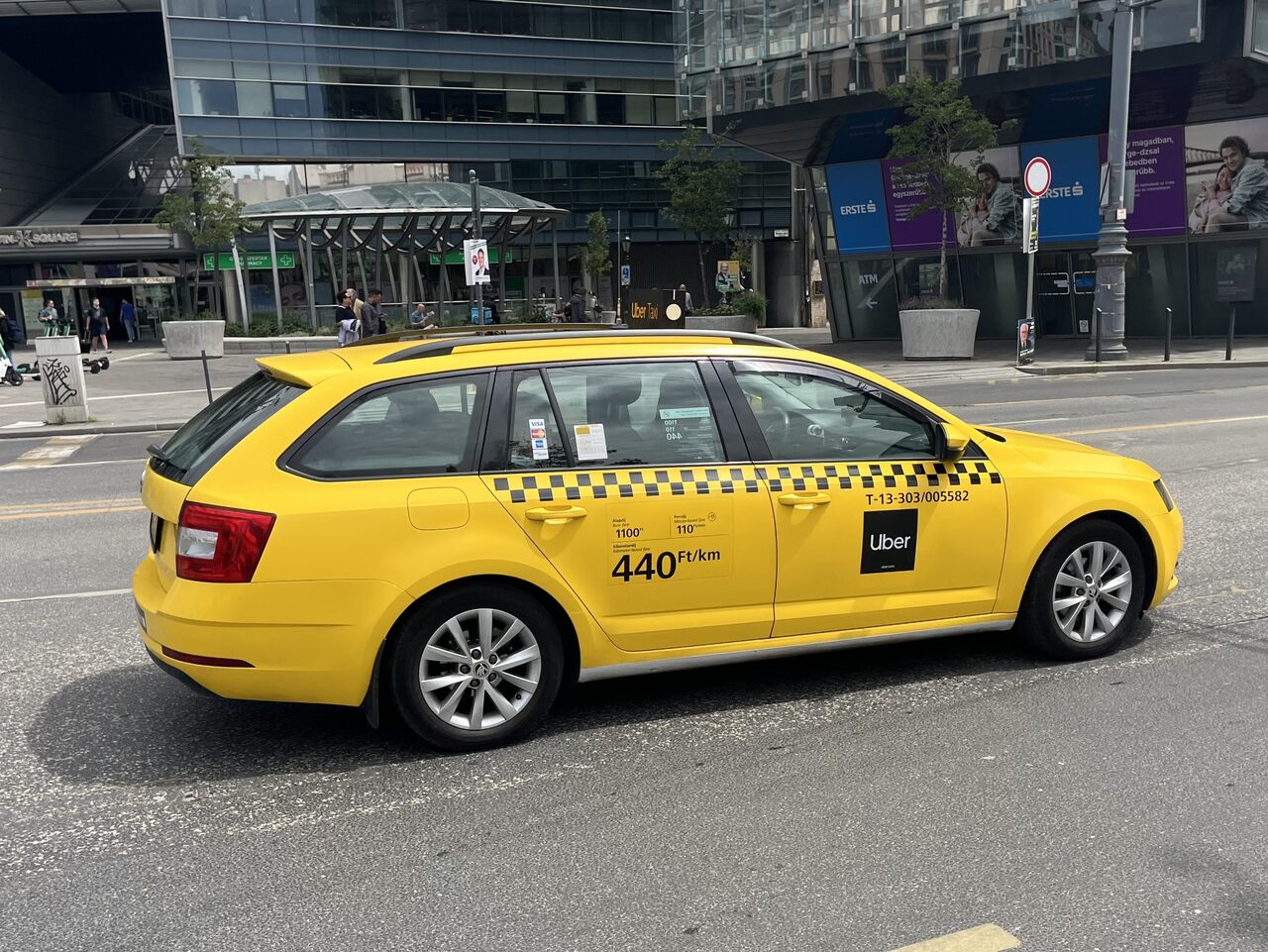
The Uber-Főtaxi cooperation may not last long
Zoltán Metál, president of the National Taxi Association, told Index when Uber’s return was announced that the taxi market would be shuffled by the change. He predicted that the big companies will be able to grow, but medium and smaller operators will struggle to stay in the market – as long as their resources and capabilities will allow.
And while Uber’s cooperation with Főtaxi seems to work during the current summer season, Index, citing industry sources, writes that when tourism, and thus ridership, dwindles in the fall, there will be more competition between Uber and Budapest taxi drivers for fewer passengers.
Most expect Uber to secure a large share of the market, just as Bolt did a few years ago. However, the latter will certainly try to fight against this. In any case, fierce competition could come between Budapest taxi and ride-share services in the near future. Especially so as Uber has promised that even after the three-month discounted commission period, the company will go under whatever rate Bolt offers.
Read also:
- New international operator to join the Hungarian taxi scene
- Breaking: Uber available in Budapest again
Source: Index
SATURATION.
Budapest Taxis – the Yellow “Battalion” v the Ubers.
Do the MATHS.
The DIFFERENTAL – equate it against DEMAND – there is SATURATION.
The differential – continues to OPENINGLY display a profession in an aggressive (2) two sided war zone.
Do the Maths.
It will worsen – this RIFT between the Yellow v the “Colours of the Rainbow”.
The focus on Uber is all wrong, in Hungary it’s now just a booking platform providing taxi drivers with business. The real underlying issue is that the cost of taxis has risen so high that only tourists can really afford them. When the summer peak season dies down, taxi drivers end up fighting over the scraps and Uber with its international reach and the inherent trust in the brand (neutralising fears of being overcharged) is a more successful platform for finding customers.