


Sensational: Hungarian space device could help unravel one of the Moon’s greatest mysteries

The European Space Agency (ESA) has signed its first deep space (lunar) research data purchase agreement with Puli Space Ltd. The Hungarian company’s “water snooper” will reach the Moon as part of a commercial mission, the Intuitive Machines IM-2 mission, where it will collect data on water ice, Puli Space told MTI.
Hungarian “water snooper”
The second lunar mission of Intuitive Machines, a private company based in Houston, is scheduled to launch no earlier than the end of February. The mission will carry Puli Space Technologies’ NASA award-winning miniature neutron spectrometer, the Puli Lunar Water Snooper (PLWS), the statement said.
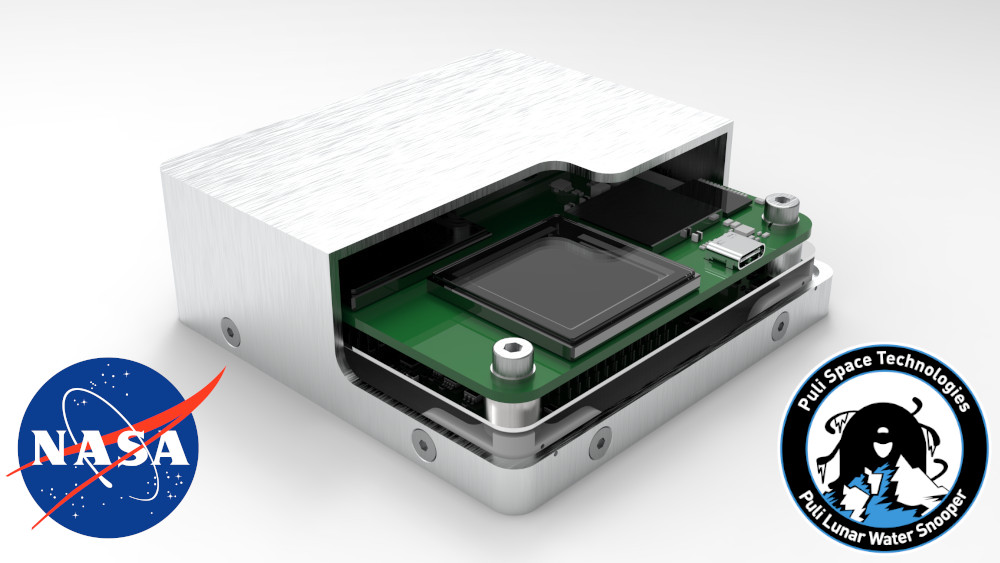
According to the release, the device will collect data on water ice in the Moon’s south polar region. The PLWS, mounted on Intuitive Machines’ rocket-powered drone, the Micro Nova Hopper, will also provide direct surface measurement data from a permanently shadowed crater.
The importance of international recognition
“International recognition is important for us as it supports the planning and validation of our further work. We are especially excited that ESA is joining us in the Intuitive Machines mission to reach the Moon’s south pole and conduct measurements in a permanently shadowed crater, where temperatures hover around minus 200 degrees Celsius,” said physicist Tibor Pacher, founder of Puli Space Technologies, in the statement.
“It’s fascinating to see how far Puli Space and Intuitive Machines have come in preparing this mission to create such a unique data package. We are eagerly anticipating the mission and are curious to learn what these data can reveal about the nature of water on the Moon,”
the statement quoted James Carpenter, head of ESA’s Lunar Exploration Office, as saying.
The United States and China are both working on ensuring a permanent human presence on the Moon, supported by significant private investments, making the celestial body an increasingly attractive target for economically sustainable space activities, the statement noted. One of the initial tasks in the emerging cis-lunar economy is to verify the potential local use of resources.
Water ice, a promising resource
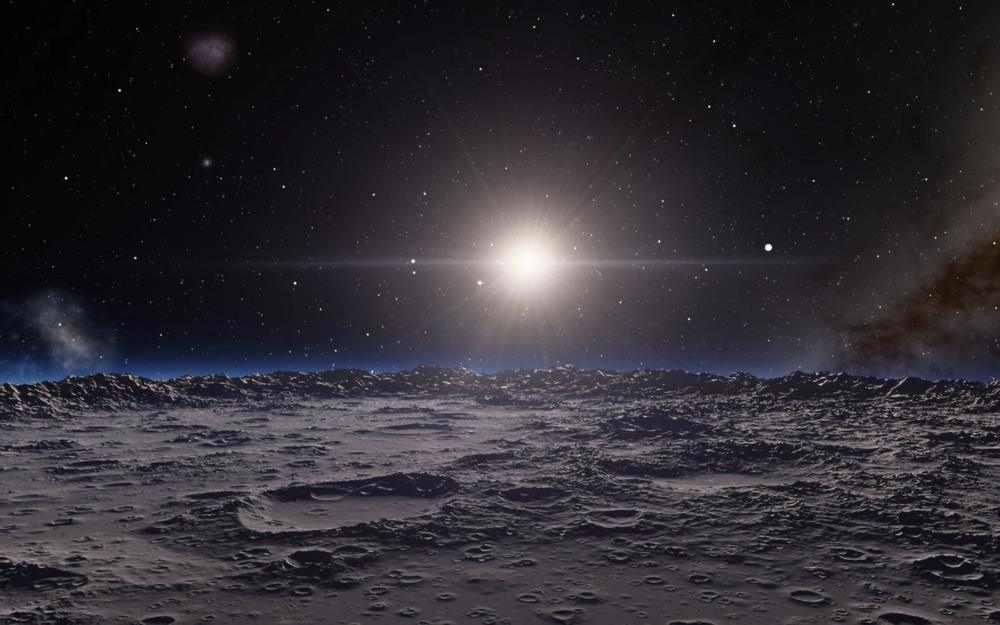
One of the most promising potential resources is water ice, as sustainable lunar water extraction could catalyse the establishment of permanent lunar bases and help build an affordable cis-lunar and deep-space transport system, making space travel more sustainable, efficient, and accessible, the summary emphasised.
Previous measurements from lunar orbit have provided multiple pieces of direct scientific evidence for the presence of hydrogen on the Moon’s surface, but its distribution varies significantly. However, the spatial resolution of this data is insufficient to identify potential mining sites, making it necessary to map local concentrations of water ice on the surface.
According to the statement, the collaboration between Hungary’s Puli Space Technologies and Intuitive Machines marks the first attempt to map water ice concentrations on the Moon’s surface.
The PLWS
The PLWS, weighing just 400 grams, is mounted on Intuitive Machines’ Micro Nova Hopper, a unique autonomous rocket-powered drone. It will explore the environment of permanently shadowed areas around the Moon’s south pole and aims to land in such a shadowed crater for the first time. The ESA Lunar Exploration Office recognised the importance of data collection when signing its first deep space research data purchase agreement with Puli Space Technologies.
This milestone supports the development of private-sector space exploration activities and paves the way for future partnerships between public agencies and private companies, the statement highlighted. The ESA will work closely with the Puli Space team on data analysis and standardisation, which will later be made publicly accessible.
Read also:
- Conference on space and climate change held in Budapest
- Breaking new ground: Hungary’s first ESA-certified space doctor Dr Klaudia Nagy
Featured image: depositphotos.com