Subscribe to our social channels to get the latest news about Hungary!


Archaeologists have uncovered a mass grave dating back to the Mongol invasion at Tázlár in Bács-Kiskun County, Hungary, containing the remains of victims buried with bound limbs and in a crouched position.
Zsolt Gallina, the lead archaeologist on the dig, told the Hungarian News Agency (MTI) that investigations are underway at one of the largest archaeological sites of the former Halas District, in an area preserved in folk memory as “Temple Hill”. The team is exploring an Árpád-era cemetery, parts of a Mongol-era fortification system, and evidence of victims from that time. Their goal is to uncover as much of the defensive trench system as possible and to showcase the full extent of the siege and destruction during the Mongol invasion.
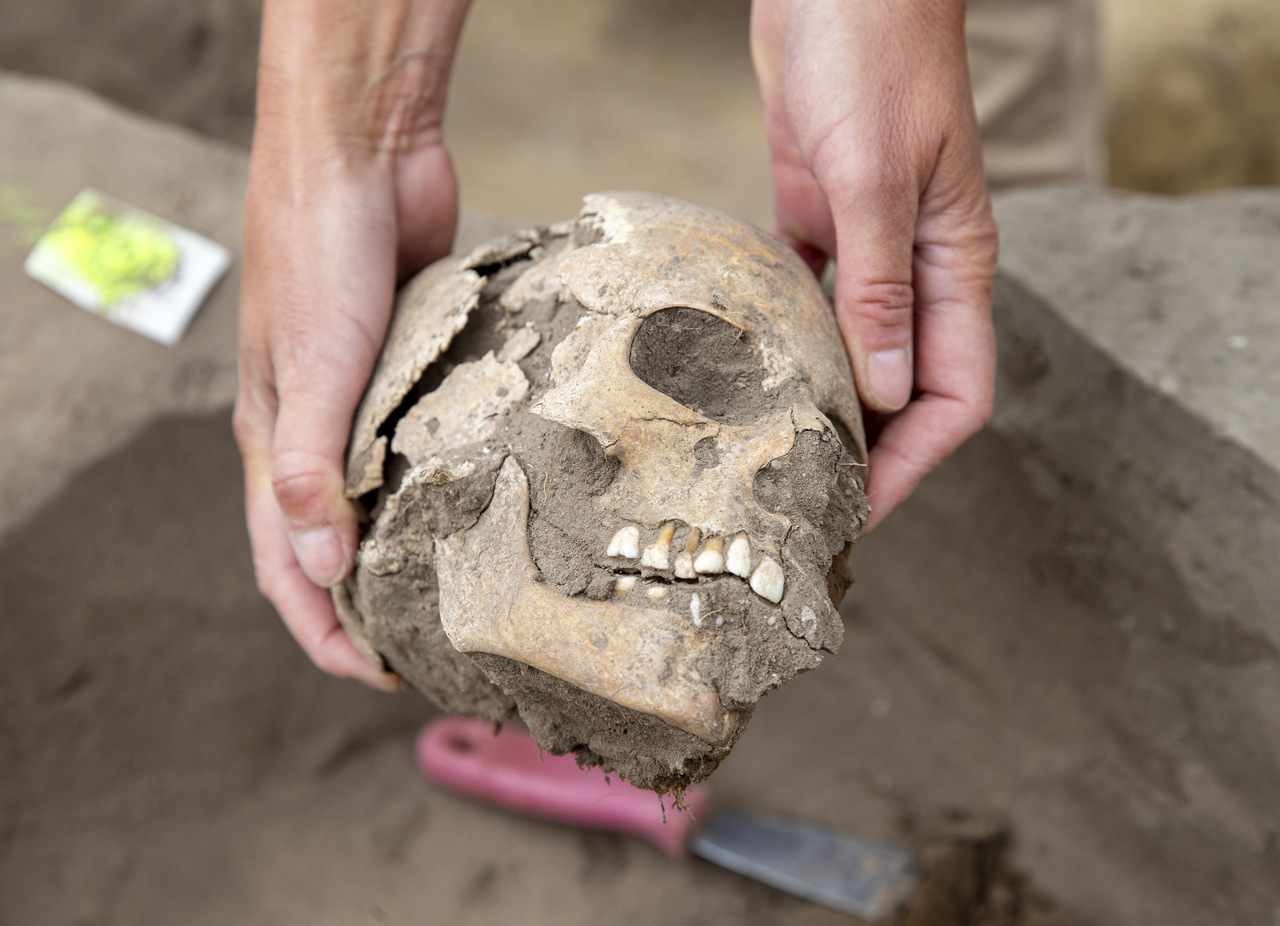
Gallina highlighted that in addition to Sarmatian-period relics, the site has yielded a richly adorned 10th-century female equestrian burial, remains of a late medieval church built by the Cumans and Hungarians, over 800 graves from the Árpád era and later Middle Ages, as well as numerous Mongol invasion victims.
He explained that Hungarians from the Árpád era inhabited the area until 1241. At the end of the 11th century and into the early 12th century, they built a church and buried their dead around it. In anticipation of the Mongol threat, they attempted to protect their villages, church, and cemetery by digging defensive ditches—but the invasion razed everything to the ground.
Gallina noted the Mongol invasion was one of Hungary’s most defining events: “The Mongol incursion and nearly a year of destruction left a lasting mark on our history.” The lowland region’s settlement structure and ethnic makeup were transformed. The defensive ditches built during the invasion linked several church sites in the Duna–Tisza region, including Bugac, Szank, Kiskunfélegyháza, Kunfehértó, and Szabadszállás.
The large church at the site was surrounded by a triple ring of trenches over 100 meters in diameter—among the largest in the region—meant not to delineate the cemetery but to defend the church compound against invading Mongol hordes.
Evidence of the violent destruction was visible in both the outer and middle trenches, with collapsed wooden walls, hidden pottery, household items, burned stone fragments, and partial or complete human and animal skeletons found in the ditches. According to Gallina, during the successful siege, the Mongols slaughtered everyone—including animals and even dogs. Children were not spared.
By fully excavating accessible sections of the outer and middle trenches, the archaeologists were able to map out a Mongol-era fortification and reconstruct the course of the siege.
“With a reconstructed ring-ditch system, we can bring these dramatic events to life and create a site visitors can experience,” Gallina added.

In the decades following the invasion, returning Hungarians—or early-settling Cuman groups—moved into the fortified area around the temple, building surprisingly sophisticated sunken homes with lined walls and complex architecture.
Around the turn of the 14th and 15th centuries, a new church was erected slightly offset from the original Árpád-era structure. Burial resumed near the new church and inside its walls. Over 3,000 individuals were interred here between the 11th and 16th centuries.
Gallina emphasised that the site’s importance lies in the scale of the fortifications and the high number of Mongol-era victims.
“Tázlár stands out among known Mongol invasion sites for the number of destruction-related remains it reveals.”
Recently, additional sections of the outer and middle defensive ditches were excavated, which during the invasion had been hastily dug. In the outer trench, researchers found several human skulls. A four-meter stretch of the middle trench yielded more remains of bodies that had fallen into it, including victims buried with drawn-up legs, bound together, or without heads.
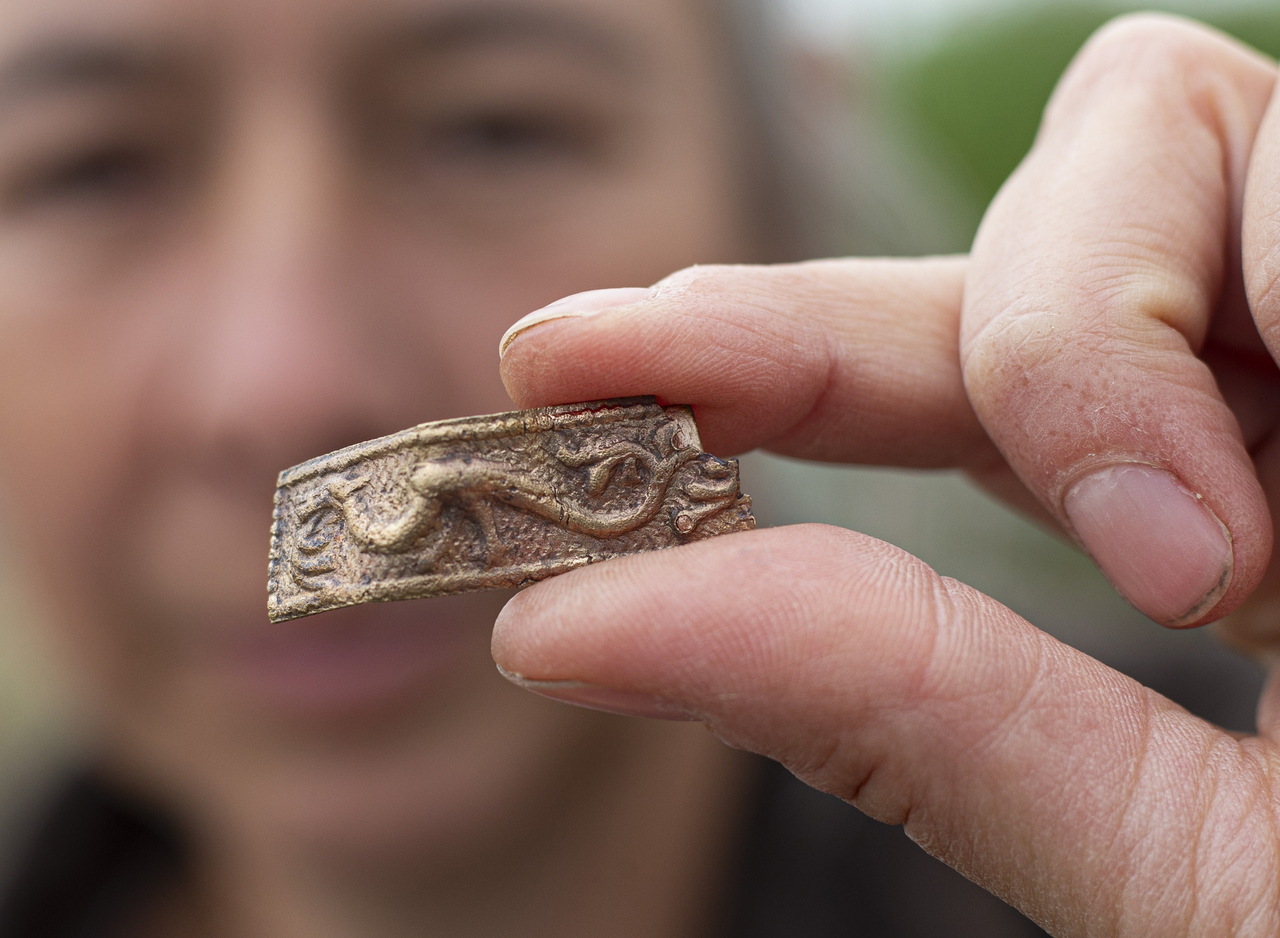
A parallel metal-detecting survey uncovered bronze horse harness ornaments from the Hungarian conquest era, a silver ring, Mongol-era coins, as well as medieval looped buttons and belt and headdress fittings.

Gallina stressed the importance of commemorating the site. An archaeological heritage park has been established and is being expanded. Symbolic restoration of the churches has been completed, involving low walls and educational signage.
The team is also reconstructing the outer ditch and ramparts of the Mongol-era fortification in their original layout, symbolically encircling both the Árpád-era site and the Christianised Cuman structures.
“It stands as a testament to heroic resistance—and the hope of new beginnings.”
To read or share this article in Hungarian, click here: Helló Magyar
Read more news on archaeology in Hungary HERE.
Read also:


