Subscribe to our social channels to get the latest news about Hungary!


We wrote before about the drying out of the so-called Sand-Ridge, a huge, more than 10,000 km² area in Central Hungary. The Food and Agriculture Organisation of the United Nations (FAO) declared the territory a semi-desert in 2020. Experts say that the rising average temperature and the decreasing amount of precipitation may give space for tropical, subtropical plants and kill indigenous species.
We wrote in THIS article that the drying out of the Sand Ridge in Central Hungary endangers the lives of more than 620,000 people, approximately 6.6% of the Hungarian population. The region served as a fertile agricultural zone for centuries, producing a variety of fruits and crops. Today, some of its parts look more like a desert with lots of sand and dust.
Experts believe we are in the 24th hour concerning intervention, so authorities must act as soon as possible. In the 19th century, many dams were erected here to free as much space for agriculture as possible. Now, those dams must be closed to keep the water in the territory instead of helping it “run away” from the Carpathian Basin. The Hungarian government wrote in March that more than 100 Hungarian farmers volunteered to allow their territories to be “flooded”.
Climate change, the rising average temperature and the decreasing amount and changing precipitation distribution result in depleting wells and bone-dry soil with compulsory irrigation. However, the latter is not a possibility in some areas. We wrote about that issue in THIS article.
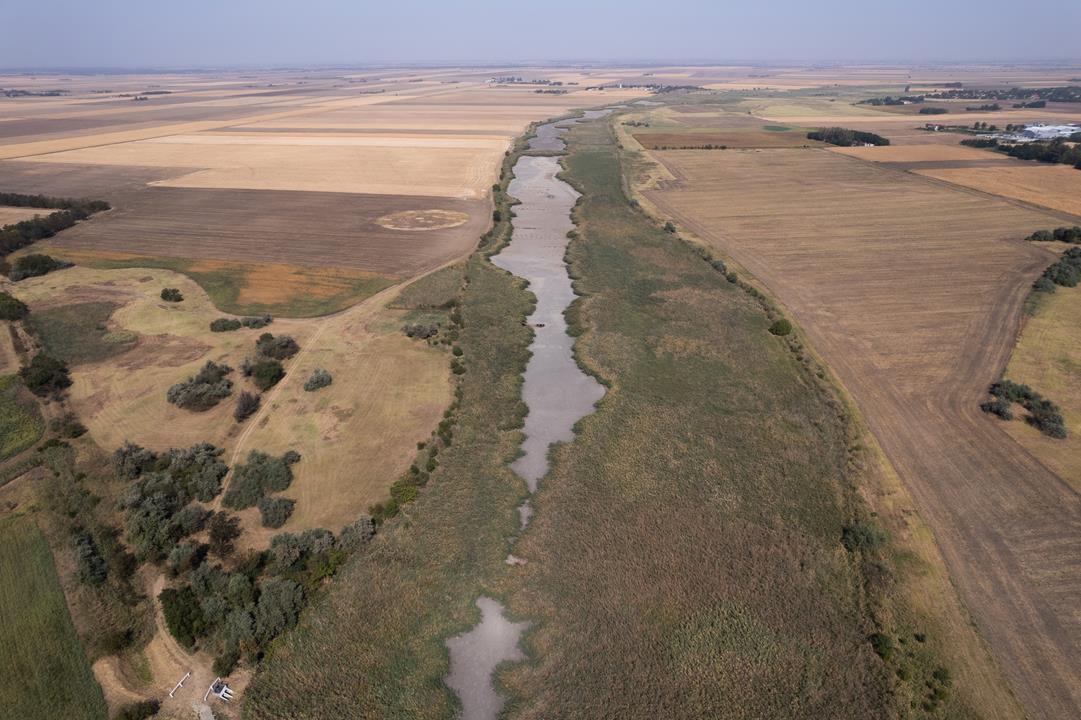
According to Telex, if climate change continues and we do nothing, the Kiskunság area of Hungary, well-known from Sándor Petőfi’s poems, will look like a semi-desert in decades. For example, the feather grass (árvalányhaj) and echinops (kék szamárkenyér) could be displaced by exotic, heat-loving plants from distant regions.
László Erdős and György Kröel-Dulay, senior researchers at the HUN-REN Centre for Ecological Research, along with their colleagues, have been monitoring changes in the open perennial sandy grasslands of the Sand Ridge region for nearly two decades. This grassland type is characterised by low dependence on groundwater, and changes in its vegetation are largely attributed to global climate change.
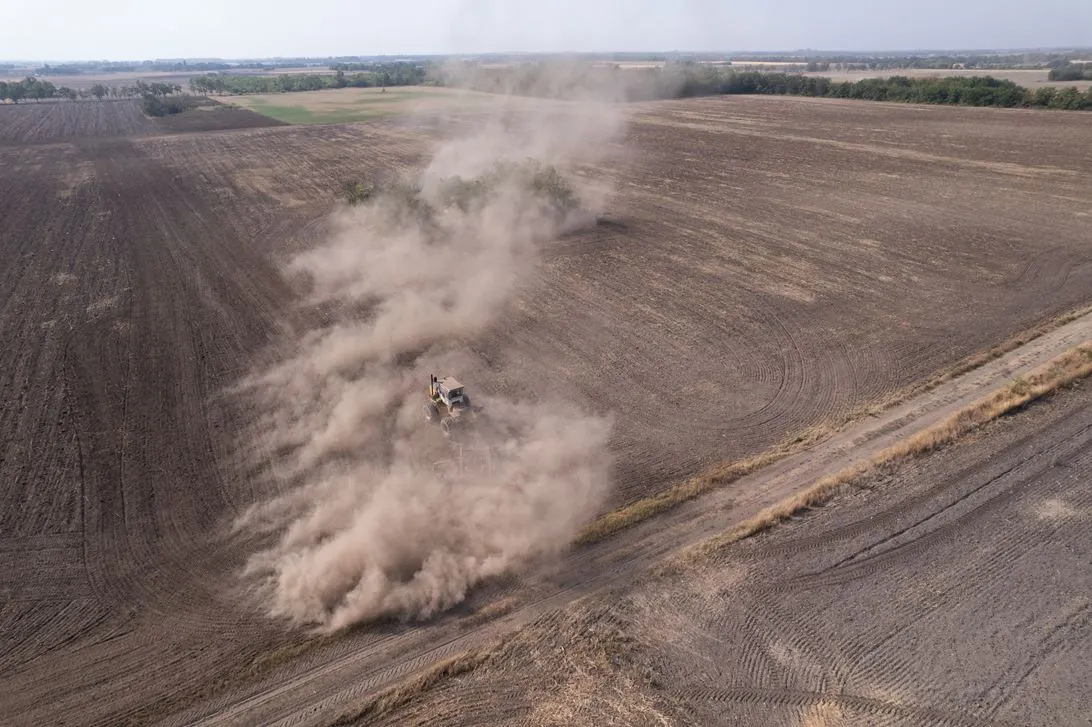
Over the past twenty years in the region, the average annual temperature has significantly increased, while annual precipitation has not changed noticeably. Comparing field surveys between 2005 and 2022, the vegetation composition reflected that trend. The proportion of heat-loving perennial plants increased significantly, while those requiring cooler conditions declined.
Two invasive alien species, the erect brome (bugás tövisperje) and prairie sandreed (homoki prérifű), appeared and became frequent by 2022 compared to 2005. Those are so-called C4 plants, which use a different mechanism to utilise atmospheric CO2, making them particularly efficient in high heat. C4 plants are typically found in tropical and subtropical areas, but are becoming more competitive in Hungary due to climate change.
Climate change is also expected to alter the seasonal precipitation distribution. Annual plants can bounce back relatively quickly from dry years by regenerating from soil seed banks, whereas perennials tend to grow more slowly and require more time to recover. Consequently, repeated dry spells may decrease the dominance of existing perennial species, potentially resulting in a shift toward semi-desert vegetation dominated by annuals in the area.
Read also:


