Subscribe to our social channels to get the latest news about Hungary!


Like the Canadian I am, let me start with this: I’m sorry. I know I am risking my life just by writing this, but it’s got to be said: Hungarian food is just not that special. I know, I know. How dare I? I can already hear people directing me to the nearest airport. “Don’t like Hungarian food? Then get out of here!!”
To be clear, I am not talking about sweets. Cakes and cookies (sütik), ice cream (fagyi), and a wide assortment of baked goods—they are world class, truly some of the best in the world. That is a discussion for another day. But insofar as cultural cuisine, well, it’s just not at the same level. Hungarian food is basic, simple.
I say all of this with the utmost respect and love for my wife, mother-in-law, and keresztanyu, who have all fed me countless times with wonderful food prepared with love and care. Delicious meals. But, if we are being honest with each other, Hungarian food is a bit… basic. Simple. Plain.
Recently, TASTEATLAS’s annual World Cuisine Ranking has Hungary listed at number 20. Twenty. That’s not bad, but it’s not good. Kind of middle of the pack. Just after Vietnam and just before Algeria. Yes, Algeria.
Hungarian cuisine didn’t just pop out of the ground fully formed — it’s the edible diary of a country that’s been trampled, traded with, and occasionally conquered by just about everyone. The Magyars rolled in from the steppes with their love of meat stews and dairy. The Ottomans showed up with peppers, eggplants, and enough sweets to give the Danube diabetes. The Habsburgs contributed schnitzel, strudel, and a flair for heavy pastries. Even paprika — the national spice — is a foreign import, arriving only after Columbus stumbled into the Americas.
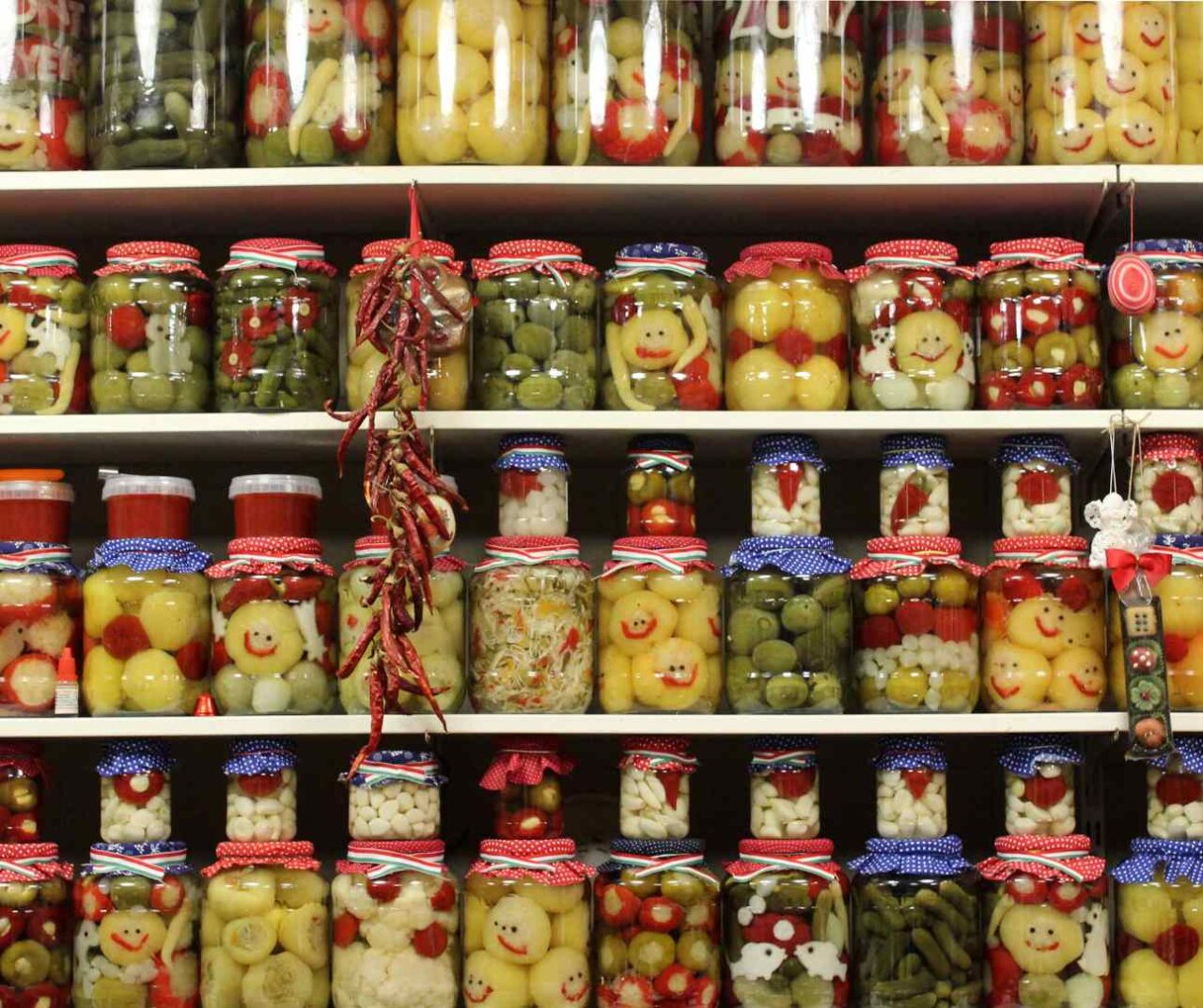
And the vegetables? Well… fresh greens never really caught on. If it’s not pickled, it’s probably boiled into submission or floating in a soup. Salads exist, but often just as a polite garnish to pretty up a plate. This is food designed for long winters, not for chasing Michelin stars — hearty, filling, and fiercely proud of it.
I understand that this opinion will irritate many Hungarians, but let’s be honest — the hype outweighs the reality. Yes, there is good food here. Yes, there are some excellent restaurants. But let’s not pretend we’re talking about a culinary capital on par with Paris, Tokyo, or Barcelona. It’s not even in the same league.
The truth is, much of the Hungarian food that gets praised to the heavens is simple, heavy, repetitive fare. Gulyás, pörkölt, töltött káposzta — tasty, sure, but they are hardly culinary revelations. After a week of eating “authentic Hungarian food,” you realize you’re basically rotating through different meat-and-sauce combinations with bread or potatoes on the side. It’s comfort food, not genius.
And while Budapest has its share of trendy, well-executed modern spots, they’re islands in a much bigger sea of mediocrity. Michelin says as much: Hungary sits 39th in the world for starred restaurants, with a total of 10 starred restaurants compared to France’s 680 or Japan’s 539. That’s not a global food powerhouse — that’s a country with a few bright sparks in an otherwise average scene.
So if Hungarians want to keep worshipping their cuisine as one of the best in the world, fine. But let’s call it what it is: simple, basic, hearty, and traditional. Nowhere near the pedestal it’s placed on.
Written by Phil Trasolini
If you would like to comment on this article, you will find the comment box below.
Read also: 5 traditional dishes that define the Carpathian Basin’s culinary heritage
Read here for more news about gastronomy in Hungary


Have you been reading my mind? I have been preaching this to others for a very long time, but never got around to penning an article. Yours is incredibly close to what I would have written, almost word for word, certain point by point (especially the one about fresh geens). Fortunately, I have a Hungarian wife who has been spoiled by the time she’s spent abroad experiencing some of the finest food in the world. And I’m not just talking about fancy food. I mean simple balanced meals with much greater variety of proteins and fresh vegetables and fruits year round (and at lower cost).
Thanks for the support. Not many agree with you 😂😂
https://www.facebook.com/share/174wGU94wt/?mibextid=wwXIfr
Don’t bother. The audience in the Facebook-comment section is a horde of wild Huns, who will hunt down everybody who doesn’t agree that Hungary is the best and most beautiful in everything. I, however, fully agree. Only comparing the amount of Michelin stars is a bit unfair, given the much larger populations of France and Japan. But other than that – a real and honest opinion.
Despite the simplicity of it, my kids still love the smell of paprikas wafting out of my kitchen. As did I when visiting Budapest enjoying the smells out of my Uncle and Grandmother’s kitchen.
I think it is all relative and personal. Food smells bring back comfort and fond memories associated with it. I love my Hungarian food from my Dad’s side, just like I like southern comfort food from my Mom’s.
I thank the author for mentioning he is Canadian at the very beginning of the article, to save me from wondering why he knows so little about food.
Born in the Netherlands to a Hungarian father, I’ve always had a deep connection to both Dutch and Hungarian cultures. My grandparents fled Hungary in 1956, seeking refuge in the Netherlands, and since 1970, I’ve made annual trips to Hungary, where I now live.
Growing up, Hungarian breakfasts were a ritual — bread, szir, tomatoes, peppers, raw spring onions, and kolbász were the staples. Our meals were typically built around comforting, flavorful dishes like pörkölt és galuska, töltött paprikás, uborkasaláta, lecsó, rántotta, and gombóc (szilva) and so on. The heartiness of these dishes is undeniable, and they have an enduring place in Hungarian culture.
However, after traveling and exploring the diverse food landscapes of Europe, I’ve come to recognize a pattern: while Hungarian cuisine is undeniably delicious and comforting, it can often feel repetitive and simple. There’s a consistent reliance on a few key ingredients and preparation methods, which, though tasty, don’t offer much in terms of variety or innovation.
This presents a significant opportunity for Hungary’s culinary scene. Just as the late Jonnie Boer transformed Dutch cuisine with his creative approach and fresh perspectives, there’s potential for Hungarian chefs to breathe new life into traditional dishes while still honoring their roots. Introducing modern techniques, new flavor combinations, and even international influences could elevate Hungarian food, offering both locals and visitors a fresh culinary experience while staying true to the country’s rich gastronomic heritage.
Hungary is at a crossroads, and the time is ripe for chefs to experiment and push the boundaries of what Hungarian food can be — bold, inventive, and yet unmistakably Hungarian.