Subscribe to our social channels to get the latest news about Hungary!


A recent government inspection has uncovered alarming and dangerous deficiencies in Budapest’s public buses, according to a statement from the Budapest Government Office released on Thursday via MTI.
Alexandra Szentkirályi described the buses as life-threatening. Mayor Gergely Karácsony responded that most of the repairs have already been completed, while Dávid Vitézy argued that at least 10 billion forints should be allocated to bus purchases and BKV investments.
The Budapest Government Office ordered immediate technical inspections after several BKV buses caught fire in recent days, putting passengers’ lives and safety at risk, MTI reported. Inspectors visited four BKV depots responsible for repairs and technical checks to assess the condition of vehicles in daily operation.
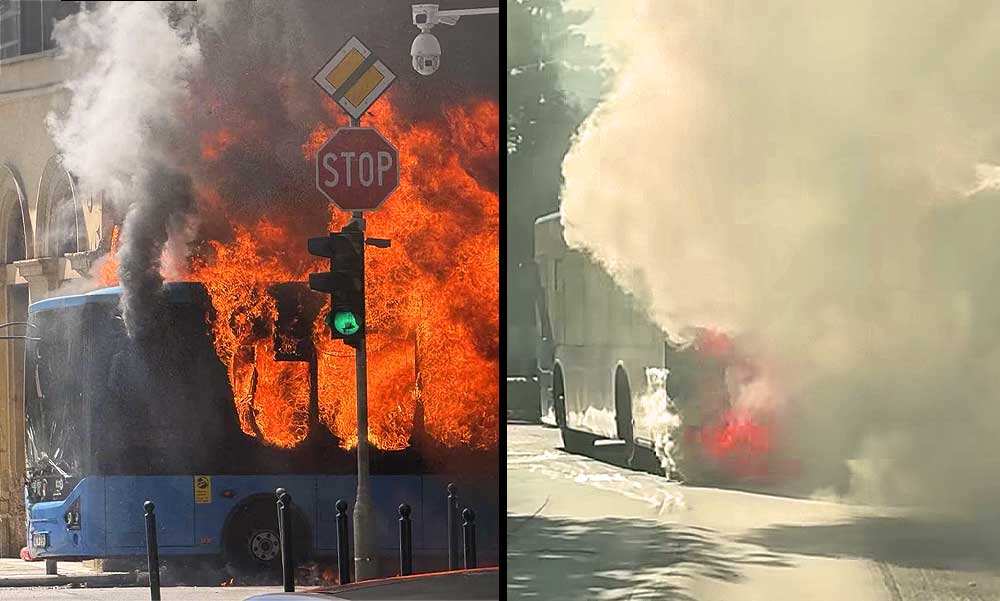
The inspections revealed serious and dangerous deficiencies:
According to the statement, only 22% of inspected buses were deemed fully roadworthy.
Common issues included oil leaks with the potential to cause fires, inadequate braking systems, worn tyres, and faulty suspension parts. Inspectors also identified safety risks inside the vehicles, such as unsecured seats, broken handrails, and missing or expired mandatory safety equipment, including wheel chocks and fire extinguishers.
Mayor Karácsony responded in a lengthy Facebook post, seeking to clarify the situation. He stressed that the government office had only ordered nine buses removed from service, which did not disrupt public transport.
“Repairs began overnight, and some buses have already been fixed,” he wrote.
He emphasised that buses undergo routine inspections:
Karácsony attributed recent breakdowns and fires to the ageing fleet, while pointing out that the city is replacing vehicles as finances allow.
“Over the past five years, 360 new buses, 45 new trolleybuses, and 40 new trams have entered service in Budapest,” he noted, adding that the national government has consistently hindered new bus acquisitions.
Despite recent upgrades, Karácsony highlighted that more than 300 vehicles currently in service are over 15 years old. Replacing them with modern, air-conditioned buses equipped with cameras and passenger information systems remains a top priority.
“Over the next two years, more than 300 new electric and diesel buses will enter service in Budapest,” he said.
He also recalled a point raised previously by Dávid Vitézy of the Podmaniczky Movement: in 2021, the national government blocked the city’s plans to replace buses now being taken off the streets. Karácsony argued that all that is required is a government signature to access favourable EU development funds earmarked for modernising the city’s public transport fleet.
Dávid Vitézy contended that there is little point in allocating 1 billion forints to participatory budgeting when BKV has only the same amount available for essential investments such as new buses.
He cited as examples shade structures installed at Széll Kálmán Square costing 120 million forints, and a cycle lane on Bajcsy-Zsilinszky Road—projects which, in his view, could have been deprioritised.
According to Vitézy, such initiatives only make sense if Budapest has at least 10 billion forints available for fleet upgrades and bus purchases.
Fidesz’s city representative, Alexandra Szentkirályi, sharply criticised not only the city leadership but also opposition figures Péter Magyar and Dávid Vitézy. She argued that they bear responsibility for spending the city’s remaining funds on the purchase of a waste site—most likely referring to Rákosrendező.
She contrasted this with the period of former Mayor István Tarlós (Fidesz), under whom, she claimed, buses would never have been allowed on the roads if only 20% were roadworthy.
Szentkirályi accused the Karácsony–Tisza coalition of being to blame for the current transport crisis.
Read more:
Click for more news concerning the public transport of Budapest.
To read or share this article in Hungarian, click here: Helló Magyar


Fidesz borrowed 2.5 billion euros to fund a high speed train line to Belgrade. Exactly how is that expenditure going to benefit Hungarians compared to funding the BKV bus fleet and funding service on existing MAV lines which are in horrible shape? The high speed line does not even stop at any major Hungarian cities such as Szeged or Kecskemet making it a tragic waste of the money of Hungarians.
Larry, it’s not even ‘high speed’, nowhere near in fact. Line speeds will be 160 kph in Hungary which are considered decidedly slow by the standards of 2025 and nowhere near the top speed of the trains that’ll serve the route. The line between Hegyeshalom and Budapest is 160 kph for about 50% of the route, a speed that was first achieved in the mid 1990s using a trackbed dating back to the time of the Habsburg Monarchy. They’ll reach 200 kph on Serbian tracks in comparison. Austria is inaugurating the Koralmbahn between Graz and Klagenfurt where trains will reach 250 kph reducing the journey time to a mere 45 minutes and while this is ‘high speed’ in rail parlance, it’s not true high speed as understood by European passengers which is from 300 kph, in line with French TGV, German ICE and Spanish Renfe line speeds, amongst others. When the UK’s ill-fated HS2 opens it’ll have speeds of 360 kph.
In short, Hungary has spent a vast amount of money to upgrade a rail line to 20th century standards, although in comparison to typical Hungarian line speeds it’s a giant leap ahead.