Gigantic tender won by Hungarian Ikarus and Chinese partner

Change language:
Ikarus and its Chinese partner Yutong have jointly won the public procurement tender for 160 new trolleybuses in Budapest. The new vehicles will combine cutting-edge battery and overhead wire technologies.
Hungarian Ikarus and Yutong win Budapest trolleybus tender
Budapest’s public transport company BKK has concluded its multi-round public procurement process to select the supplier of 160 new battery-powered self-driving trolleybuses. The winning bid was submitted by Electrobus Europe Zrt., the distributor of Ikarus electric buses, in partnership with Chinese manufacturer Yutong. As reported by Magyarbusz.info, the tender was awarded to this Hungarian-Chinese consortium.
Four manufacturers submitted bids for the contract to supply 160 new trolleybuses to Budapest. Competing proposals came from Hungary’s Electrobus in partnership with Yutong, Poland’s Solaris, the Czech Škoda Group, and the Turkish Bozankaya-Medcom consortium. Škoda withdrew from the process, and while Solaris met formal requirements, it failed to reach eligibility for a full evaluation.
As a result, the actual competition came down to the Ikarus–Yutong team and Turkey’s Bozankaya, with the Hungarian-Chinese consortium winning due to its more favorable price-to-value ratio.
How much will the new Ikarus trolleybuses cost?
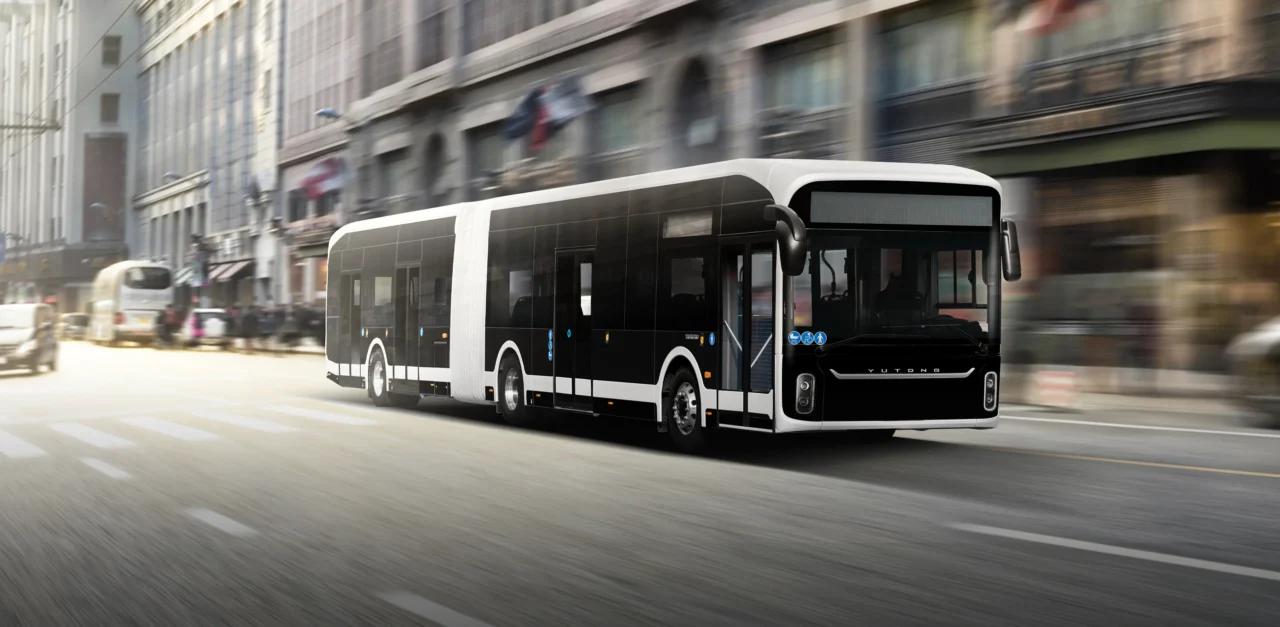
The solo trolleybuses are priced at EUR 451,500 (HUF 179 million) each, while the articulated versions will cost EUR 649,500 (HUF 259,6 million) apiece. Within the consortium, Electrobus Europe Zrt.—a member of the Ikarus Group—is responsible for distributing the vehicles and providing after-sales support. Yutong will handle manufacturing and technical development.
Yutong built the trolleybuses using its proprietary electric bus platform. This means the vehicles use Yutong’s proven e-bus systems for propulsion, battery, and control. Overhead wire power supply and other trolley-specific components were integrated into this system, allowing the vehicles to operate as both electric buses and traditional trolleybuses.
Innovative technology
Rather than using a standard electric drive system, the new trolleybuses are based on Yutong’s premium e-bus platform, enhanced with overhead wire compatibility. The integrated system simplifies maintenance, makes parts replacement easier, and reduces operational costs.