In 2024, residents of Budapest’s District VI voted in favour of banning Airbnb, and the local council officially adopted the measure: from 2026, short-term rentals will no longer be allowed. According to the municipality, Airbnb drives up housing prices, undermines communities, and forces locals out of the city centre.
Eight months later, however, the Budapest Government Office declared the blanket ban unconstitutional, arguing that it violates the freedom of enterprise, Telex reported.
Airbnb in Hungary: a growing conflict
Short-term rentals, commonly known as Airbnb, have become a major source of tension in Hungary. Hosts say the tourist-driven market provides essential income, while many residents complain that noise, parties, and constant tenant turnover make everyday life impossible.
With more than 150 million users worldwide, Airbnb is the leading platform for short-term accommodation. Photo: depositphotos.com
Research has consistently shown that it contributes to rising housing prices and rental costs. Unsurprisingly, the issue has sparked political debates and strict regulations in many European cities.
District VI residents voted to ban
The conflict in Budapest is particularly acute in the central districts. In autumn 2024, District VI held an online vote asking residents: “Do you agree that in District VI we should ban the rental of apartments in condominiums as Airbnb-type accommodations?” The majority said yes, and the council passed a decree allowing “zero days” of short-term rentals.
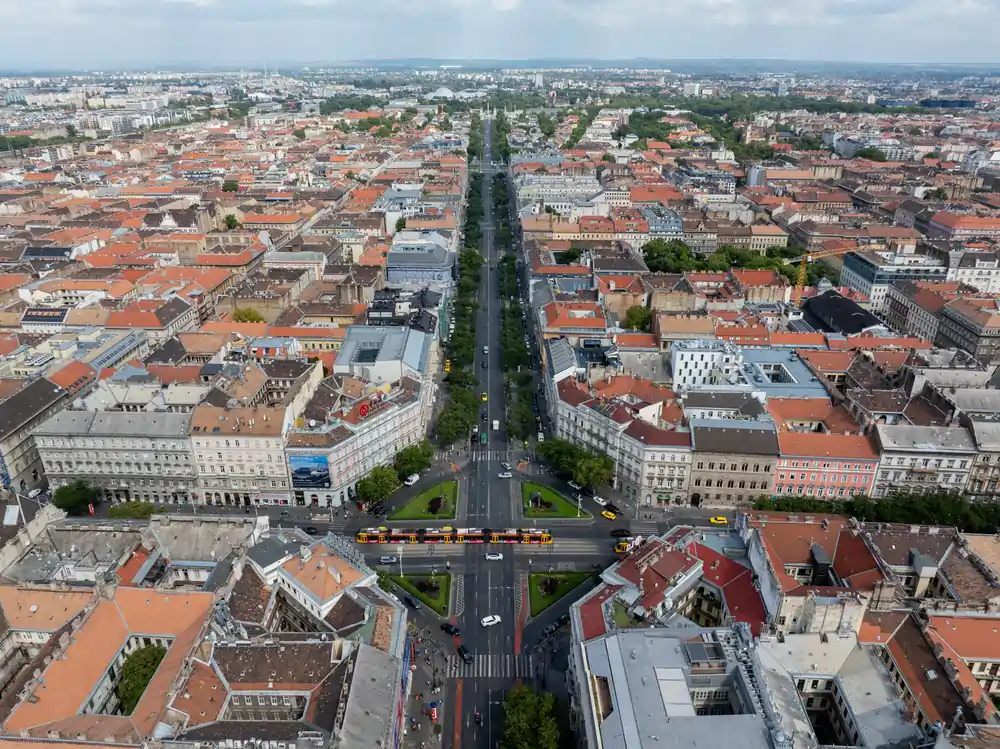
Located in the heart of the capital, District VI is one of the most popular areas for tourists. Photo: Soproni Tamás / Facebook
Airbnb operators responded with an open letter to Mayor Tamás Soproni, urging him to withdraw the ban. Soproni, however, stood firm:
“Our position is unchanged. in line with the majority decision, the right to housing, home, and peace of mind takes precedence over financial interests. We will not amend our decree, and if necessary, we will defend it before the Curia.”
According to Hungary’s Central Statistical Office, District VI is especially affected: around 8 percent of all apartments were used for short-term rentals, and nearly half of the buildings had at least one Airbnb unit.
Budapest Government Office argues the Airbnb ban is unconstitutional
“A very strange and uncertain situation has emerged,” Telex noted in its report.
In July 2025, the Budapest Government Office challenged the district’s decree. Its argument: a total ban violates Hungary’s Fundamental Law, as it disproportionately restricts the freedom of enterprise. The district government, however, insists that a 2020 law gives municipalities the right to set the number of allowable rental days—even zero—making the ban lawful.
The Curia’s upcoming decision could reshape Airbnb regulation in Hungary
The case is now before Hungary’s Curia (supreme court), which is expected to rule this autumn on whether the District VI ban can remain in force. The decision could set an important precedent for how far other municipalities may go in regulating short-term rentals.
In the meantime, Airbnb hosts remain in limbo. According to Telex, many are unsure whether to give up their licenses or wait for the ruling, even if that means paying higher taxes. The situation is further complicated by a nationwide moratorium: no new private accommodations can be registered until 2027. In other words, hosts who exit the market now may not be able to return later.
The Curia’s decision will ultimately determine whether Airbnb truly disappears from central Budapest in January.