Subscribe to our social channels to get the latest news about Hungary!


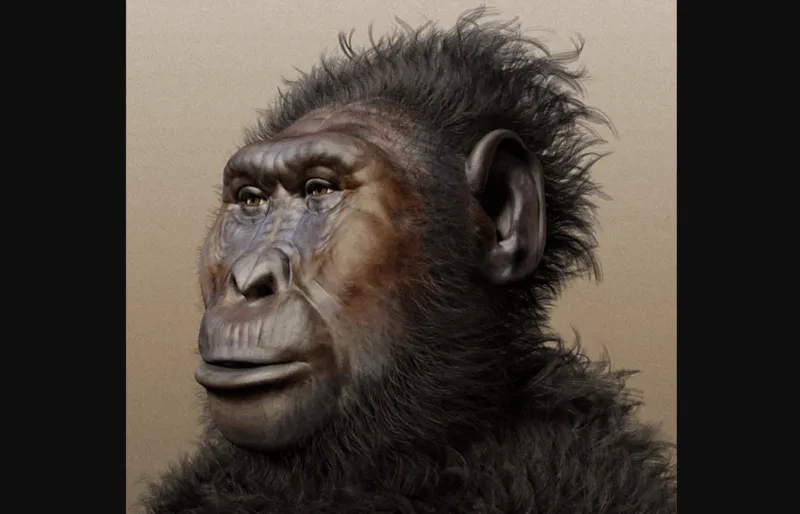
A major scientific breakthrough could soon reveal everything about one of the most debated prehistoric human ancestors.
A long-running scientific dispute may be nearing its end: the discovery of a fossilised hand appears to confirm that Paranthropus boisei—better known as the “Nutcracker Man”—really did use tools, according to a National Geographic article.
The mystery surrounding P. boisei dates back to July 1959, when British archaeologist Mary Leakey unearthed the remains of an early human skull in Tanzania’s Olduvai Gorge, a site known for its rich archaeological finds.
Her discovery gained significance because she and her husband, Louis Leakey, had found stone tools there as early as 1931, which researchers believed had been made by the robust-jawed hominin later nicknamed “Nutcracker Man” for its massive molars.
However, the finding sparked heated debate within the scientific community. Many doubted that the species—later named Paranthropus boisei—had actually made the tools. Even the couple’s son, Richard Leakey, questioned his parents’ hypothesis. To confirm the theory, scientists needed one more crucial piece of evidence: fossilised hand remains. For decades, none were found—until now.
Louise Leakey, the granddaughter of Mary and Louis, and her research team have announced the discovery of P. boisei hand fossils near Kenya’s Lake Turkana. Alongside the hand bones, skull fragments and teeth were also uncovered, which likely belonged to the much-debated ancestor.
According to the team’s analysis, the hands of P. boisei were both strong and dexterous enough to craft and use stone tools. However, the researchers also cautioned that while this shows the species possessed the necessary physical ability, it still cannot be stated with absolute certainty that P. boisei actually created those tools.
The newly found fossils may now support Louis Leakey’s decades-old theory about the “Nutcracker Man.” Leakey argued that P. boisei had relatively weak and underdeveloped incisors and canines, making it difficult to tear the hides of hunted animals with its teeth. He believed the species, therefore, created tools to help process meat.
Yet by the 1960s, after examining the skull of Homo habilis—commonly called the “handy man”—Leakey began doubting his earlier conclusion. Subsequent research on P. boisei remained largely speculative.
In 1969, Richard Leakey discovered another P. boisei skull near Lake Turkana and used the find to refute his father’s claims. He argued that its powerful jaw and large molars suggested a plant-based diet, making it unlikely that the species needed tools for cutting or piercing. Given that fossils of Homo habilis and Homo erectus were also abundant in the same region, Richard concluded that those more advanced ancestors were the true toolmakers.
The recently unearthed hand fossils suggest that P. boisei possessed long, slightly curved fingers and broad fingertips—features that allowed for relatively precise finger movements. Still, it remains possible that, like modern apes, the species used this agility for tasks such as pulling up plants or climbing rather than making tools. Further evidence will be required to determine this with confidence.
This milestone discovery could reshape not only our understanding of the “Nutcracker Man” but also broader scientific perspectives on human evolution. Fittingly, it stands as a shared achievement of three generations of the Leakey family.
By Bence Morvai


