Subscribe to our social channels to get the latest news about Hungary!


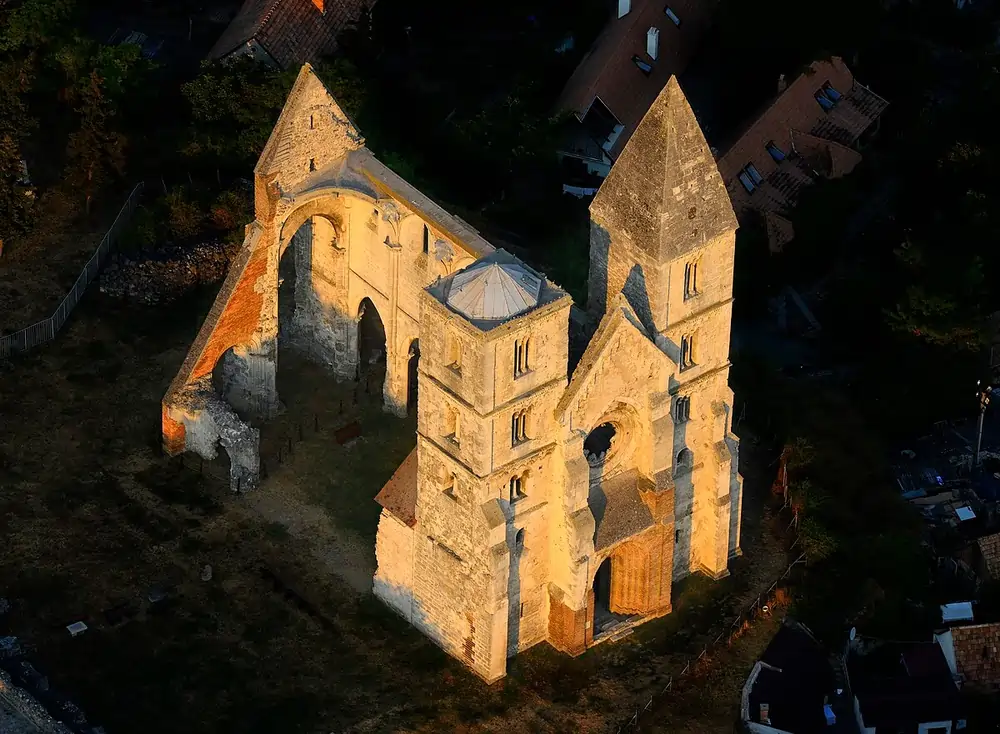
One of Hungary’s most iconic medieval ruins, the Zsámbék Basilica, may soon be reborn: yet not everyone agrees on what that should mean. Preparations for the reconstruction are underway, but the question of whether to restore or preserve the church as a ruin continues to divide experts and locals alike.
In spring 2023, the Municipality of Zsámbék announced a design competition titled “Revitalisation of the Zsámbék Old Church and Its Surroundings”. Twenty-two submissions were received, and the winning entry came from KÖZTI Zrt.
According to Magyar Építők, the company will prepare detailed plans for around 1.1 billion forints, while the total investment could reach 10 billion forints.
Under the proposed concept, the Premonstratensian order could return to live near the historic church. A new monastery would be built over or adjacent to the ruins of the medieval abbey, including monks’ quarters, workrooms, and guest rooms. Part of the complex would be closed off as a monastic enclosure.
Tourism also plays a key role in the plans. A modern visitor centre is envisioned, featuring an interactive exhibition on the Premonstratensian order and the history of the basilica. Parts of the current stone collection would be moved here, and the facility would include a conference hall for 120–180 people. Developers estimate around 60,000 visitors per year once the project is completed.
The plans for rebuilding and expanding the site have raised numerous concerns. According to Szemlélek, both professionals and members of the local community fear that the project could destroy the site’s unique identity as a preserved ruin.
The ICOMOS Hungarian National Committee, part of the international heritage conservation organisation, argued that the Zsámbék Basilica is an iconic monument that should be preserved as a ruin, much like the Colosseum in Rome or the Pont d’Avignon in France.
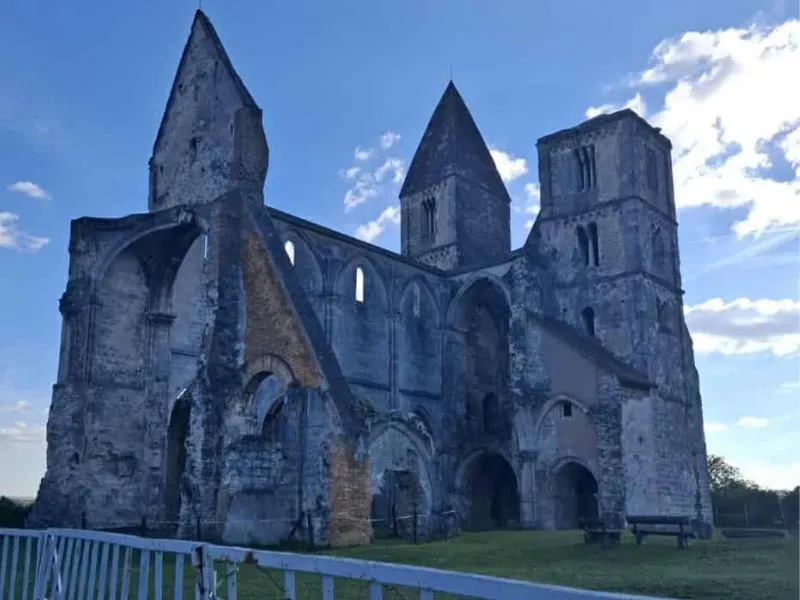
Archaeologist Ilona Valter, who once took part in excavations at the site, also expressed strong reservations. She warned that building a new monastery could only be achieved by partially demolishing original medieval walls.
“Personally, I am devastated by the idea that the Premonstratensian order — with the help of a former heritage architect — plans to build a modern monastery atop the medieval ruins, and next to it a visitor center,”
she told Szemlélek.
Other experts, however, argue that the basilica was built from soft sandstone, which continues to deteriorate. Without some form of intervention, the structure could eventually collapse.
According to Father Dénes Márton Holnapy, the Premonstratensian parish priest of Zsámbék, delaying the decision would be irresponsible.
“We cannot let the church collapse while we argue. If that happens, we’ll have wasted years of opportunity. Something must be done — the question is what,”
he said in an interview.
Father Holnapy, who also holds a degree in architecture, has monitored the basilica’s gradual decay for decades. He believes the project can only succeed if the local community feels included — if the new complex serves not only tourists but also Zsámbék’s residents.
Although planning has officially begun, the start date of construction remains unclear. The ruined basilica is still a symbol of Zsámbék, making the debate over its fate a matter of national cultural importance.
Father Holnapy admits that, for now, they are “waiting for a small miracle.” But everyone agrees on one thing: saving the church can no longer be postponed. Whether that means reconstruction or preservation, the coming years will decide the basilica’s future.


