Subscribe to our social channels to get the latest news about Hungary!


Researchers at the National Archaeological Institute have been working for four years to uncover the history of Veszprém Castle.
Archaeologists from the National Archaeological Institute of the Hungarian National Museum have been conducting excavations at Veszprém Castle for nearly four years. During this time, they have identified numerous elements of the medieval fortress walls and early modern fortification systems.
Located atop Castle Hill, one of the seven hills that make up the city, Veszprém Castle was established in the 10th and 11th centuries, according to Veszpréminfo. The remnants of the ancient fortress can still be seen in the walls that trace the steep, rugged hillsides, where historic buildings now stand.
Over the centuries, the castle has witnessed many battles, followed by major construction projects that constantly renewed and reshaped its appearance to reflect the architectural styles and needs of each era. Today, the site functions as an artistic and religious hub, featuring numerous churches and grand historic buildings. Visitors exploring from the Art Nouveau-style Óváros Square will encounter many of the city’s top attractions and viewing points concentrated within the Baroque-style castle quarter.
Traces of its thousand-year history remain visible in exhibition spaces, visitor centers, and in various parts of the castle complex. Some of the original stones and rocks that once protected the fortress—and even housed Queen Gisela—can still be found today.
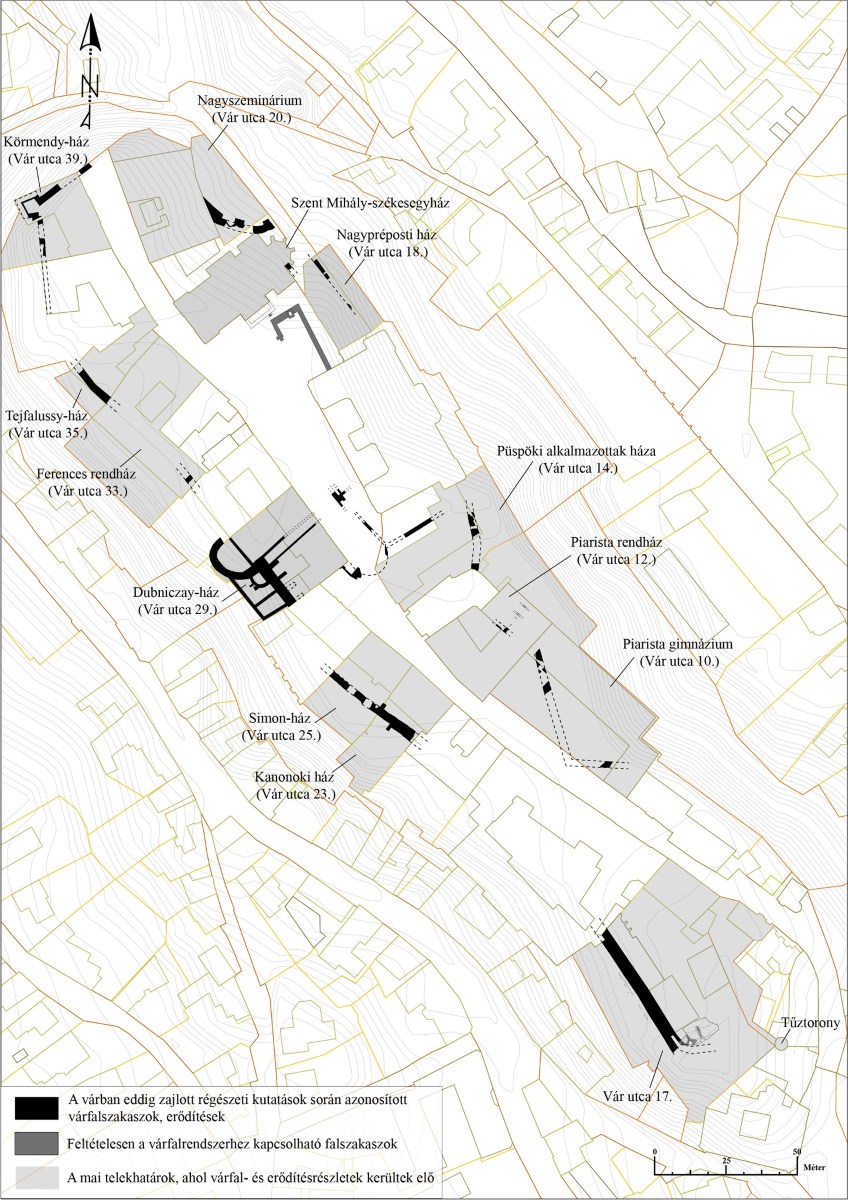
Archaeologists from the National Archaeological Institute have documented how Veszprém Castle evolved across the centuries. “Based on our current research, Veszprém Castle was definitely surrounded by stone walls starting in the early 14th century, as revealed by a section of wall found in the courtyard of the Piarist High School. In the basement on the west side of the Tejfalusy House, we discovered an even older wall segment, possibly dating back to the 12th or 13th century,” the Institute noted in a statement on Facebook.
Excavations revealed that during the early modern era, efforts were made to strengthen the castle walls using various methods. Instead of full-scale renovations, only partial repairs were carried out. “The Ottoman sieges of the 16th century took a toll on Veszprém Castle. But due to a lack of time and resources for complete reconstruction, earth-and-timber ramparts were added to reinforce the medieval walls. These could also double as artillery mounds,” the researchers explained.
“Giulio Turco, an imperial military engineer, documented these timber-reinforced embankments in his 1572 survey—including one at the southwestern corner of Castle Hill, which we also uncovered during our excavations and were able to study in detail,” they added.
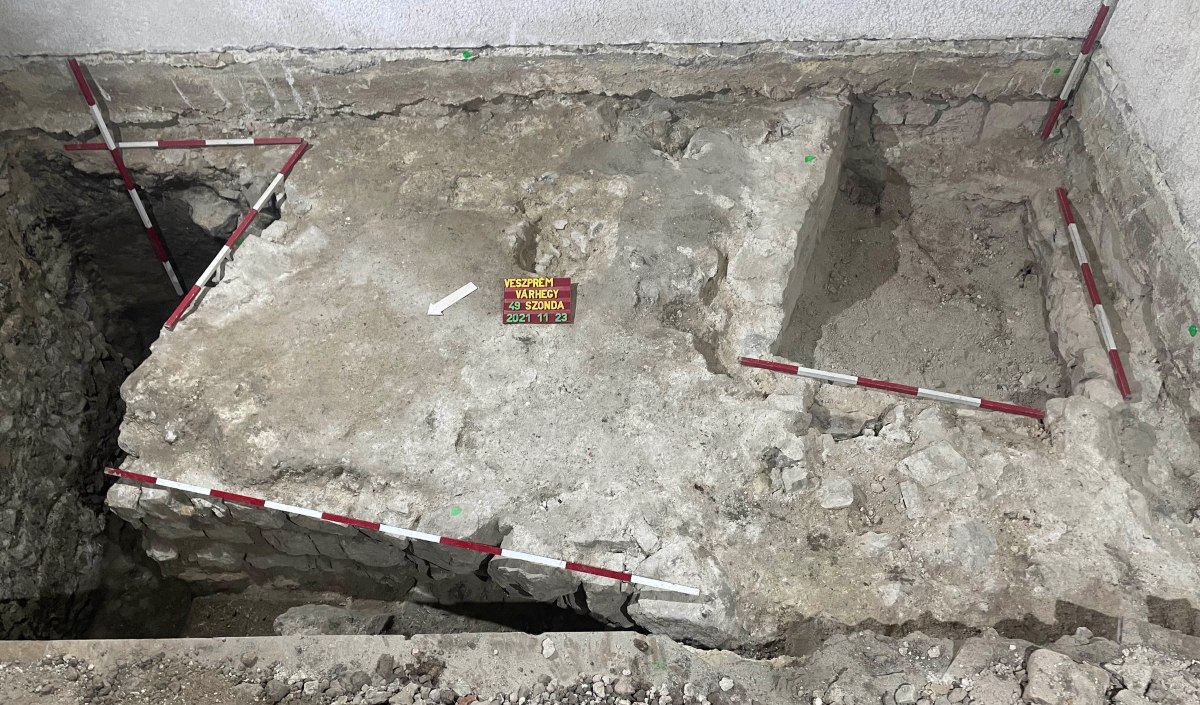
Research also showed that in the 17th century, additional fortifications were added. Remnants of a pentagonal bastion—used as the foundation for the Körmendy House—are still preserved in the building’s basement at the northwest corner of Castle Hill. Excavations in the courtyard of the Canon House uncovered two parallel, though not contemporaneous, wall sections. This suggests that a new wall was built outside the medieval one, likely to bolster that area of the castle against attack.
According to the Institute’s experts, most of the medieval walls were either dismantled or repurposed during the Baroque reconstructions of the 18th century. Some buildings integrated the old stones directly into their walls, while others, like the Körmendy House, stand on foundations made of original castle materials.
To read or share this article in Hungarian, click here: Helló Magyar
Read more Hungarian history-related articles on Daily News Hungary.
Read also:


