Subscribe to our social channels to get the latest news about Hungary!


Hungary is an open country – as the cliché says. And it actually is: while the export was eight times bigger in 1990 – the year of the change of regime – than in 1960, the volume index of Hungary’s export grew eightfold by 2016 again, GLOBS Magazine said.
Meanwhile, the import grew sevenfold since 1960 by the time of the change of regime, and continued to grow more than fivefold by 2016, which means that the Hungarian growth of export exceeded the growth of import as part of a dynamic growth process. The good news that comes with the openness is that Hungary’s balance of trade also improved, however, we ended up in difficult payment procedures several times due to the external indebtedness. At the same time, the Hungarian external financing position has been improving and shifting into the positive range since 2012, in a way that there’s also economic growth and the debt is decreasing.
Regarding the trade activity of Hungary, the trade of services reached a greater proportion in the past two decades and managed to achieve a positive balance in the past years. The surplus was 7 billion euros in 2016 – it was only 1.5 billion ten years earlier – and a similar or even better order of magnitude can be expected in 2017 based on the results of the first half year.
Tourism, which brought a 3.3-billion-euro surplus last year, plays an outstanding role in the revival of services’ performance.
The growth pattern of the tourism’s asset seems to be coming to end based on the analysis of current processes, because as a result of the improving living standard, Hungarians resort to more and more touristic services abroad. Being an EU member state, the other successful service branch is the export of transport (services, carrying trade performed abroad), by the means of which our exterior balance improved by 2 billion euros last year. This is expected to improve further this year. A great part of our service asset – 63.8% in 2016 – was achieved vis-a-vis the EU member states, but it’s important to note that our balance is positive vis-a-vis all great country groups – even Asia.
The European Union plays an important role in the trade of our services, it accounted for 70.9% in 2016 and a similar rate can also be expected this year.
Based on this, we can state that the trade of services solidly helps the country’s exterior liquidity and the cutback of our debt’s foreign currency proportion, but it is also true that 2017 is the first year after a long time when the trade of services doesn’t support the Hungarian GDP’s growth sensibly.
There was a significant increase in goods turnover this year, the country’s trade openness (the rate of the export and import’s quantity compared to the GDP) continues to grow. Measured in euro, the export grew by 9.8%, while the import grew by 11.2% in the first half year. A factor that contributed to this is that our terms of trade decreased by 0.9% mainly due to the rise of a few important import products. Furthermore, the forint strengthened by 1% compared to the euro, but it was devalued by 2% compared to the dollar. Until the end of June, the balance of goods turnover brought an asset of 600 million euros less than last year, based on which it can be estimated that this surplus will be smaller by approximately 1 billion euros in 2017 compared to 2016. The growth in the field of investment and consumption compensates the remission of the trade surplus, the latter leads to the negative growth contribution of the GDP. But since the service asset and the goods turnover asset could be quite high this year (7 and 9 billion euros respectively), and the massive inflow of EU funds can be expected, if the economic growth continues, Hungary’s exterior financing position could stay steady despite the withdrawal of income and profit by foreigners.
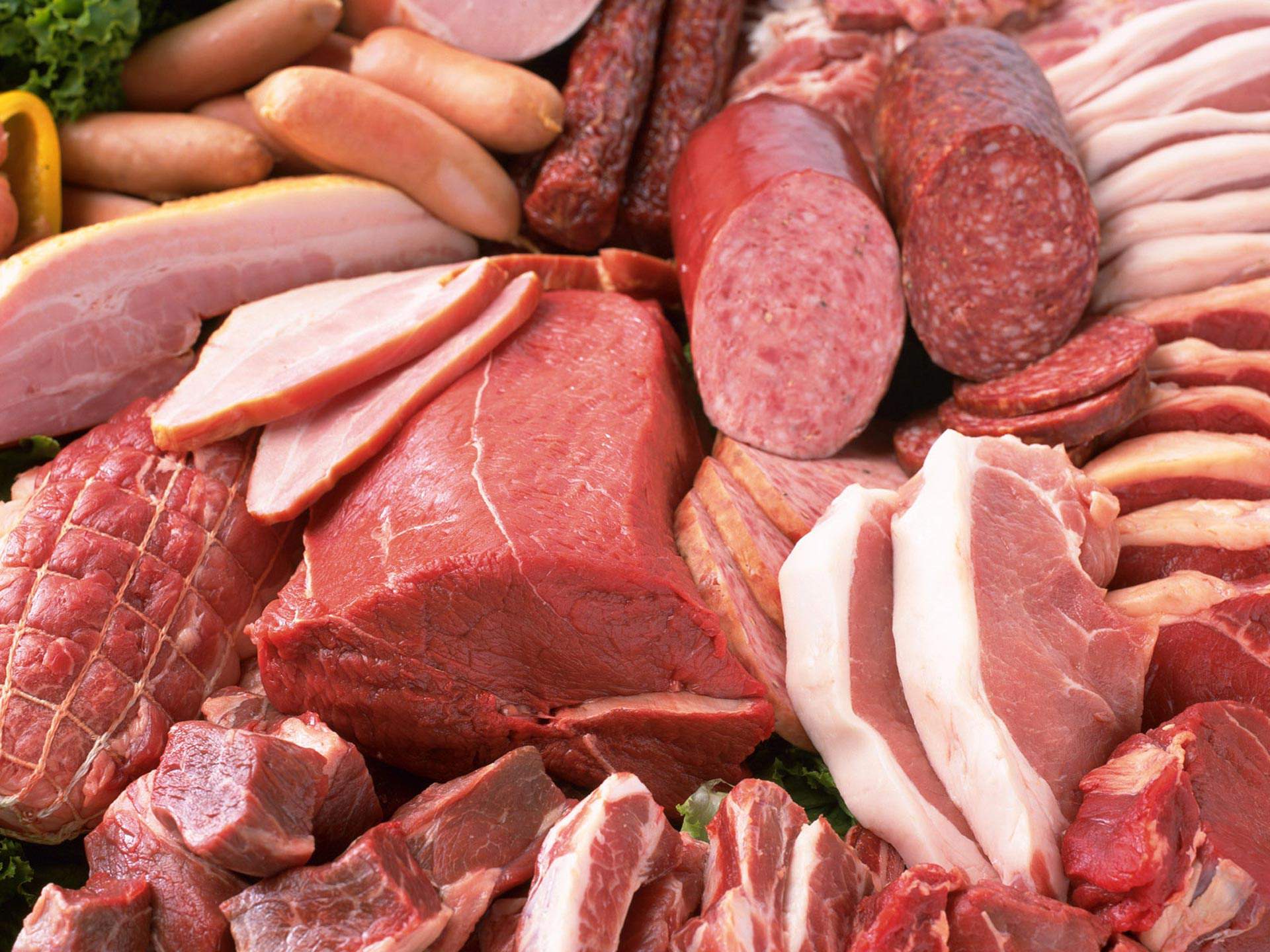
Out of the main groups of goods, the balance of trade of agricultural and food industrial products improved this year thanks to the outstanding results of the previous year. It could even reach the balance of 2015, only with a much better export and import record. This means that we managed to keep the asset of the sector, which represents a high Hungarian value-added, even despite a higher personal consumption rate. Hopefully we’ll manage to increase the net agricultural export in the upcoming years even if the personal consumption rate keeps on increasing, because it would also contribute to the growth of the GDP. Beside the export of raw materials, this calls for the higher rate of meat-trade and vegetable products.
The balance of energy sources declined compared to last year, so the processing and the re-export activities cannot compensate the price growth of products gratifying import needs. The case of raw materials is very similar.
In point of the growth of investments and the improvement of competitiveness, we can be satisfied because the import of machines and engineering appliances grew better then average.
If we analyse the Hungarian trade goods turnover by country groups, it can be stated that EU member states still play a significant role as 79% of the Hungarian export value finds its partners from the EU.
We managed to keep the outstanding asset achieved in 2016 (5.1 billion euros in a half year), but our surplus with the EU 13 countries grew slightly even in 2017. (They are called “new member states”, but this is not an adequate term 13 years after their accession, it’s better to call them states which joined since 2004.) It is a milestone that the EU 13 region has become a greater export market for Hungary than the whole world – outside the EU. (They come near the performance of non-EU partners regarding import as well.)
As a result, Hungary’s balance of goods turnover declined with countries out of the EU, the rate was already negative in the first half year after the minimal surplus of last year. The reasons behind this are not only the Russian energy import and the Chinese import pace, but also the increased African import, what is promising even if the continent only plays a minor role in the Hungarian trade (less than 1%). However, since the forecasts say that a significant population growth – which might even go together with a significant economic growth – can only be expected in the Dark Continent in the upcoming three decades, the market positions of the future have to be established now. (The population growth of Latin America and Asia will come to an end soon. But the improvement of the living standard can be an attractive factor there.)
If we break down the Hungarian goods turnover into countries, we can see that
the German predomination is still present in both the export and import.
The anecdote, according to which the two greatest German partner states (Bavaria and Baden-Württemberg) could be listed as our second and third most important trade partners after the rest of Germany, is still true.
Regarding the export: the competition for the second place in our export of partners behind Germany has been quite confined for years: Austria, Italy, Romania, Slovakia and France stand out, but the Polish and Czech relations that have been flourishing in the past years could become our main partners after Germany in a few years’ time. Beside Germany, we’ll have the greatest positive balance with Romania this year (the surplus was 1.3 billion euros in the case of both countries in the first half), while
the greatest liability can still be expected in the case of China and Russia.
But the latter cuts no ice, because the pertaining movement of goods is determined by the international working capital flow, not to mention that significant part of Chinese import only flows through Hungary. Regarding the changes of the balance of trade this year, it is good news that the significant growth of Hungarian export to Russia and Ukraine has gone under way, and this could lead to prosperous phase in our relations.
If you would like to read more interesting articles on GLOBS Magazine, please click HERE
or you can buy online The GLOBS Magazine on DigitalStand
Photo: MTI
Source: By: Zsolt Becsey/GLOBS Magazine


