Subscribe to our social channels to get the latest news about Hungary!


8 June is an important date in Hungarian history: 158 years ago, on this day, Emperor Franz Joseph and Empress Elisabeth (Sisi) were crowned. For Sisi, the day was excruciatingly long: she was being dressed from early dawn, the ceremony took place in the morning, a crowd celebrated in the streets during the day, and she attended receptions in the evening. Madame Tussauds Budapest commemorates this significant event with figures of Elisabeth and Franz Liszt, along with historical reenactments and various programs.
The coronation of Franz Joseph and Empress Elisabeth took place on 8 June 1867, in the Matthias Church. On this grand day, not only the ruler but his beloved wife, Elisabeth, was also in the spotlight. Hungarians adored Sisi so much that she was crowned alongside the king, despite etiquette dictating that her coronation should have happened several days later.
Queen Elisabeth usually avoided ceremonies, but 8 June 1867, held great importance for her. The Empress played a key role in the Austro-Hungarian Compromise and was genuinely happy to become Queen of Hungary. The coronation was held at 7 AM in the Matthias Church. Preparations took hours: her hairdresser, Fanny Angerer, styled her hair, then her maids helped her dress. Elisabeth arrived at the church in a ceremonial carriage.
After the lengthy ceremony came the knighting of the Golden Spurs, the oath-taking in Pest, and finally, the symbolic sword swing atop the coronation mound built from soil of Hungarian counties near the Pest side of the Chain Bridge: the king pledged to defend the country by striking toward the four cardinal directions with the Sword of Saint Stephen. A coronation banquet at the palace followed.
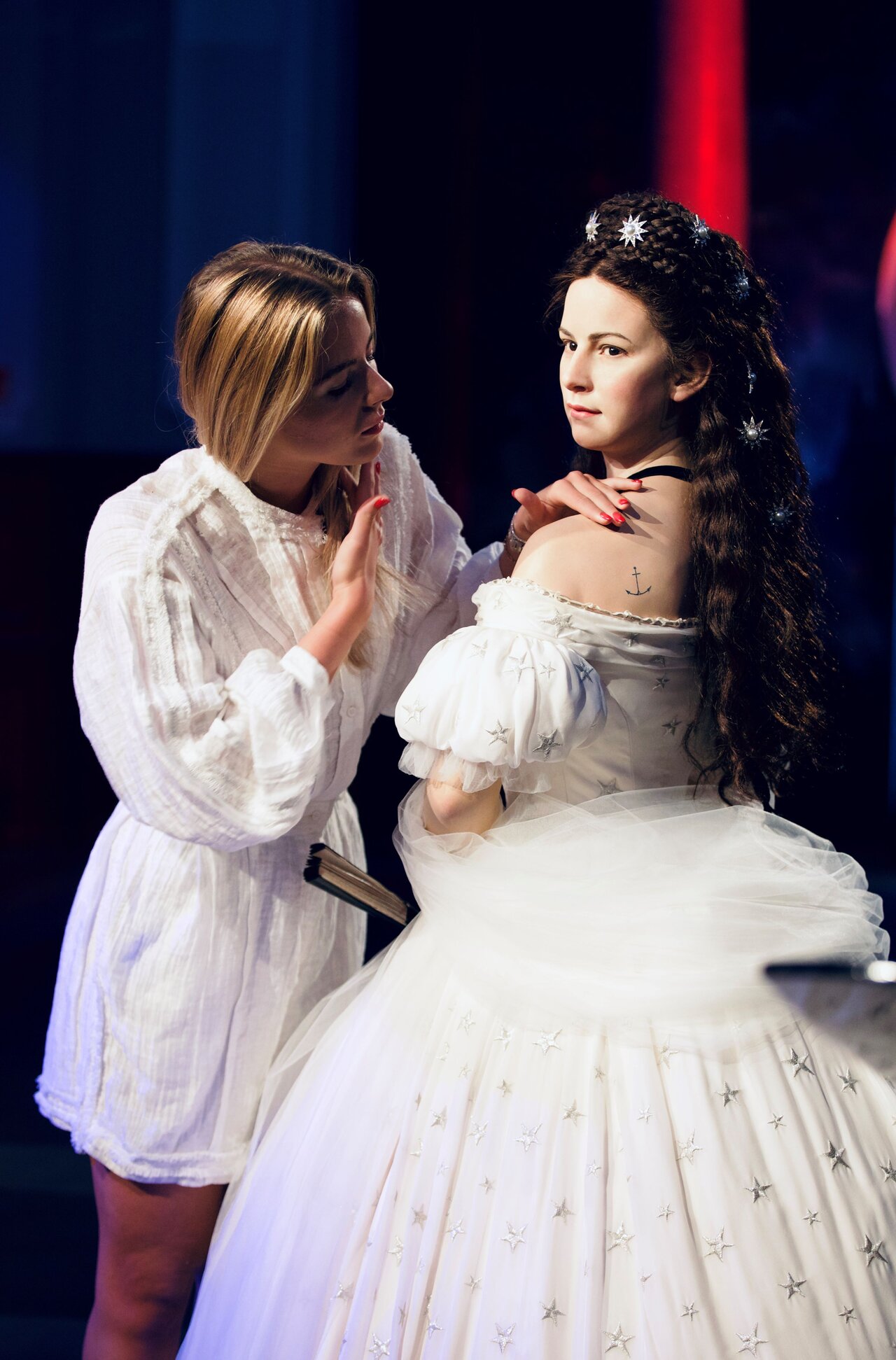
At 30, Elisabeth was said to be at her most beautiful during the coronation. She wore a traditional Hungarian court dress adorned with embroidered lilacs, with diamonds sparkling at the centre of each flower. Following tradition, she later donated the gown to the Bishopric of Veszprém, where it was turned into liturgical vestments.
Franz Liszt’s Coronation Mass, composed for the occasion, was performed at the ceremony—largely thanks to Elisabeth, who personally advocated on his behalf. Though Liszt was not officially invited, he still attended and listened from the gallery. As he left the church on foot, the crowd recognised him and greeted him with great applause.
Elisabeth’s ability to speak Hungarian made her immensely popular. She began learning the language as a young bride, hiring several tutors, including journalist Miksa Falk. She also appointed many Hungarians to her court, including Ida Ferenczy, who became her close confidante. Elisabeth often used Hungarian as a “secret” language to maintain privacy during travels. She insisted that her children, Gisela and Rudolf, learn it as well.
Madame Tussauds Budapest features figures of both Sisi and Franz Liszt. Visitors can meet the queen in the grand Hauszmann Room, beside her carriage, and admire her famously slender figure, which became one of her trademarks. At 172 cm (5’8″), Elisabeth was considered tall; her waist measured 50–55 cm (19.5–21.5″), her hips 60–65 cm (23.5–25.5″), and her bust 80–90 cm (31.5–35.5″). Her typical weight was around 50 kg (110 lbs).
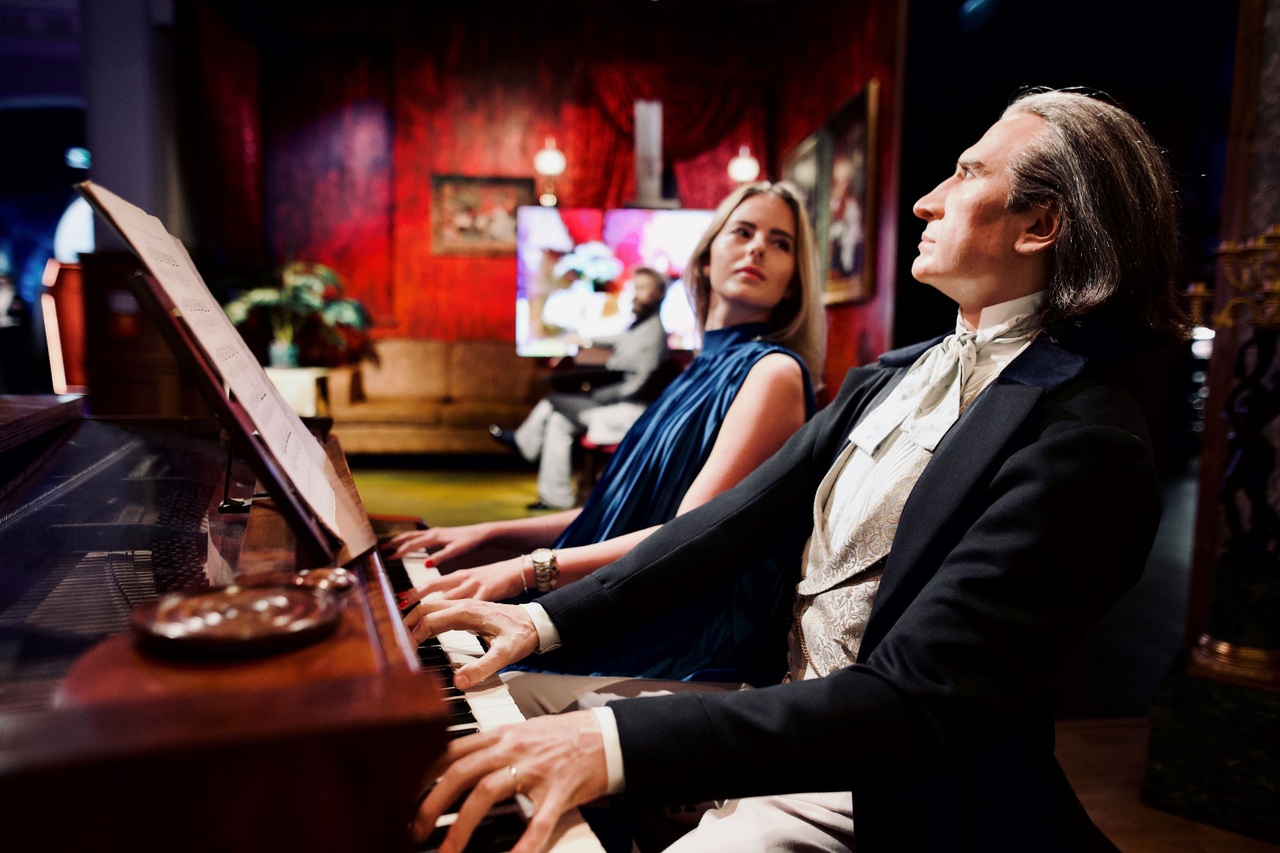
The dress displayed on the Dorottya Street figure dates back to the early 1860s and features a large crinoline. A unique detail: the figure displays one of Sisi’s tattoos—a small anchor on her left shoulder blade. Just a few meters away, visitors will find Franz Liszt seated at a piano, also ready to greet guests.
On Sunday, 8 June, from 10 AM to approximately 4 PM, visitors will have the chance to meet a historical reenactor portraying Queen Elisabeth. Emperor Franz Joseph may also make occasional appearances throughout the venue.
Read also:


