Subscribe to our social channels to get the latest news about Hungary!


Researchers are looking for regular phonetic correspondences between Hungarian and other Finno-Ugric languages, which can be used to reconstruct ancient language forms. Such correspondences can be observed at all levels of the language, whether in the formation of the phoneme set, verb and pronoun phrasing, or sentence structures.
According to Egyetem TV’s Választár series, the Finno-Ugric affinity of the Hungarian language is mainly proven by the methods of historical-comparative linguistics. This method has been used worldwide since the 19th century to investigate relationships between languages. The kinship of languages of the same origin is based not only on vocabulary similarities but also on systematic similarities in phonology, grammatical structures, and syntactic features.
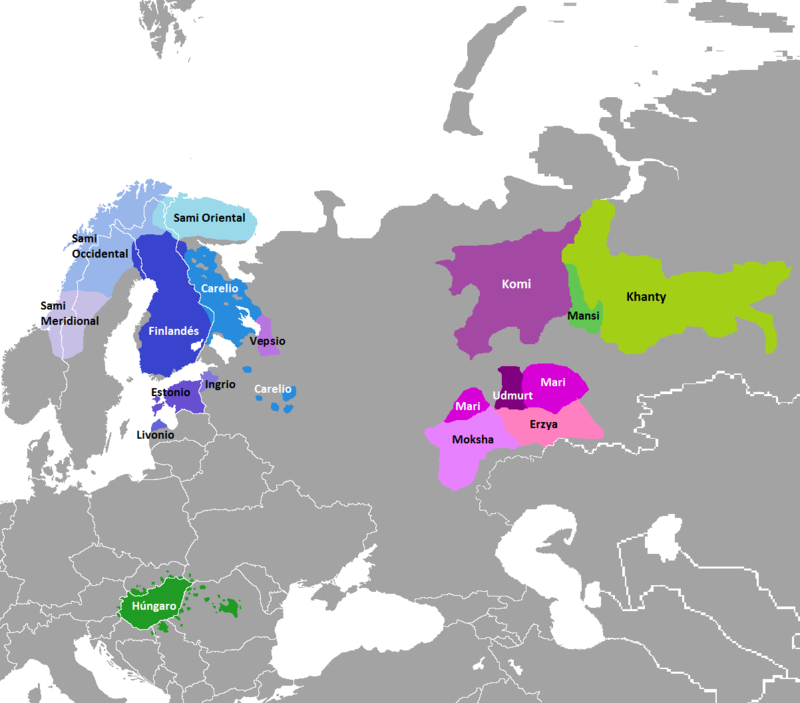
Phonological correspondences, for example, show that certain sound changes have occurred consistently in related languages. This is the case with the relationship between Hungarian “kő” (stone) and Finnish “kivi”, which may seem surprising at first sight but can be deduced from linguistic history.
There are also common features in grammatical structures. For example, the Hungarian agglutinative system of suffixation is similar to that of other Finno-Ugric languages. The use of cases, verb formation, and possessive person marking show clear affinities between the Finno-Ugric languages.
In the field of syntactic structures, the similarity is less striking, as the order of sentence parts varies in a relatively limited way across the world’s languages. Nevertheless, there are structural elements that link Hungarian with the Finno-Ugric family of languages.
There are a number of words in the Hungarian language that can be proven to be of Finno-Ugric origin. These include words that denote basic concepts, such as names of body parts (hand, head), terms related to nature (water, tree), and names of basic actions (eat, drink).
There are words of Finno-Ugric origin that, at first glance, do not seem to have a cognate meaning in other Finno-Ugric languages. For example, the relationship between Hungarian “kő” (stone) and Finnish “kivi” is more difficult to recognise because of phonetic changes.

The Finno-Ugric origin of the Hungarian language is disputed by many people for several reasons. One of the main factors is that the relationship between Hungarian and the other Finno-Ugric languages is very distant in both space and time. The languages of the Nordic cognates seem completely alien to the ordinary Hungarian speaker, which makes it difficult to accept the kinship.
Another reason is that the issue of Hungarian linguistic affinity has often taken on identity and political dimensions. In the 18th and 19th centuries, when the proof of Finno-Ugric linguistic kinship began to be provided, many people found it difficult to accept the idea that the Hungarians were linguistically related to peoples from the north. In the last century, and even today, a number of alternative theories have emerged, often based on historical, archaeological, or genetic arguments, but these cannot replace linguistic evidence.
Cultural and scientific contacts between peoples speaking Finno-Ugric languages have a long history. The first major meetings took place as early as the early 20th century, when Hungary, Finland, and Estonia had closer ties. These meetings provided an opportunity to promote research in Finno-Ugric linguistics and to foster a common cultural heritage.
Today, there are still Finno-Ugric conferences and meetings where scientific and cultural issues are discussed. These events help to maintain contact with smaller Finno-Ugric-speaking communities, especially Finno-Ugric peoples in Russia, whose language and culture are under threat.
Research into the Finno-Ugric origins of Hungarian continues, and although there are many misconceptions and debates surrounding the issue, linguistic evidence clearly shows that Hungarian belongs to the Finno-Ugric language family. However, linguistic affinity is not the same as ethnic or genetic affinity, which can be a source of much misunderstanding. The aim of scientific research is to establish objective facts, regardless of political or cultural sensitivities.
Read also:


