


 ZH
ZH IT
IT DE
DE HR
HR NL
NL FR
FR JA
JA RO
RO RU
RU ES
ES TR
TR


Metro in Budapest: Your essential 2025 guide to lines, stations, tickets and useful information

The metro in Budapest is one of the most efficient and reliable ways to get around the Hungarian capital. Serving residents, commuters and the city’s growing number of international visitors, the metro system forms the backbone of Budapest’s public transport network. With four modern lines, easy-to-navigate stations, and a wide variety of tickets available, the metro offers quick connections to major attractions, business districts and residential neighbourhoods. Here is all the key information you need to travel confidently and comfortably.
Table of contents
A short introduction to the Budapest Metro
First opened in 1896, the Millennium Underground Railway (today’s M1 line) is the oldest metro on the European continent and a UNESCO World Heritage Site. Since then, the system has expanded to four lines (M1, M2, M3 and M4) covering significant parts of the city and linking key transport hubs. The metro in Budapest is run by BKK, the city’s official mobility centre, and operates every day from early morning until late evening, with frequent trains during peak hours.

Metro in Budapest: Overview of the metro lines
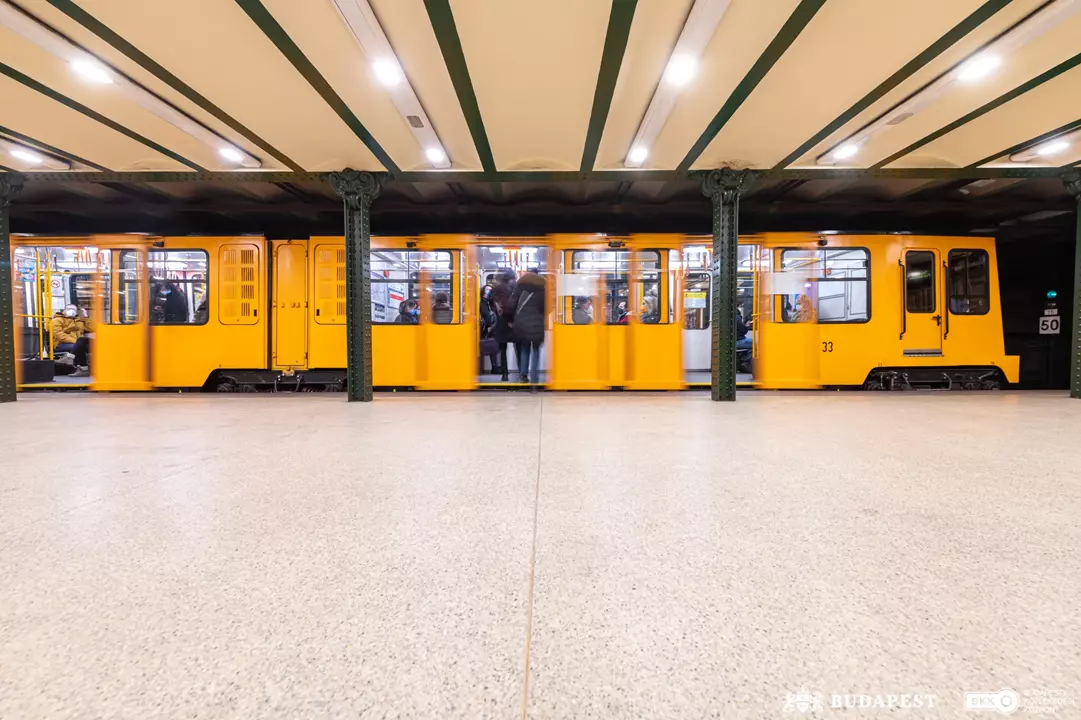
M1 – The historic yellow line
The iconic yellow line runs between Vörösmarty Square and Mexikói Road. It travels just beneath Andrássy Avenue, offering direct access to popular destinations such as the Opera House, Oktogon, Heroes’ Square and City Park. With its vintage carriages and small stations, the M1 remains a favourite among tourists.
M2 – East–west connection
The M2 line connects major train stations Keleti and Déli, running through the city centre via Kossuth Lajos Square, Astoria and Deák Ferenc Square. It is one of the busiest lines in the public transport system, serving both locals and visitors heading to important landmarks such as the Hungarian Parliament.

M3 – The newly renovated blue line
The longest metro line in Budapest, the M3, runs from Újpest in the north to Kőbánya-Kispest in the south. After a multi-year modernisation programme, all stations are now renovated and fully accessible. The line is especially useful for reaching the airport bus connection at Kőbánya-Kispest.


