


Orbán expects a busy year in diplomacy in 2024
Change language:
Prime Minister Viktor Orbán said in an interview on Friday that he expected 2024 to be “a difficult and busy year” in terms of diplomacy.
Orbán told public radio that preparations had started “for a long march”, which included Hungary taking up the presidency of the Council of the European Union from 1 July, and this involved “intensive diplomacy”.
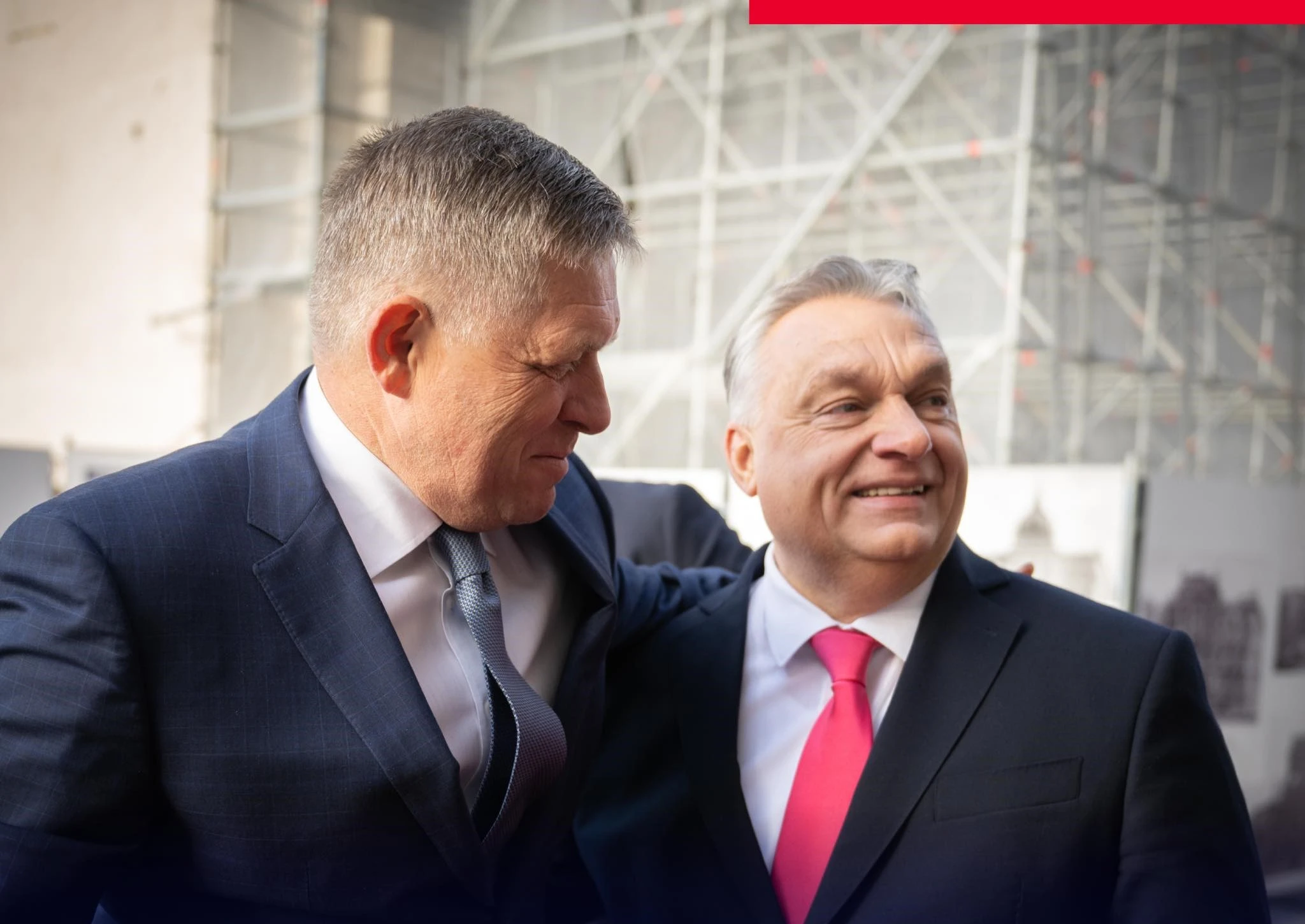
He said Slovak President Rober Fico’s recent visit to Budapest had been a highlight, and he noted that he had met Fico 33 times over the years. He added that he was glad to see “an old soldier” return because it is always easier to work together with a well-known partner than with a new one.
“New partners are not bad, either, as cooperation with the new Romanian prime minister offers great opportunities to improve bilateral ties,” he added.
Commenting on a visit by the prime minister of Vietnam, he said the rise of Asian countries was not a temporary trend, and the West must understand that it was not alone in dictating economic rules.
Orbán: ‘No money in the world’ to get Hungary allow migrants to enter
Prime Minister Viktor Orbán said in an interview on Friday that there was “no money in the world” that would get Hungary to allow migrants into Hungary and “take the country away from us”.
Orbán told public radio that Hungary would not allow circumstances to develop as they had done in western EU member states, citing “the threat of terror, crime and parallel societies”.
He said there was also “no money in the world” that could convince Hungarians “to hand over their children to LGBTQ”. “That would be impossible to imagine in Hungarian families”, where the raising of children “is exclusively the job” of the family and parents. “Nobody can take this away from them, especially not the school,” he added.
“They [the EU] cannot blackmail us with money in these matters because they are more important than money,” he said.
Commenting on the upcoming European elections, he compared Brussels to the French royal court, “where you can be charmed and where a separate language can be invented to discuss reality”. But, he added, at the time of the election, ordinary people “who don’t understand the Brussels jargon” must be addressed clearly, comprehensibly and directly.
He said MEPs were “fighting for re-election, and European Commission president Ursula von der Leyen “also has ambitions”, adding that she had stated clearly that EU funds were not being handed over to Hungarians for two reasons: because Hungary refused to allow migrants in and refused to allow LGBTQ activists among their children.
Orbán said that by any means possible, including financial pressure, the EU wanted Hungary to change its laws, “but this won’t work”. He also said that the EP election would be about the issues of “migration, our families and the war”.
Meanwhile, the prime minister said that the National Consultation public survey was an important exercise in taking joint action as well as addressing specific issues.
“Deep national thinking is very strong in Hungary,” Orbán said, adding that Hungarian national feeling of belonging went back a thousand years, whereas in Western Europe this was one or two hundred years.
He said more than 1.5 million people returned questionnaires “because they thought it important for the country”.
It was better, he said, to assert interests together than separately. “The consultation proves that we are still a strong country and a strong nation”, he said, adding that this message “will be heard in Brussels”.
The prime minister said that after a difficult 2023, “we’re looking ahead to an easier, better year this year”.
Referring to the pandemic and the war in Ukraine, with “skyrocketing energy prices and sky-high inflation”, Orbán said: “We were tormented by the year 2023, but … we got through it”.
He said Hungarians had “solved this together” and this strengthened their ability to face the challenges of global economic competition which raises the quality of life in the country, “and makes us a successful nation”.
Hungary’s economy, he said, was “crisis-proof even without European Union funding” and had come through the hardest of periods. When EU money was “most needed” after the pandemic and during the current period of rising energy prices, it had not been forthcoming, he said. Nevertheless, Hungary solved both crises, he added.