Subscribe to our social channels to get the latest news about Hungary!


One of Budapest’s most photographed yet enigmatic statues is tucked away among the trees in City Park. The faceless, hooded figure known as Anonymus has appeared in countless tourist snapshots, but few people know the stories behind it. The statue not only honors one of Hungary’s most significant historical chroniclers but is also the centerpiece of an unusual artistic tale.
Miklós Ligeti was a young, up-and-coming sculptor when he was given the chance to depict the anonymous notary of King Béla III—the author of the Gesta Hungarorum. This medieval chronicle was likely written at the end of the 12th century and covers Hungarian history from its ancient homeland through the reign of Grand Prince Géza, just before the country’s foundation.
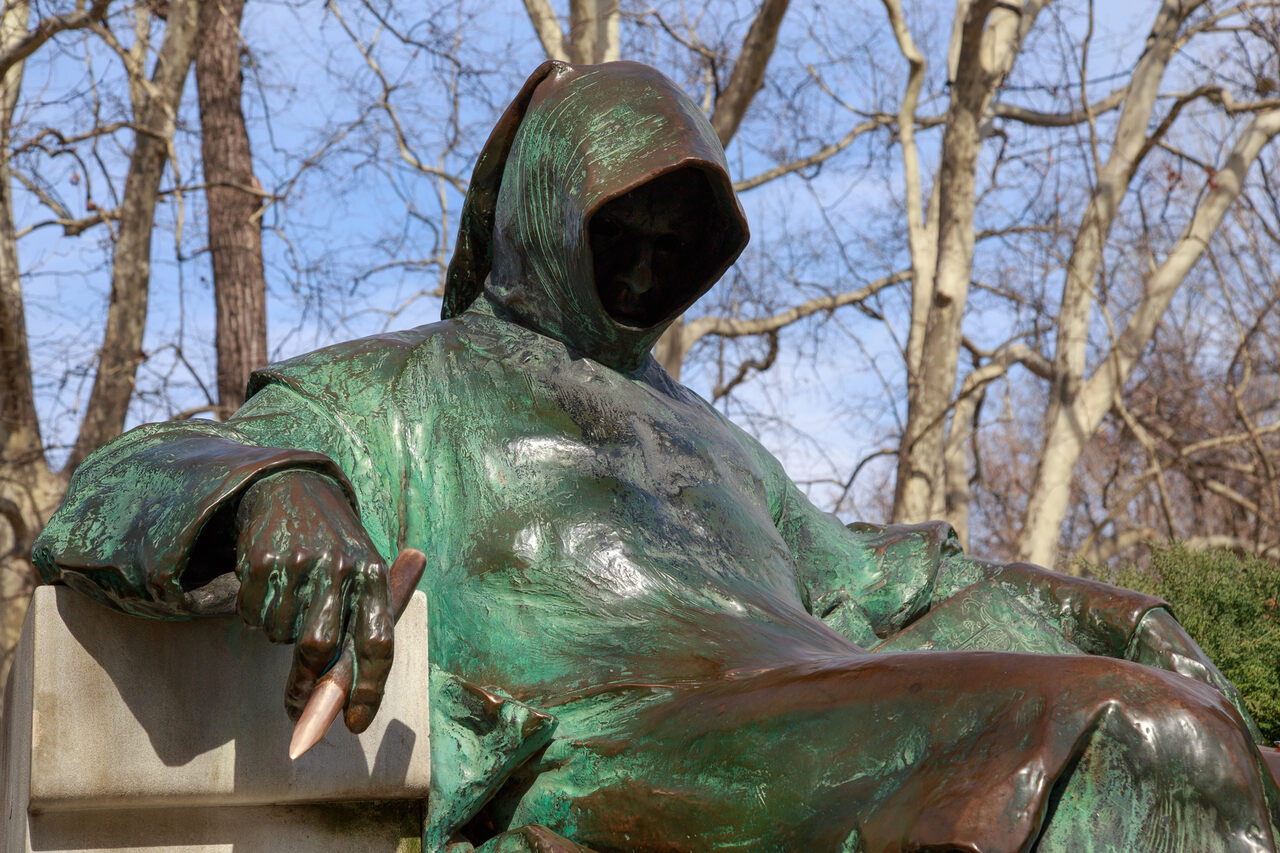
The Anonymus statue is unique for several reasons. According to local legend, it brings good luck if you simply rub the tip of its pen. Another myth claims that poets suffering from writer’s block seek refuge there for a dose of inspiration and a bit of support, as reported by infoneked.hu. More than just a masterpiece, the Anonymus statue has come to symbolize anonymous authors, artistic greatness, and timeless stories—tales we may not always know, but that remain eternally with us.
The Lelépő reports that in the late 19th century, while the statue was still in the design phase, renowned and already nationally famous sculptor János Fadrusz visited Ligeti’s studio. What he saw so deeply affected him that he left abruptly without a word. Ligeti was left stunned and unsure—was it rejection, disdain, or confusion?
The real reason came to light later that day. That afternoon, as members of the statue committee were offering their critical feedback one by one, Fadrusz suddenly burst into the room and, visibly upset, demanded, “Why the gloom?”
Upon hearing the negative remarks, he silenced the critics and admitted that the statue had left him so impressed, he had spent hours walking along the Danube trying to “air out his envy,” as he put it. He confessed he found the young artist’s work so exceptional that he simply couldn’t find the words to express his feelings in the moment.
Ligeti later recalled the story in his memoirs. It was a tale not of rivalry, but of genuine admiration—how only a true artist can respond when confronted with another’s extraordinary creation. Today, the Anonymus statue is one of Budapest’s most iconic public artworks.
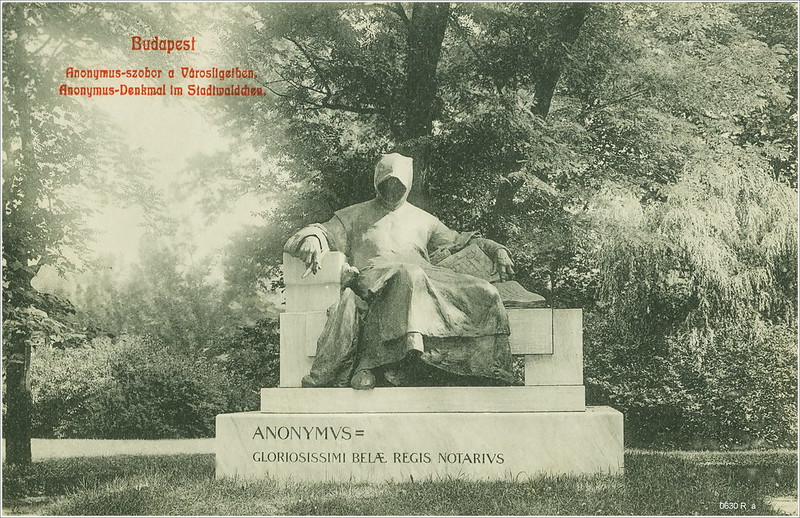
Miklós Ligeti was so attached to his creation that he wished to be laid to rest beneath the Anonymus statue after his death. Although this wish was not fulfilled—he was ultimately buried in the Fiumei Road Cemetery—his legacy and artistry live on beneath the shady paths of City Park.
To read or share this article in Hungarian, click here: Helló Magyar
Read also:


