Subscribe to our social channels to get the latest news about Hungary!


Hungarians have made a huge impact on the scientific and artistic scene of the past couple centuries. Szeretlek Magyarország has collected some of the most significant entrepreneurs, directors and actors who have contributed to the development of the film industry in Hollywood.
If we started enumerating and listing all those Hungarian scientists, mathematicians, medics, artists, actors who have left a significant mark on the world, then we’d be sitting here for hours. However, let’s just focus on one profession: filmmaking.
There are numerous actors of Hungarian origins, as you can learn from our previous articles, but did you know that in some way Hungarians invented Hollywood? Yes, it’s true! This view was widely shared in the USA in the previous century. It was even claimed that the celebrity status, modern film distribution and the latest cinema networks were all invented by Hungarians.
Some even go as far as to say that the word ‘movie’ derives from the Hungarian word ‘mozi’ which means ‘cinema’ in English.
If we take a look at the facts and not just the urban legends, there are two people whose names cannot be missed: Adolph Zukor and William Fox. What’s the connection, you might ask? Well, both have Hungarian roots.
Zukor and Fox each established such film corporations that later became the United States’ biggest and most powerful companies.
Zukor founded Paramount Pictures, while Fox founded Fox (today: 20th Centuries Fox).
Adolph Zukor (in Hungarian Zukor Adolf) (Ricse, January 7, 1873 – Los Angeles, June 10, 1976) was a producer with Hungarian origins, also the founder of Paramount Pictures, one of the pioneers of the Hollywood film industry. Born as the son of a village grocer, Zukor left school after four years and continued as an apprentice at a grocery store.
When his parents died in 1888, the fifteen-year-old boy immigrated to the USA. He began his journey with zero knowledge of English and only 25 dollars in his pockets.
No one had his back, no one helped him, so he had to be diligent and hard-working, taking up all sorts of work he was able to do.
He worked at a furrier shop in New York and in Chicago, and after having saved enough money, he opened his own shop.
He saw his first film when he was 20, and fell in love with the genre immediately. He also had a good eye for business and saw the opportunity in it. Next year, he partnered with a nickelodeon (these were small booths, where cheap short films were screened) and started expanding his network with his partner.
However, he had to take a risk to climb higher on the ladder and have a chance against his film rivals, so in 1912 he put his money on the French film,
Les Amours de la Reine Élisabeth (Queen Elizabeth) and bought the American rights for it.
It was a successful hit, and since Zukor was its only distributor, he made a lot of money on it.
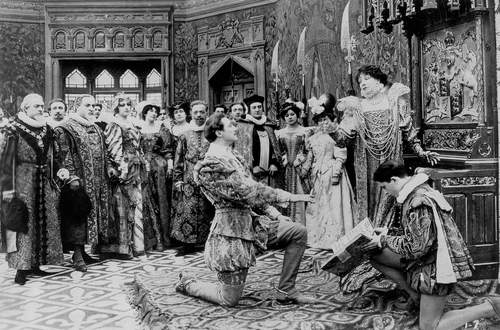
It was already in 1912 when he founded the forerunner of Paramount, Famous Players in Famous Plays Company. He hired the best actors to bring classics to the screen and shot films such as The Count of Monte Cristo (1913). By 1914, his company was able to produce a yearly 30 films, and Zukor opened the Standard cinema palace on the Broadway, New York, which hosted 3500 people.
He rented the storage of an orange farm in the outskirts of Los Angeles, called Hollywood. This is where he set up his first studio. Zukor’s company employed such brilliant actors as Douglas Fairbanks, John Barrymore (Drew Barrymore’s grandfather), Pola Negri, Gloria Swanson, Clara Bow, Adolphe Menjou, Rudolph Valentino, Gary Cooper.
Zukor was a tough businessman, crushing his rivals.
The actors had to sign exclusive contracts. Zukor realised quickly that the interest of the audience lies in the big names.

In 1916, Zukor’s company merged with Jesse L. Lasky’s, with Feature Film Company, having Zukor at its head. He managed to get Lasky’s company near bankruptcy, this is how he got the rights to this company. However, the newly merged company’s success was shattered by the Great Depression.
Still, Paramount survived even the gravest times and arose stronger than ever: in 1940 they teamed up with ABC.
Adolph Zukor won an Academy Award in 1949 for his achieved work. 17 years later, in 1966, his company was taken up by Gulf and Western Industries, placing Zukor at its head as an honorary manager.
Zukor passed away in 1976, aged 103. An independent Hungarian film studio shot a film in his memory, titled 25 dollár (25 dollars).
William Fox was born at Tolcsva on January 1st, 1879, as Vilmos Fried. He was only nine-month-old when his parents moved to the US. They’ve lived in New York, on the Lower East Side, where the majority of migrants moved to at the end of the 19th and beginning of the 20th century. This quarter was particularly poor for a good while.
Little Wilhelm started off as a newspaper boy, then moved on to getting a job in the fur- and clothing industry.
He had no opportunities for education.
Wilhelm took the name Fox later, which is the anglicized form of his mother’s maiden name, Fuchs. He set up his first company in 1900, which he sold a couple later years later and bought his first cinema theatre, where short silent films were screened.
As an entrepreneur, his main focus was to buy and build more and more film theatres, so
not many years later after his first theatre-purchase, he was the owner of the biggest film distributing company.
In 1908, Fox already had a cinema at the Broadway.
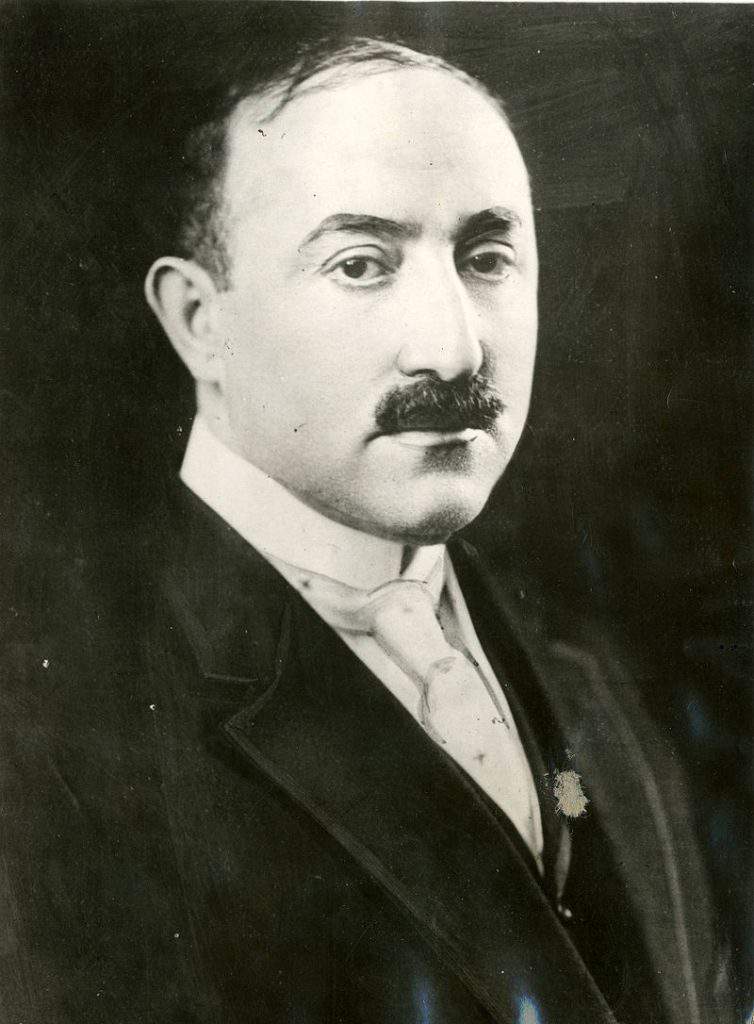
In these days, only Motion Pictures could produce films, so Fox took his case to court and managed to get rights for himself too. In 1914, he bought the rights to the Balboa films and started distributing it, letting it to other cinemas. In 1915, he founded Fox Film Corporation, the company which later became the Fox we know today.
It was his idea to set up such a technological process that involved everything from the beginning of the shooting up to the screening. He set up studios in Europe too.
Just like Zukor, Fox recognised that the audience and spectators need starts, celebrities, so he started promoting actors, making the first film stars out of them.
He was courageous enough to shift from silent movies to talking pictures, even when his rivals were unsure and wary of taking such a big step.
The economic depression shook Fox to the core, but Wilhelm could not start over as Zukor did. The US government launched an antitrust legal procedure against him, and he was even in a car crash. When the rate of his shares fell, the banks bought them up and Fox lost his majority in the company.
In 1935, Fox merged with Twentieth Century Pictures, resulting in 20th Century Fox. The businessman with Hungarian roots made a huge mistake following this, which left a dark mark on the rest of his life, practically erasing him from the US film industry. This move was bribery:
during the 1936 bankruptcy proceedings of his company, he tried to buy the judges.
He was jailed for 6 months, after his release he retired and led a poor life.
He died in 1952, but no such film was made to commemorate him, as it was in the case with Adolph Zukor.
Sándor Korda was one of the directors at United Artists in the 1920s and later moved to London. However, during WWII, Churchill asked him to return to the US and this was when he shot Lady Hamilton.
Film director Mihály Kertész, otherwise known as Michael Curtiz (originally Manó Kaminer), emigrated to the USA in 1926 and participated in the production of 100 films in Hollywood.
His film, Casablanca won an Oscar in 1942 and is still one of the greatest and most iconic cinematic productions ever made.
Fans of classics are surely familiar with the 1944 success, Gaslight, which was directed by George Cukor and starred Ingrid Bergman as its lead. She even won an Academy Award for Best Actress. Cukor himself got an Oscar for his work with My Fair Lady. This particular film cashed in 8 awards at the Academy Awards in 1965.
Let’s not forget about Leslie Howard (László Steiner), who starred in Gone With the Wind, playing Ashley. He was even nominated for an Academy Award on several occasions.
Last, but not least, we mention Peter Lorre (László Löwenstein), who was a huge star of the 1940s-50s, having played in films such as M, The Maltese Falcon, Casablanca.
Source: szeretlekmagyarorszag.hu


