

Despite a boost this year, Hungary’s minimum wage still ranks near the bottom of the European Union: only Bulgaria trails behind, while most neighbouring countries now offer higher wages.
Table of Contents
Where does Hungary stand in the EU’s minimum wage rankings?
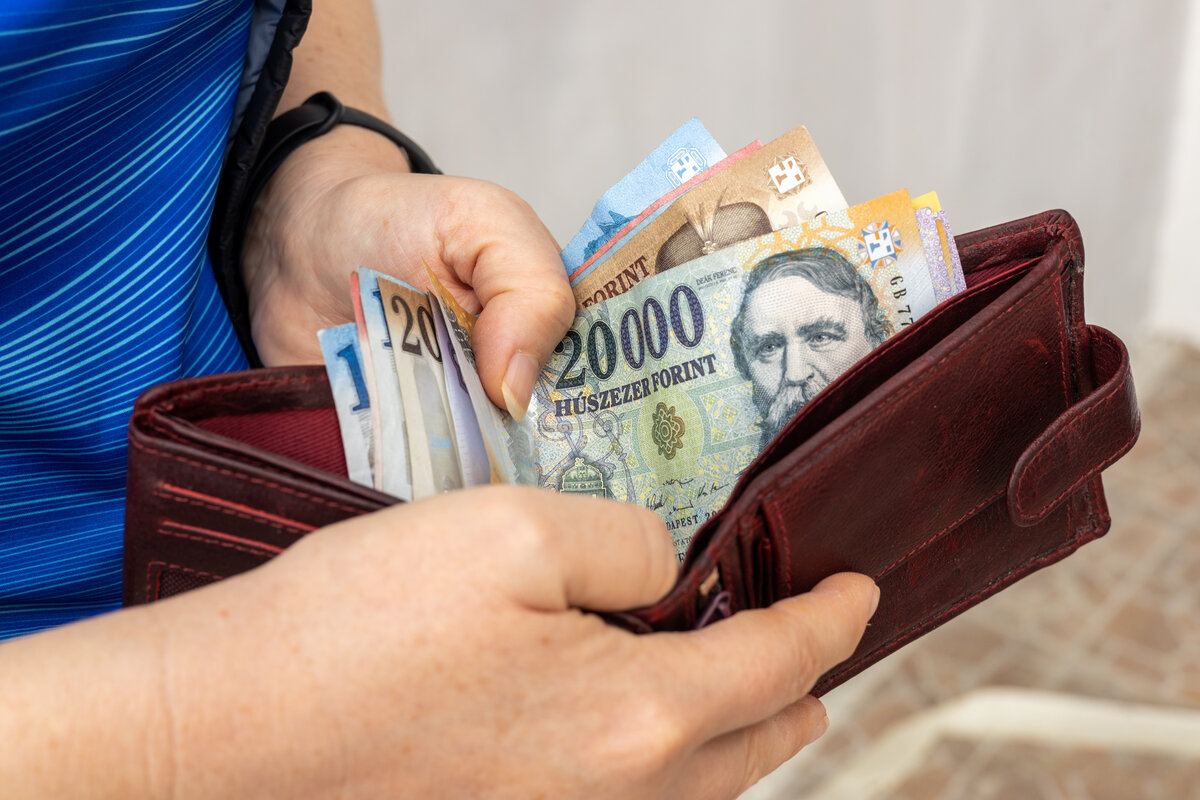
Last December, the Hungarian government announced minimum wage increases for 2025. As of 1 January, the monthly minimum wage is HUF 290,800, and the guaranteed minimum wage is HUF 348,800, marking a 9% rise from 2024 levels. According to a July report by Eurostat, the EU’s statistics agency, this places Hungary second to last among member states, ahead of only Bulgaria.

Highest tier (above EUR 1,500/month): Luxembourg, Ireland, the Netherlands, Germany, Belgium, and France. While France is slightly below the others, most countries in this group have minimum wages over EUR 2,000 per month.
Middle tier (EUR 1,000–1,500/month): Spain, Slovenia, Poland, Lithuania, Greece, Portugal, and Cyprus. These countries hover around the EUR 1,000 threshold, well above Hungary, though not quite reaching the top group.
Lowest tier (EUR 600–999/month): Croatia, Malta, Estonia, Czech Republic, Slovakia, Romania, Latvia, Hungary, Montenegro, and Serbia. Hungary falls into this category with a monthly wage of EUR 727. Although modest by regional standards, it is still not the lowest: Bulgaria lags further behind among EU members.
According to Eurostat data from July 2025, gross monthly minimum wages across the EU ranged from EUR 551 in Bulgaria to EUR 2,704 in Luxembourg, which translates to roughly HUF 217,000 to 1,066,000 at current exchange rates.
The guaranteed minimum wage
It’s important to distinguish between the minimum wage and the guaranteed minimum wage. The former is the lowest legally allowable pay for all workers, while the latter applies to employees with specific educational qualifications or vocational skills—they cannot legally be paid less than this amount.
In 2025, the guaranteed gross minimum wage is HUF 348,800 monthly, HUF 80,190 weekly, HUF 16,040 daily, or HUF 2,005 hourly. This figure has steadily increased in recent years—from HUF 219,000 in 2021 to HUF 260,000 in 2022. Although Hungary’s general minimum wage is near the EU’s bottom, the guaranteed minimum wage paints a slightly better picture. It aligns more closely with pay for similarly qualified workers in neighbouring countries, narrowing the gap somewhat in this segment.

Factors affecting perception of Hungary’s minimum wage
When comparing minimum wages, it’s not enough to look at euro-denominated figures. Cost of living varies widely across countries—meaning actual purchasing power is more relevant. In terms of purchasing power parity (PPP), Hungary ranks 17th as of summer 2025, low in the middle tier. This suggests that, adjusted for domestic prices, Hungarian wages go further than the nominal euro figures would indicate.
However, it’s also crucial to consider how much of the gross wage is lost to taxes and contributions. Hungary’s tax structure, featuring a 15% income tax, 18.5% social security contribution, and a 13% employer social contribution, significantly reduces take-home pay. Inflation is another key factor, despite wage hikes, if prices rise faster, real income may not improve. In the first quarter of 2025, inflation in Hungary was 4.1%, further dampening the impact of nominal wage increases.

Overall, the real value of Hungary’s minimum wage has shown modest improvement, but it remains at the lower end of the regional spectrum and continues to rank near the bottom within the EU.
Read also:
- Hungary employs cruel and anti-family policy against guest workers
- Painful tax increases coming in Hungary: petrol, cigarettes and more to cost extra
Click for more news concerning the Hungarian economy.
To read or share this article in Hungarian, click here: Helló Magyar



does anyone know when will the Hungarian golden age start?
So what? Not that there should be such a thing as a minimum wage to begin with, but Hungary’s cost of living is the lowest in the “E.U.,” so it stands to reason that our “minimum wage” would be near the bottom, too.
No prizes for guessing this ‘expat’ doesn’t live from an income equivalent to minimum wage, nowhere near in fact. It’s also worth calling out that the cost of living in Hungary is not the lowest in the EU for there are a roll call of countries with lower costs, especially in Budapest where there’s also no mandatory salary uplift to reflect the much higher cost of living.