Subscribe to our social channels to get the latest news about Hungary!


Hungarian motorways have officially stepped into the digital age. A new AI-powered traffic monitoring system has been launched on the shared M1-M7 section near Budaörs. The project’s aim isn’t just to monitor traffic but to lay the foundation for a future where roads become active participants in transportation networks.
One of the key elements of the development is the installation of 39 different types of sensors—radars, LiDARs, thermal cameras, and optical cameras—along an 800-meter stretch of motorway. These devices gather real-time traffic data and transmit up to 1.5 gigabytes per second via optical connections to the Hungarian Public Road’s data centre in Budapest, where a high-performance supercomputer analyses and models the information.
According to Vezess.hu, experts from the Department of Vehicle Technology at the Budapest University of Technology and Economics were responsible for calibrating the sensors and training the AI models. The initiative is part of a Hungarian-Austrian collaboration within the so-called Eureka Central System, which aims to transform road networks into data-driven intelligent systems—not just in Budapest, but eventually across the entire country.
The heart of the system is its “digital twin”—a real-time digital replica that mirrors every vehicle and roadside object on this section of the motorway. It’s more than just a visualisation tool; the digital model makes it possible to simulate self-driving vehicles and driver-assist systems in an extremely precise environment.
The core idea is not just for vehicles to “see,” but also to communicate with the infrastructure. If a car brakes or changes lanes, other vehicles—and even the traffic management system itself—can instantly detect it. This marks a revolutionary shift in traffic regulation: no longer limited to signs and signals, but driven by data.
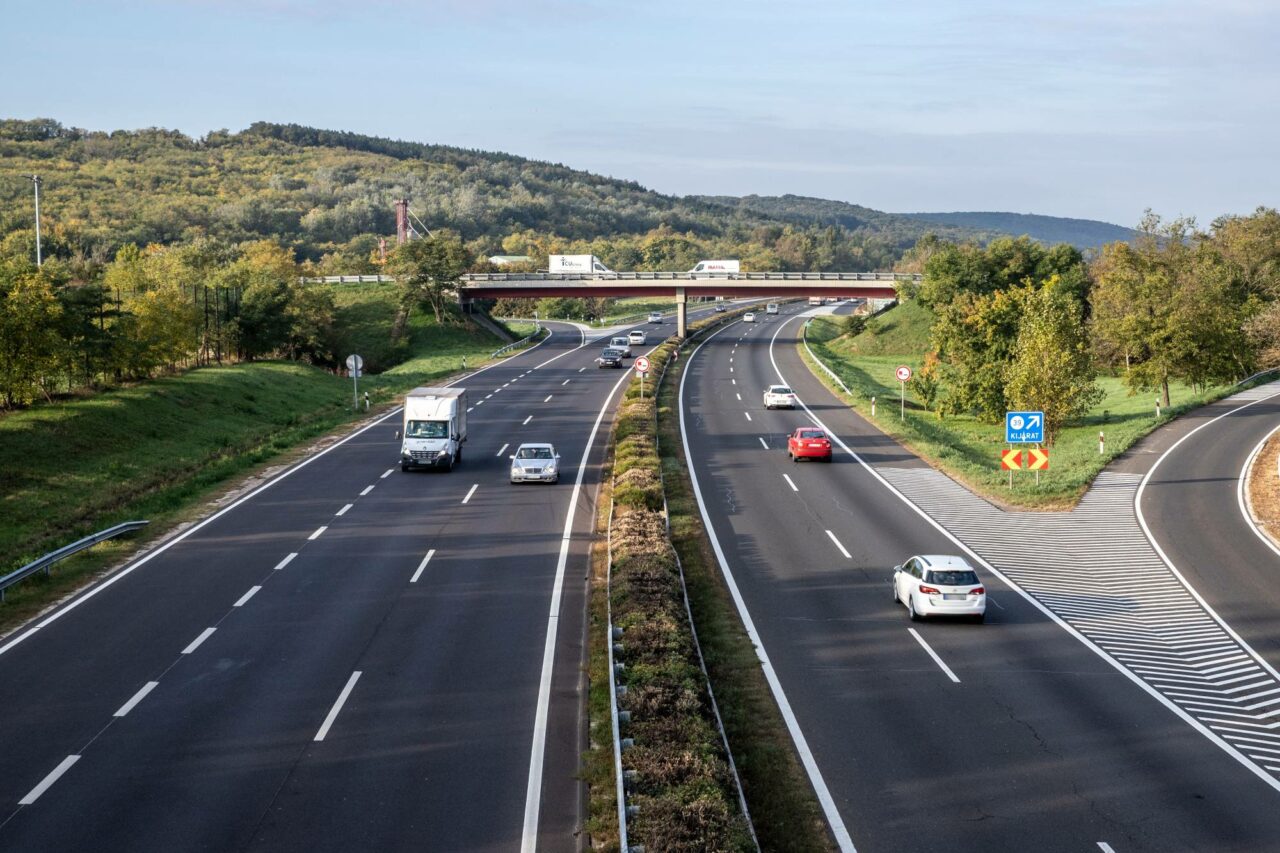
The current 800-meter smart road segment will soon be expanded to 1500 meters. The goal is to broaden testing capabilities and lay the technological groundwork for future traffic management. In the long term, the plan is to build a nationwide network that could drastically reduce the number of accidents and make transportation faster and safer.
This rollout aligns with a regulatory shift mandating the use of so-called Building Information Models (BIM) in all new road construction projects, not only aiding construction but also long-term operation, maintenance, and future upgrades.
Perhaps the most pressing question is: what does this mean for drivers? The answer is simple: safety, efficiency, and predictability. When vehicles and infrastructure share real-time data, response times shrink, the likelihood of preventing accidents rises, and traffic management can react faster to unexpected events.
While there have been previous attempts to develop intelligent road sections, this system is unique in both scale and complexity. The objective isn’t just for roads to “see”—it’s for them to interpret what they see. That difference has the potential to fundamentally transform transportation worldwide.
Read more travel-related news on Daily News Hungary!
To read or share this article in Hungarian, click here: Helló Magyar
Read also:


