


FM Szijjártó annouced when the new Hungarian port in Italy will start operation

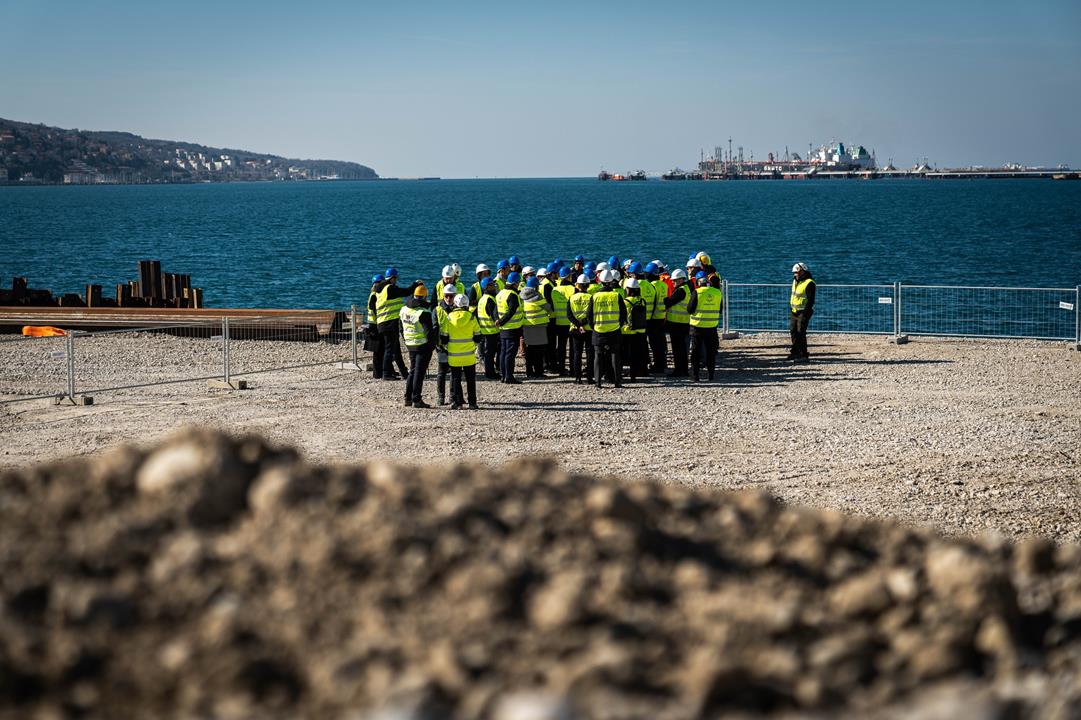
The Hungarian-owned development at the port of Trieste will start operating soon, Minister of Foreign Affairs and Trade Péter Szijjártó said in Rome on Friday.
Hungary’s port development project in Italy starts
In a statement issued by his ministry, Szijjártó said he had discussed the Hungarian development at the port of Trieste with Matteo Salvini, the deputy prime minister. He added that the development would offer new opportunities to Hungarian exporters, in terms of flexibility and speed, especially with regard to orders bound for Asia. Szijjártó said the Italian government was contributing to the HUF 80bn cost of the development. He added that some of that support had already been received and the sides had agreed that the rest would be transferred in 2026.
He acknowledged local authorities’ work issuing the permits necessary for the development. Szijjártó said the port would be ready to serve Hungarian exporters within two years. He noted that bilateral trade between Hungary and Italy stood at an annual EUR 13bn-14bn. He added that the Hungarian government was counting on the participation of Italian companies in the construction of gas-fueled power plants in Hungary.
Brussels risks ‘total isolation’ if it continues to hinder peace talks
The European Union could soon find itself isolated on the world political stage if its “liberal leaders continue hindering the success” of peace talks in the war in Ukraine, Szijjártó said in Rome on Friday. Speaking after talks with Italian Deputy PM Salvini, Szijjártó said they had reaffirmed that they were in agreement on Europe’s most critical issues, noting that they both reject illegal immigration, want urgent peace in Ukraine and place the focus on the protection of families.
US President Donald Trump’s move to engage in direct talks with Russia means that the possibility to broker peace in Ukraine “is closer than ever before”, Szijjártó said, according to a ministry statement, noting that the Hungarian government has been emphasising the importance of direct talks between the US and Russia for three years.
“I think the fact that the Russian president hasn’t said no to the proposal for a ceasefire and the fact that there appears to be a shared intention for a lasting peaceful settlement offer a huge opportunity for peace to return to Ukraine, and thereby central Europe, too,” Szijjártó said.
US President key player in peace efforts
He said a ceasefire and an agreement between the warring sides on the terms for a lasting settlement were key prerequisites for peace. Szijjártó said the US president was a key player in these developments, as evidenced by the fact that “this hopeful turn of events came about after his inauguration”, allowing him to be the one to create the conditions needed for a ceasefire and a lasting settlement.
He warned, at the same time, that there was “a bigger risk than ever that the European Union ends up isolated on the world political stage on this issue”. “If the European liberal leaders continue with their pro-war political approach, if they continue to block and hinder the success of peace talks, then Brussels can soon find itself isolated on the world political stage,” he said.
“So the right thing to do would be … for the European liberal leaders to finally choose peace instead of trying to convince Ukraine to keep fighting the war,” he added. He said the European liberal mainstream was in favour of continuing the war, arguing that “it becomes clear at the pro-war summits that the participants don’t have an interest in peace”.
Orbán cabinet pushes for peace
“We who have been living in the shadow of the war for three years now are clear in our position that this war must end, because if it doesn’t then there will be even more casualties, even more destruction and an even greater threat of escalation,” Szijjártó said.
“Those who want this war to continue are playing with fire and increasing the risk of a third world war,” he said. “That is why we call on every pro-war politician to stop pushing for the continuation of the war and urge them not to block, hinder and undermine peace talks, but to instead support the US president in creating the conditions for the warring sides to agree on a ceasefire and reach a lasting peaceful settlement.”
Here is the question the Hungarian government will ask us on the new referendum
Europe is facing big decisions, but “unfortunately Brussels appears to put Ukraine first,” cabinet official Balázs Hidvéghi said in a video posted on Facebook on Friday. Hidveghi said the leaders in Brussels wanted to continue the war from European taxpayers’ money, “and if that were not enough, they now want to force Ukraine’s EU accession through in an expedited procedure”.
He said European Commission President Ursula von der Leyen had recently announced that Ukraine must become an EU member within five years. “Ukraine’s EU membership can bring us many dangers, so we are directly addressing the people of Hungary, asking their opinion on this in a public survey,” Hidvéghisaid. “Every Hungarian citizen with permanent residence in Hungary can participate in this vote.”
Voters will be sent a ballot by post, he said, adding that delivery is expected to start in mid-April and everyone will receive the ballot by the end of May. In the video, Hidvéghi presented the ballot paper, noting that the single question on it will read “Do you support Ukraine becoming a member of the European Union?”
Read also: