Subscribe to our social channels to get the latest news about Hungary!


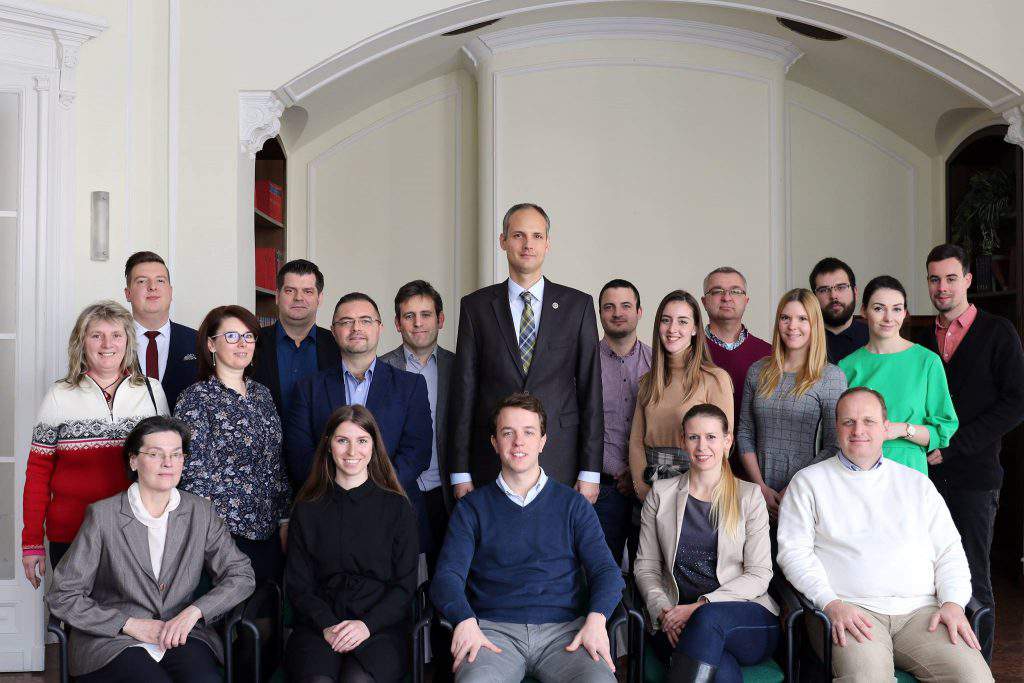
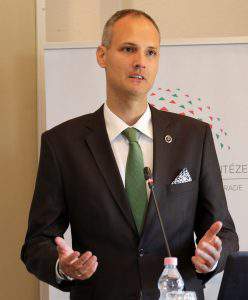
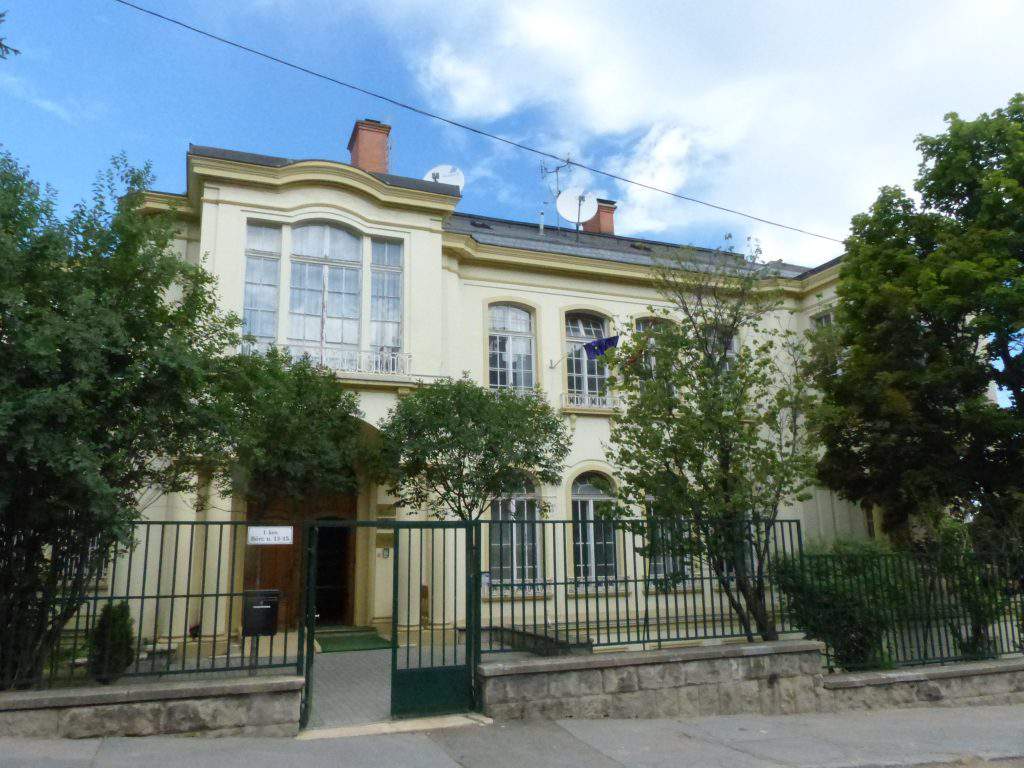
The Institute for Foreign Affairs and Trade (IFAT) is a separate legal entity under the Center for Democracy Public Foundation (DEMKK in Hungarian) operating as the leading Hungarian foreign policy think-tank. IFAT is carrying out active research in fields covering the priorities of the Hungarian foreign policy. Márton Ugrósdy is the director of the IIFAT in Budapest, and you can read here an interview with him about the institute and Hungarian foreign policy.
The interview made by GLOBS Magazine:
Globs: What got you started working in the economy, why did you choose this career?
Ugrósdy: To be honest, I started developing an interest in economy when I began reading newspapers during my high school years, when I began to make conscious effort to understand what was happening in the world around me. Ever since, I have been quite decidedly walking along this path. At university, I chose courses and wrote up topics that were relevant from this point if view. I wrote my thesis on Russian-American relations. Since then, I have been striving to work in foreign politics. From this perspective, it is logical that I ended up here, though it did take me several years and a lot of luck, too. I believe that now I have found my place, I work with a really great team here.
Globs: You have only recently become the director of the institute. What were your goals when you took the position?
Ugrósdy: I have not been working as a director for a long time. Naturally, I have goals I would like to realize. I would like to support the co-operation of the expert community much more actively. What we see is that there are a lot of efficient professionals in the country, who often function like islands without there being any sort of communication between the various research teams. We would like to provide them with opportunities of private, honest conversations the likes of which have perhaps not really taken place before. We have organized events like this before and will continue to do so in the future. We would like to move forward the professional discourse in the upcoming years at home.
Globs: In the past years, the Institute for Foreign Affairs and Trade has undergone several changes. What direction is it going in now, what are its priorities?
Ugrósdy: For many people, the Institute for Foreign Affairs and Trade has been more of an academic institute. The colleagues working here have dealt with somewhat historical, somewhat speculative things. This has changed greatly in the past years. Nowadays, we strive to deal with topics that are more current, more tangible, and more relevant to Hungarian foreign diplomacy. We also strive to shorten the amount of time between the occurrence of an event and the birth of the analysis thereof. Previously, this has not always been a goal. Or rather such papers were created but only for selected use. We aim to thematize this, to create current, shorter analyses that can, in certain situations, be available to the wide public as well.
Globs: How important is the so-called basic research for the Institute? How direct is the support of the administration in foreign decision-making?
Ugrósdy: We essentially have a dual function in this area. We try to help by providing ideas and suggestions where there is a need for it. This is a rather non-visible part of our job. Our other task, which is given considerably more attention, is the performance venue of the foreign guests visiting Hungary. The high-ranking foreign invitees can discuss their views on various subjects here. An important fact is that attendees can ask questions [during these events], we are an open Institute in this regard. One can only directly pose questions to these type of people in few other places in the world.
Globs: The Hungarian administration’s foreign politics preferences and topics have been common knowledge for the past few years. To research these, however, several other institutions have been founded, such as the Migration Research Institute. How much does their research interlap with yours? To what extent do you work together?
Ugrósdy: We are fortunate since we have the opportunity to work together with several institutes, but of course this is all topic-dependent. There are disciplines where immersing one’s self in these is necessary, to get a line on something from the research of other professionals. For example, at our institute, migration is a mere part of the Middle-Eastern problem set. Our colleagues deal with several other Middle-Eastern topics besides migration, which is why it would be justified to found an institute with migration as its main focus. Lots of times when organizing a conference, we contact partner-institutes to learn their perspectives too. We are able to cooperate with mostly everyone, and we would like to maintain our role as such.
Globs: What are the fields in which you think more developments are due, where the cross-section is narrow?
Ugrósdy: One of the areas like this is the West Balkan region, as currently only one of our colleagues is treating the topic. Naturally we strive to treat this as a topic of high priority, but one single person is insufficient for this work.
Globs: How fast can the Institute react when, for example, a crisis breaks out somewhere?
Ugrósdy: Naturally, we are prepared for every eventuality. If something happens somewhere, sometimes we get a call within half an hour to comment on it. Our colleagues are accostumed to this and can manage these situations well.
Globs: Excellent short summaries are penned by your colleagues. How do these researches come about, and how does one make time for them?
Ugrósdy: Our researchers are well-versed in this too. We have a rather wide variety of sources of information, be it the media, professional liens, Hungarian and foreign embassies, Hungarian missions abroad, etc. The most important is, of course, the researcher’s personal network of connections. The real value – and this is what we add – is putting all of this within a framework, a context. We do not just describe events but research the reasons for their occurrence. This is the type of thing one cannot learn from reading newspapers or the Internet. Accumulation years of experience are needed for this.
Globs: You are an expert in Hungarian-American relations. These ties have been put to the test in the past few months. What do you hope for?
Ugrósdy: What I see is that there is a positive expectation regarding the future. It was interesting to see that despite the political conflict of interest between the Hungarian and American administrations, American companies nevertheless invested in Hungary, increased their operational framework and contributed to economic growth. There are areas with great possibilities, like energetics and infrastructure-development.
Globs: Another favourite of your fields of expertise is energy security. What is your opinion on Hungary’s energy security?
Ugrósdy: What I see is that the strategy we have implemented is slowly coming full circle. We have well established connections gas-wise with every neighboring country; in regards to electricity, there are a few structures, but we are working on that by involving several sources. Energy security and renewable energy are largely dependent on natural resources, which means that in Hungary – most of the country being composed of lowlands – it is difficult to build up energy sources. In the area of solar energy, a lot of investments have been kicked off, for example. With all this, it is possible to maintain the country’s energy needs.
Globs: What do you do in your free time?
Ugrósdy: Besides teaching at Corvinus University, I strive to spend as much time with my family as possible.
Globs: If you weren’t a foreign policy expert, what would you be?
Ugrósdy: I would probably be a pilot.
[button link=”https://dailynewshungary.com/tag/interview/” color=”teal” newwindow=”yes”] Read more interview HERE![/button]
If you would like to read more interesting articles on GLOBS Magazine, please click HERE
or you can buy online The GLOBS Magazine on DigitalStand
Source: by Dávid NÉMETH, Journalist – GLOBS Magazine


