PHOTOS: This is what the new Hungarian euro coin looks like!

Change language:
Here is what the new Hungarian euro looks like: but how can such a coin even exist, considering that Hungary has not yet joined the eurozone?
Here’s the Hungarian euro
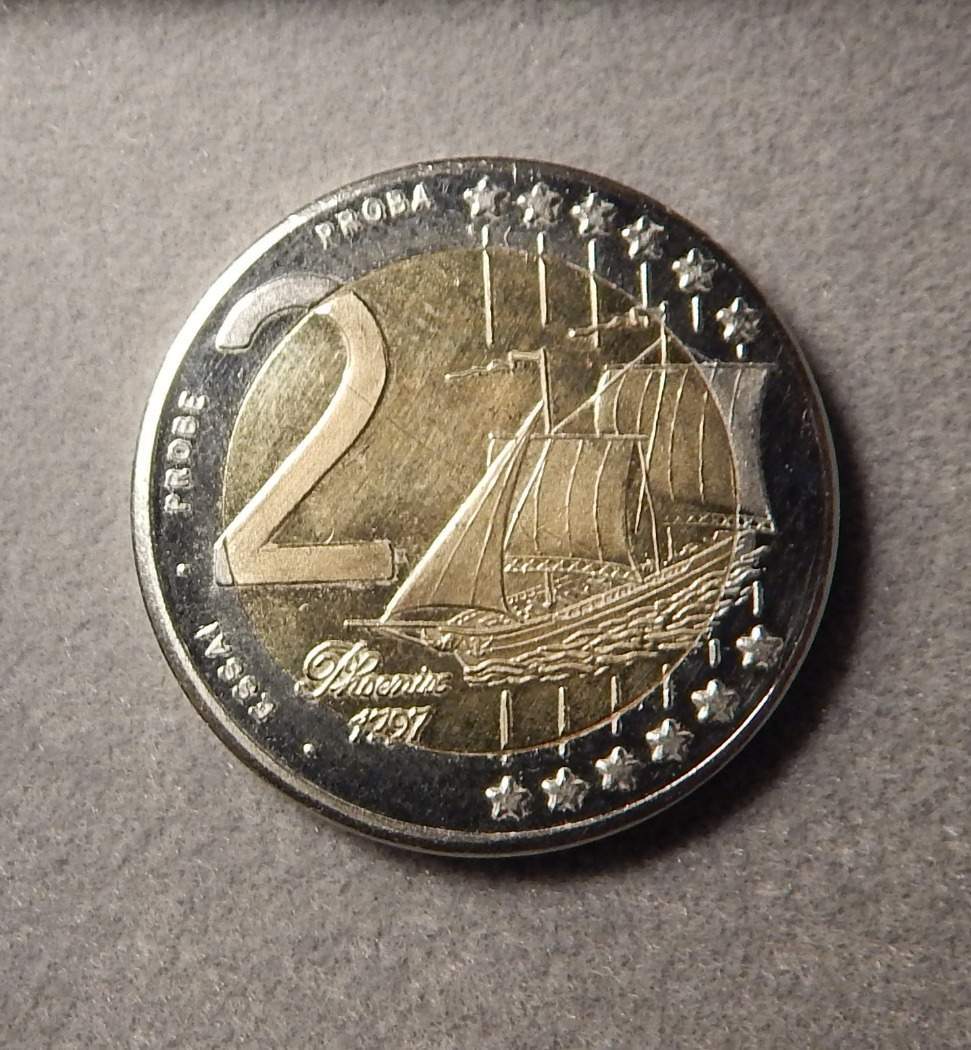
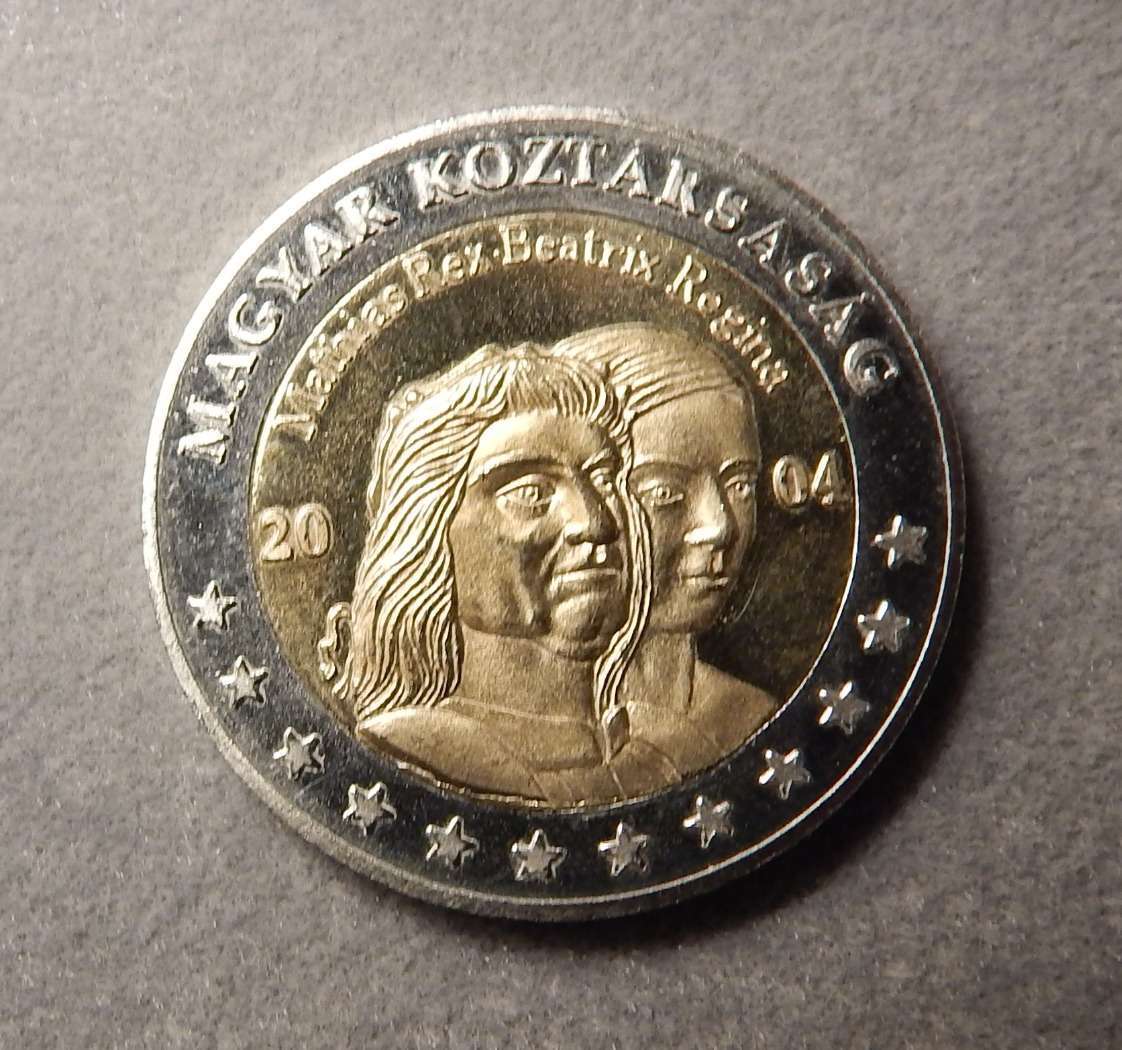
The answer is simple: the Hungarian euro coins for sale on, for example, Vatera, an online marketplace, are trial strikes of the Hungarian euro issued in 2004, the year Hungary joined the European Union.
According to Origo, the Hungarian 2-euro coin is not too expensive. It costs only HUF 5,000 (EUR 12.5). But what exactly is depicted on the obverse and reverse sides of the Hungarian euro coin?
The reverse sides of the Hungarian forint coins are very colourful, depicting buildings, plants and animals. Hungary’s official coat-of-arms decorates two denominations, while on the others, there is the Chain Bridge, the Great Egret (Ardea alba), the Hungarian flag iris, the Saker Falcon (Falco cherrug), and the Hungarians’ totem animal.
On the paper forint denominations, prominent figures of Hungarian history are depicted, including Francis Rákóczi II, King Matthias, and István Széchenyi, the greatest Hungarian.
On a Hungarian euro coin trial strike, one would expect a prominent figure, a symbolic building, or an iconic representative of Hungary’s flora or fauna. And the reality does not differ from this logical reasoning.
This is what you can see on the Hungarian euro
On the obverse of the Hungarian euro coin, you can see the Phoenix ship and the date 1797. The vessel belonged to one of the greatest Hungarian noble families of that era, the Festetics family, who built an astonishing palace in Keszthely, near Lake Balaton. It was one of the largest sailing vessels on Lake Balaton, measuring 28.5 meters in length and over 7 meters in width, and could carry a cargo of 3,000 quintals.