Subscribe to our social channels to get the latest news about Hungary!


Sharjah is often regarded as the cultural heart of the United Arab Emirates, offering a unique blend of history, natural beauty, and modernity. During my recent visit to this captivating emirate, I unearthed many treasures that distinguish it from the world-renowned Dubai or Abu Dhabi.
When thinking of the Emirates, Dubai is typically the first destination that comes to mind, with its myriad of unique experiences. However, right next door lies Sharjah, an emirate that receives far less attention. As the third-largest emirate in the UAE, Sharjah is renowned for its cultural and artistic significance. It has even earned the title of ‘Cultural Capital of the Arab World’ from UNESCO.
For visitors from Hungary, the best route is via Dubai International Airport (DXB), served by airlines such as Emirates, Flydubai, and Wizz Air. From Dubai, it’s easy to reach Sharjah by taxi, as the cities are seamlessly interconnected.
At first glance, Sharjah’s modern skyline and abundance of mosques appear similar to Dubai’s. Yet, Sharjah’s charm lies in its ability to blend tradition with progress.


Let’s pause here for a quick overview: The UAE is a federation of seven emirates, located in the southeast of the Arabian Peninsula along the southwestern coast of the Persian Gulf. While all emirates follow Islamic principles, Sharjah is known for adhering to stricter interpretations. Alcohol is prohibited, and modest dress is expected, especially at religious and heritage sites.
The Emirates is a melting pot of cultures, with people from around the globe making it their home. However, citizenship is rarely granted to expatriates, creating a fascinating societal structure. One Indian taxi driver I met had lived in Sharjah for 26 years, witnessing its transformation from desert landscapes to urban vibrancy, yet he remains content despite being ineligible for citizenship.
Sharjah spans both the east and west coasts, offering visitors the chance to explore the country’s natural beauty—from sandy deserts to pristine beaches. For the best experience, visit between October and April, when the weather is cooler.
While Sharjah has a well-established public transport network, it lacks trains or metro services. Taxis are an affordable and convenient option, though ‘crossing the border’ into Dubai incurs an additional fee on the meter.

Alternatively, you can rent a car, but be aware that Sharjah is notorious for traffic jams, so you should always factor that in. However, the drivers are very attentive.
My cultural journey began at the Islamic Civilisation Museum of Sharjah, where I was captivated by treasures of Islamic art and history. Ancient manuscripts, celestial globes, and exquisite ceramics were highlights, with the central dome’s mosaic constellations leaving a lasting impression.
In the Heritage Area, I explored the Al Hisn Fortress, learning about Sharjah’s rulers and its past strategic significance. Nearby, the Sharjah Museum of Calligraphy showcased the beauty of Arabic script, while bustling souks offered everything from spices to handcrafted jewellery.
One of my personal favourites is Al Noor Island, quite literally a green oasis in the heart of the bustling city. I wandered through lush gardens adorned with artistic installations, a perfect blend of creativity and nature. To my surprise, there’s even a trampoline in place of a pavement, should you fancy a bounce. For a truly memorable experience, the Butterfly House on the island is a must-visit. The abundance of beautiful butterflies, fluttering freely in the same space as humans, offers a magical encounter. They might land on your hand, or you can observe them closely as they feed on sweet nectarines. Transporting and caring for butterflies, which live only for a month or two, is an expensive endeavour for such a unique ‘zoo’. It’s safe to say we won’t see many like it in our lifetime.


For those keen to explore the other side of the emirate, I recommend a day trip to Khor Fakkan on the east coast. This picturesque coastal town boasts tranquil beaches and clear waters, ideal for diving. A hike to the Rifaisa Dam, surrounded by majestic mountains, offered breathtaking views and a sense of adventure. The Al Suhub rest area also provides a stunning panorama.


If the desert calls to you, the archaeological site of Mleiha is the perfect destination. Located just 40 minutes’ drive from the city centre, it is one of the most popular tourist attractions in the UAE. This UNESCO World Heritage site is home to some of the region’s most significant archaeological discoveries, including Bronze Age tombs, forts, and fossils. Despite its historical allure, Mleiha is particularly favoured for its desert experiences. For those with strong nerves, I highly recommend off-roading between the dunes—a thrilling and unforgettable adventure. While “rodeoing” through the desert in our campervan, we stopped at Camel Rock (Teve Sklara) and Fossil Rock to marvel at the dramatic scenery.


Our hosts then treated us to camel riding, followed by a dinner of local cuisine in a magical desert setting. As the day drew to a close, we gazed at the Moon, Jupiter, and Saturn through two state-of-the-art astronomical telescopes—a truly enchanting finale.


Sharjah offers a wealth of family-friendly attractions, starting with the Sharjah Aquarium, which showcases the vibrant underwater beauty of the Arabian Gulf. The colourful coral reefs and playful seahorses were a delight to behold. Located next door, the Maritime Museum is equally worth a visit. Conveniently, the boat to Dubai departs from this complex, offering an affordable public transport option for those who prefer not to drive.

The Arabian Wildlife Centre in the Desert Park is another excellent family destination, combining education and entertainment.
For an enchanting evening outing, Al Qasba is a must-see. Its mesmerising architecture and illuminated surroundings create a magical atmosphere. The canal linking the two bays is ideal for a cosy dinner, while children can enjoy amusement parks or the captivating evening lights.


No trip to Sharjah is complete without indulging in some shopping. Just a stone’s throw from Al Noor Island lies the Blue Souk, renowned for its stunning architecture and diverse range of traditional goods, including textiles and gold jewellery.
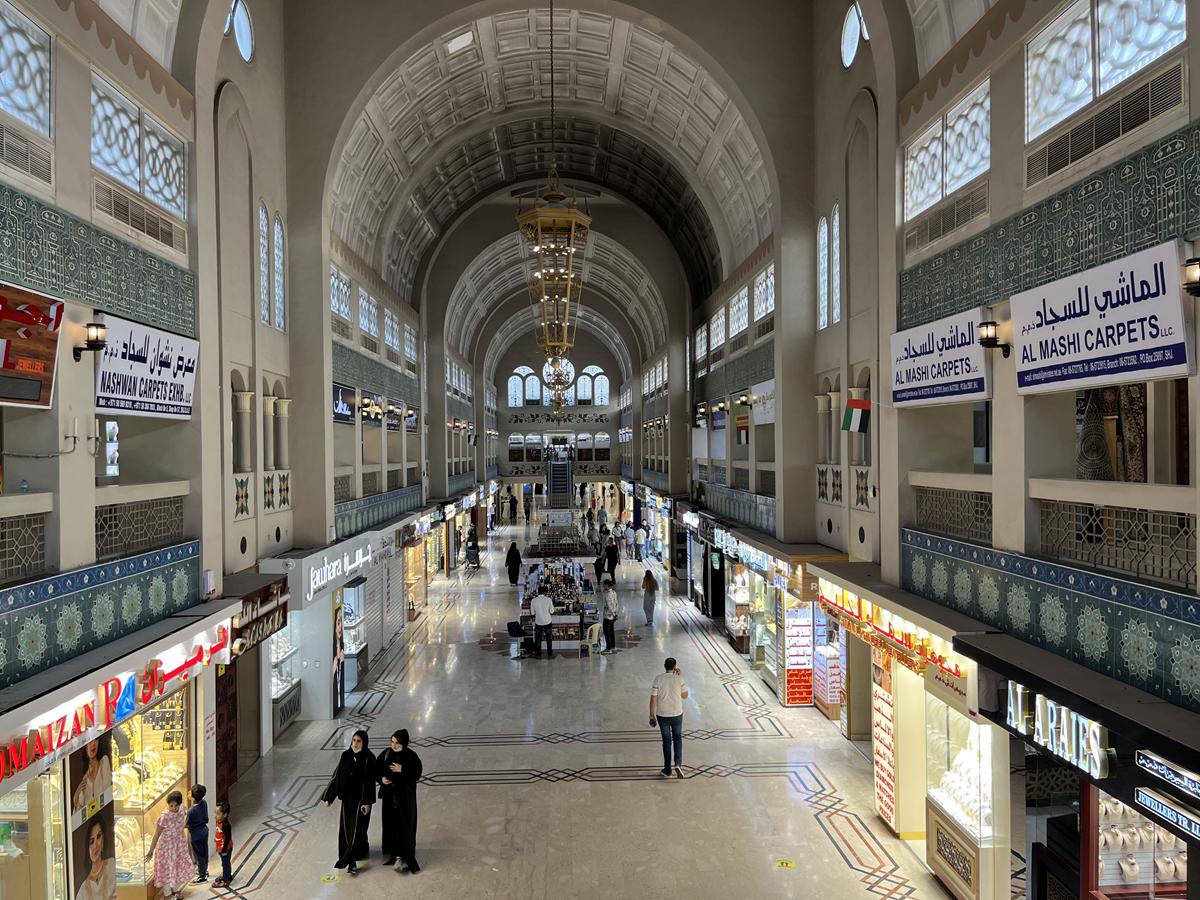
For a step back in time, I thoroughly enjoyed strolling through Souk Al Arsah, one of the oldest markets in the UAE, where I picked up authentic Emirati souvenirs. For a more modern shopping experience, the Sahara Centre—a sprawling mall offering international brands, dining options, and entertainment—did not disappoint.
Sharjah’s gastronomy is as rich and diverse as its culture. Alongside traditional Arabic dishes, the city’s multicultural population brings a vibrant variety of international cuisines. Local specialities include majboos (spiced rice with meat or fish), harees (a traditional dish made from wheat and meat), and madrooba (a creamy fish dish). A cup of gahwa, traditional Arabic coffee flavoured with cardamom, is the perfect accompaniment to desserts like luqaimat (sweet, doughnut-like balls).
Modern restaurants in Sharjah cater to a range of tastes, offering Indian, Lebanese, Turkish, and Western dishes.
For a truly authentic experience, I recommend sampling the fresh spices, dates, and seafood available at local markets. Don’t miss the unforgettable flavours of traditional Arab sweets!
Sharjah hosts numerous events and festivals each year, celebrating its rich cultural heritage.
One of the world’s largest book fairs, the Sharjah International Book Fair (SIBF) attracts authors, publishers, and readers from around the globe. This prestigious cultural event honours renowned writers and poets. In recent years, Zlatan Ibrahimović and Mohamed Salah were among the high-profile guests.


Related news – Sharjah International Book Fair 2024: 1.82 million visitors this year
A dazzling display of lights and projections that transforms the landmarks of Sharjah into works of art.
Through exhibitions, workshops, and performances, the Sharjah Art Foundation showcases contemporary art from the Middle East and beyond.
Sharjah is the ideal destination for those wishing to experience the UAE beyond the glitz and glamour of Dubai. While embracing modernity, Sharjah remains deeply committed to preserving its cultural heritage. With its rich history, breathtaking natural landscapes, and warm hospitality, the Emirates offers a unique and unforgettable experience.
Whether you’re an admirer of Arab art, a history enthusiast, or simply seeking a tranquil nature retreat, Sharjah has something for everyone. I hope this travelogue has conveyed why Sharjah stands apart from the more familiar UAE destinations and is well worth discovering.
This could also be interesting:
Mohamed Salah on SIBF 2024: 90% of my success comes from what I’ve learned through reading
Steven Bartlett at SIBF 2024: From business success to fatherhood dreams

 IT
IT HR
HR NL
NL FR
FR JA
JA RO
RO RU
RU ES
ES TR
TR

