Subscribe to our social channels to get the latest news about Hungary!


Our team is committed to reaching out to and giving a voice to foreigners who have moved to Hungary for work, family, or other reasons, and who spend their daily lives here. We want to understand how they feel about living here, what difficulties they face, how they have managed to integrate, and what they think about Hungary and their place of residence. Therefore, we have launched a series in which we interview foreigners living here about their work and experiences in our country.
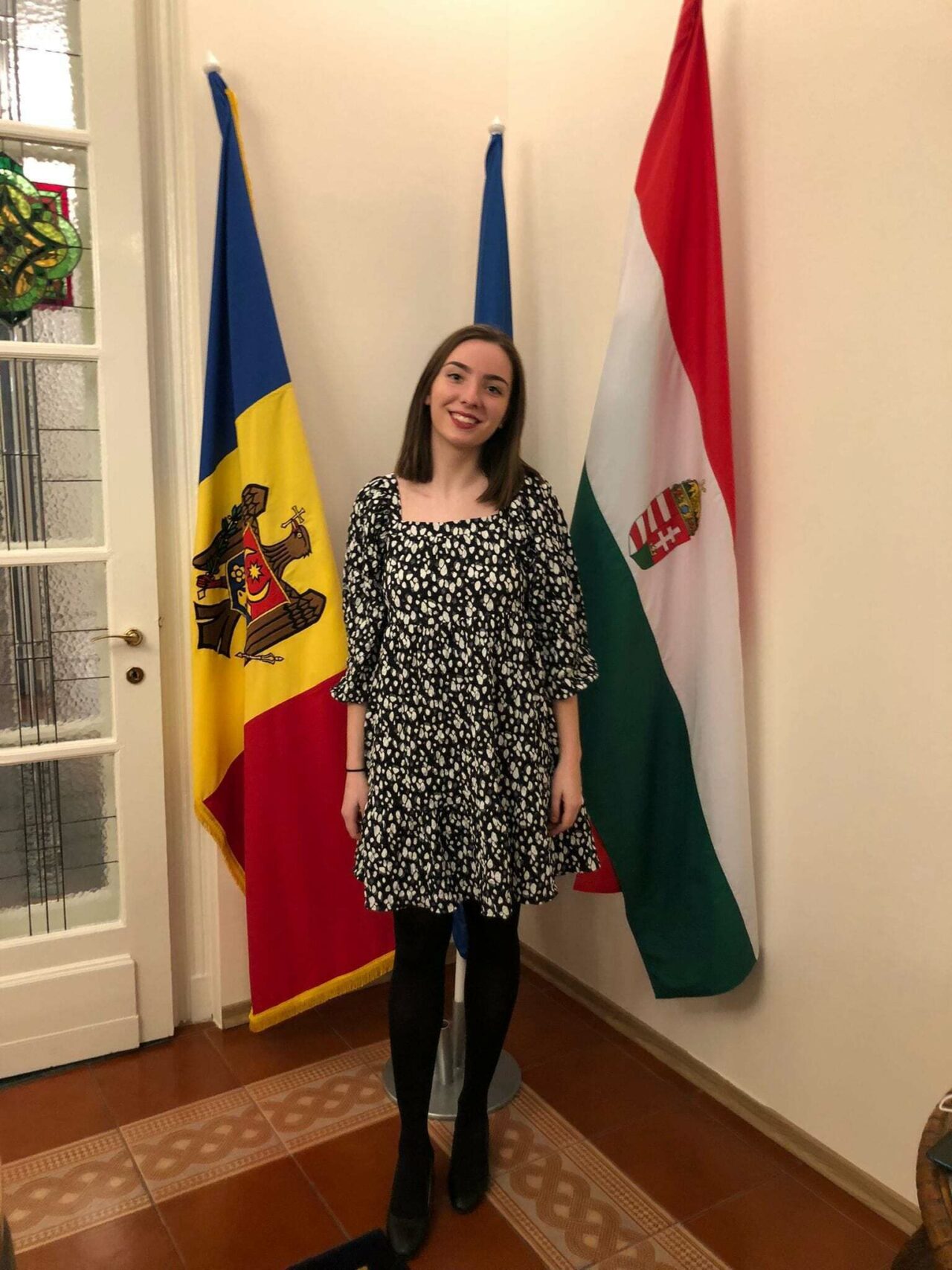
Ever wondered what it’s like to live in Hungary as an expat? Let us show you what a Moldovan individual has to say about life in Budapest.
Author: Valeria Ciolac
When I first arrived in Budapest back in 2020, I had no idea that paprika would become such a significant staple in my diet, that thermal baths would be my go-to therapy, or that a simple tram ride along the Danube followed by some shopping on Andrássy Avenue could calm even the most stressful day. It was the start of something new — and yet, I couldn’t have imagined just how much this city would give me. What was meant to be a few years of studies has turned into what feels like an entire lifetime compressed into five years. If time is measured not in hours but in moments that shape you — then I’ve lived many lives here.
I came to study International Relations at Corvinus University. I didn’t know anyone. I didn’t speak the language. But I stayed — because this city slowly, persistently, and unexpectedly became home.
Budapest is not a place you merely live in — it’s a place that teaches you how to feel more deeply. It taught me how to listen: to unfamiliar languages and unnamed emotions. It taught me how to look: at crumbling façades that reveal layered histories, at Danube sunsets that shift from golden to violet in minutes, and at Hungarians who at first seem distant, but who, once you’re in, hold you like family.
I now live in District II, on the Buda side — a place where city life slows into green hills, where silence has depth, and where birdsong starts your morning better than any alarm clock. It’s peaceful in a way that doesn’t feel isolated — it just holds you gently before the city rush begins.
And when the rush gets too much, Budapest does something no other city can: it lets you dissolve into hot, healing water.
During exam seasons, before deadlines, after hard days — I go to the baths. Rudas, with its octagonal dome and rooftop views, is my favorite for moments when I need clarity. Széchenyi, especially in the winter, offers a kind of fairy-tale decadence. Gellért feels like stepping into a Wes Anderson film, and if you want something more hidden, Veli Bej — intimate, quiet, and deeply historic — is a gem.
My deepest memories are marked by food. In 2023, I spent Christmas with the family of one of my closest Hungarian friends. That’s when I first tasted Hortobágyi palacsinta, served with a reverence that made me realize this dish is more than a recipe — it’s love folded into a pancake. The father handed me a glass of quince pálinka as if handing down a family secret.
Since then, Hortobágyi palacsinta and pálinka became my comfort duo. Whenever I’m sad, I knock on their door. No explanation needed. They already have the plate warm and the pálinka poured.
That same winter, I must have eaten 10 kilos of bejgli. And I regret none of it.
This city has something for every version of yourself. On energetic days, I run through Margaret Island, under the canopy of trees. I cycle along Kopaszi gát, where the city feels quieter and the water always keeps pace with my thoughts. I walk endlessly across the bridges of Budapest, each one offering a new perspective of a city that keeps shifting — like a kaleidoscope.
I picnic in Normafa, read books in Múzeumkert, attend the Opera and Operetta, sing karaoke in Gozsdu Udvar, jump on the trampoline in my backyard, and wander up to the Philosophers’ Garden on Gellért Hill, where the city stretches out below the statues and everything feels briefly in balance. I chase squirrels in Városliget like a child on a sugar rush and order mákos guba at my favorite café — even though I pretend to look at the menu every time. Some days I take tram 2 just to sit in the front and watch the Parliament slide by like it’s part of a movie I somehow live in.
And food? It’s sacred. Here are a few places I love:
More than anything, Budapest gave me people. Friends. Chosen family. Strangers who became constants.
Some I met the traditional way — through university, work, mutual friends. Others? In the weirdest, most wonderful places.
I have friends from Debrecen, Pécs, Győr, Kaposvár, Tata — all corners of Hungary. They’ve introduced me to their families, their traditions, their dogs and grandmothers, and most importantly — to the kind of generosity that speaks for itself.
One summer, I stayed at a friend’s house in Badacsonytomaj, near Lake Balaton. We rode vizibicikli (colorful pedal boats shaped like old convertibles), picked cherries, discussed politics and philosophy, and every night, shared wine and music. They introduced me to Hungarian bands I now adore — Kiscsillag, Carson Coma, Papírsárkányok. And one night, someone showed me Bájoló. First the melody, then the words by Miklós Radnóti:
“let the rain
wash our hearts together.”
That was the moment I knew: Hungary wasn’t just around me anymore — it had found its way in.
To any foreigner wondering what life in Budapest might be — I can only say this:
Come. Be confused. Be enchanted. Stay.
Let the city carve out a home in you.
Let its bridges teach you patience.
Let its pálinka bring you stories.
Let its people hold your name.
Let its language soften your fears.
And let Hungarians love you — not loudly, but deeply. Not quickly, but fully.
Read also:


